Basic HTML Version



Plant maintenance, test and measurement
sible functions may be allocated respectively. A2A is also interested
in using this product as it has IEC61850 [1] interface protocol. IEC
(International Electrotechnical Commission) is a standardisation body
in Geneva which has developed IEC61850 [1], a general transmission
protocol for the protection and control technology inmediumand high
voltage switchgears. The series of standards predominantly defines
general specifications for switchgear, the most important information
for functions and devices, the exchange of information for protection,
monitoring, control and measurement, a digital interface for primary
data and a configuration language.
Since the product discussed in this article is still in its introduc-
tory phase, A2A first of all started installing it with a Modbus protocol
and a TCP/IP interface in the energy distribution grids of Milan City.
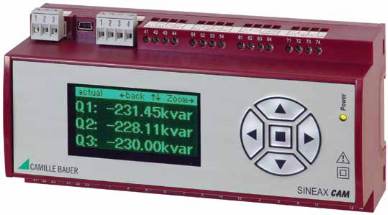
Camille Bauer has provided A2A with an instrument which meets
all requirements.
Conclusion
The company is situated in Milan and is the third biggest energy pro-
vider in Italy. It was created through a merger of AEM SpA Milan and
ASM SpA Brescia as well as the take-over of Amsa and Ecodeco on 1
January 2008. The cities of Milan and Brescia are the main sharehold-
ers participating with a share of 27,5% each. The business activities of
the group focus on the production, sale and distribution of power, the
sale and distribution of gas and waste and water management. The
company operates its own water and thermal power plants with an
installed capacity of approximately 3,4 gigawatt and sells power, gas
and non-gaseous fuels to national and international wholesalers. A2A
maintains a systemof 15 000 kilometres of low current, 180 kilometres
of heavy current and 8 000 kilometres of gas pipes. In waste manage-
ment, A2A focuses on disposal and recycling to generate power and
biogas in five power plants as well as on the disposal in incinerators
or landfills. Water management comprises the collection of water,
aqueduct management, water supply and wastewater disposal and
treatment with a network of 5 000 kilometres.
Reference
[1] IEC 61850. 2012. Communication systems and networks in sub-
stations.
A
bout the author
T
ake note
The Italian energy market is the fourth biggest power and the
third biggest gas market in Europe. Contrary to many other
European countries, Italy dispensed with nuclear power at the
end of the 80s. At that time, approximately two thirds of Italians
decided to abandon nuclear energy in a popular vote under the
influence of the reactor disaster of Chernobyl. However, Italy
has granted the nuclear industry another chance: In February
2010, the government issued a decree concerning the approval
and site criteria for the planned reintroduction of nuclear en-
ergy. In 2013, the construction work for new nuclear power
plants is supposed to start. The Berlusconi government intends
to have covered 25% of the national power consumption with
nuclear energy by 2030. The reasons for the reintroduction
of nuclear power are increasing costs for oil and gas as well
as the pronounced dependence (85%) on imports. More than
half of the Italian power production is based on natural gas.
More than 50% of all natural gas imports are from Russia and
Algeria. The energy costs for Italian industrial companies are
up to 30% above the EU average and rely on the competitive-
ness of exports.
Milan born Stefano D’Abrusco has a PhD in Electrical
Engineering. He started work at GMC- Instruments
Italia in October, 2000 and was appointed as an
expert in the product support department for all
GMC products in energy and power quality systems.
Enquiries: Email DeWinter@camillebauer.com or
contact Timecount: Tel. 011 882 3105 or email sales@
timecount.co.za.
• Internationally, energy markets are being privatised and liberalised.
• Liberalised energy markets require a grid that is in many ways different
from those of today.
• The Italian energy market is, to some extent, a sign of things to come.
33
September ‘12
Electricity+Control