In an environment where downtime, rework, and fragmented supplier networks continue to erode margins, integrated compaction solutions are no longer a luxury, they’re a necessity.
The 2017 acquisition of Wirtgen Group by John Deere marked a decisive shift in the global construction equipment landscape - one that continues to influence project delivery in markets such as South Africa. By integrating Wirtgen’s five specialist road-building brands into its portfolio, Deere effectively created a full-line construction offering without internal product overlap. The result is a complementary ecosystem of technologies, strengthened global reach, and streamlined distribution and support capabilities.
In the African context, this global integration finds practical expression through the partnership with AFGRI Equipment. The collaboration brings together advanced compaction technologies and a robust local support network, offering contractors a single, integrated supplier. For an industry often constrained by fragmented supply chains and inconsistent aftersales support, this alignment delivers tangible value: improved access to equipment, faster service response times, and dependable parts availability across South Africa and into the broader continent.
The implications for project delivery are significant. A broader, well-aligned equipment range enables smoother transitions between construction phases - from earthworks through to final asphalt compaction. This continuity reduces downtime, enhances operational efficiency, and supports consistent achievement of compaction specifications. In an industry where delays and rework can quickly erode margins, such efficiencies translate directly into improved project timelines and cost control.
At the centre of this offering is HAMM, widely recognised for its precision engineering and durability and the benchmark in compaction performance. Its equipment is designed to perform reliably across both asphalt and soil applications, even under demanding site conditions typical of many African projects. The HAMM HD Series tandem rollers, for instance, prioritise versatility and operator usability, with compact designs for easier transport, intuitive controls, and strong visibility - features that contribute to both productivity and safety on site.
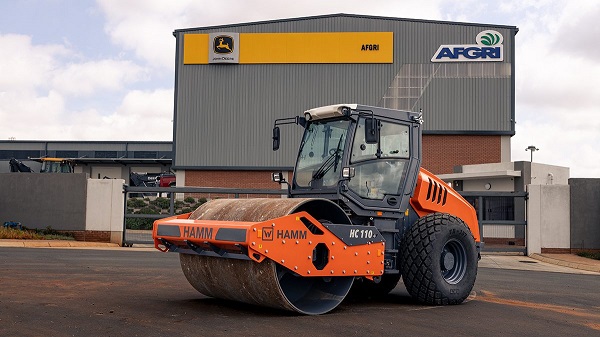
For more demanding earthworks, the HAMM HC Series delivers high line loads and adaptable drum configurations, enabling effective deep compaction across varied soil conditions. This flexibility is particularly relevant in large-scale infrastructure projects where material variability and site complexity are common challenges.
Technology integration is another defining feature of the modern compaction landscape. Machines such as the HAMM HC 110 G incorporate John Deere engines alongside JDLink™ telematics, providing real-time insights into machine performance, utilisation, and location. This level of visibility supports proactive maintenance and improved fleet management - critical factors in maximising uptime and controlling lifecycle costs.
Beyond telematics, innovations such as oscillation compaction and digital monitoring systems are reshaping how contractors approach quality assurance. Oscillation technology reduces the number of passes required while minimising the risk of over-compaction, particularly near sensitive structures. Meanwhile, systems like Smart Doc and Smart Compaction provide real-time data and documentation, enabling contractors to verify compaction quality and streamline project handovers. In a regulatory environment that increasingly demands measurable compliance, these tools are becoming essential rather than optional. The shift is clear compaction is no longer just mechanical. It’s becoming a data-driven discipline where every pass is measured, verified, and optimised in real time.
Local industry dynamics are accelerating this shift toward advanced technology. South African contractors face a combination of challenging ground conditions, stricter quality requirements, and a shortage of highly skilled operators. As a result, there is growing demand for equipment that can standardise outputs, assist operators, and deliver verifiable results.
Equipment selection itself is evolving accordingly. While upfront price remains a consideration, contractors are placing greater emphasis on total cost of ownership - factoring in fuel efficiency, maintenance costs, reliability, and aftersales support. Specifications such as vibration frequency, centrifugal force, and drum width are no longer abstract technical details; they are critical determinants of productivity, influencing how quickly and effectively compaction targets can be achieved.
Equally, operator experience is gaining prominence. Ergonomics, visibility, and ease of use are now central to equipment design, reflecting the reality that machine performance is closely tied to operator capability. Well-designed machines reduce fatigue, enhance safety, and enable consistent results - even in environments where highly experienced operators are in short supply.
Ultimately, the convergence of global manufacturing strength, local support infrastructure, and advanced technology is redefining compaction in Africa. The John Deere-Wirtgen-AFGRI ecosystem illustrates how integrated solutions can address longstanding industry challenges - improving efficiency, ensuring quality, and delivering long-term value in a sector where margins are tight and expectations continue to rise.