Estimates indicate that South African businesses launder between R16-billion and R64-billion annually. For manufacturers and sellers of high-value goods - such as machinery, vehicles, and heavy equipment - this has significant implications.
While incidents of criminals purchasing high-value goods with illicit cash have been widely reported, there is a growing trend of criminals using these goods, including vehicles, machinery, and movable parts, to launder money.
Money laundering can be understood as the disguise and movement of value, rather than just cash. Converting illicit funds into tangible assets is an effective way to conceal the original source of the money. These assets can then be sold, traded, or even moved across borders, where they may be liquidated in a different jurisdiction.
The sophistication of these operations is concerning. Without vigilance, businesses may unknowingly become entangled in such activities.
Gone are the days when simple cash transactions were the primary vehicle for money laundering. Today, criminals exploit everything from real estate and luxury goods to complex corporate structures and digital currencies. They are increasingly adept at identifying vulnerabilities in our financial systems and exploiting them for illicit gain.
The Financial Intelligence Centre Act (FICA) plays a vital role in combating money laundering, terrorist financing, and tax evasion, as well as in identifying the individuals behind these activities.
High-value goods dealers—defined as businesses handling items valued at R100 000 or more—are particularly vulnerable to money laundering and other illicit financial schemes. When such a transaction occurs, the seller must comply with all FICA obligations, including conducting thorough due diligence on the client. Failure to adhere to these requirements can result in significant fines and reputational damage.
As such, FICA’s Know Your Customer (KYC) protocols have never been more critical. These requirements are not merely regulatory formalities—they are essential measures to safeguard your business from inadvertently becoming complicit in criminal activities.
Every time a business processes a large transaction or onboards a new client without conducting proper due diligence, it risks facilitating the movement of illicit funds.
The primary goal of FICA is to ensure that businesses fully understand their clients' identities, intentions, and the source of their funds. This enables them to identify and report any suspicious transactions to the authorities.
Without the cooperation of businesses—who are on the front lines of detecting potential money laundering—law enforcement agencies are left without the critical information needed to pursue investigations effectively.
By adhering to FICA’s KYC requirements, businesses not only protect themselves but also contribute to a broader effort to combat financial crime in South Africa.
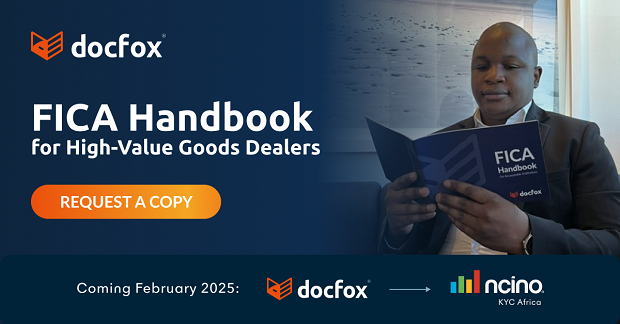
To learn more about FICA and what is expected from you as a High-Value Goods Dealer download the DocFox FICA Handbook - Request your copy here.
Reach out below for any queries or information on how to become FICA compliant: sales@docfox.co.za | www.docfox.co.za
About DocFox
DocFox is a software and services solution that enables Accountable Institutions to be FULLY FICA compliant. It is trusted by hundreds of High-Value Goods Dealers, Law Firms, Property Practitioners, Asset Managers and other discerning businesses. Request a live demonstration to see how we can assist your business.