With South Africa’s agricultural industry breaking export and production records in 2025, preventing unplanned downtime has never been more important - particularly in critical drive and automation systems.
According to Dwane Jacobs, SEW-EURODRIVE’s Cape Town Branch Manager, the company’s drive technology is playing an increasingly integral role in the sector by helping to improve productivity, reliability and efficiency. Its industrial gear units, high efficiency motors, variable frequency drives and automation software form part of a growing range of solutions being adopted in agriculture-related operations, Jacobs says.
“Agricultural applications range from conveying systems and packhouses used for sorting, grading and packaging, to on-farm material handling equipment such as augers, crushers, grain conveyors and feed processing plants,” he explains. “We also support irrigation systems including centre pivots and pump-driven water supply mechanisms as well as automated packaging, palletising and handling solutions used by high-throughput agricultural producers.”
Applications like these rely heavily on robust drive and automation systems to ensure reliable material handling, processing and irrigation.
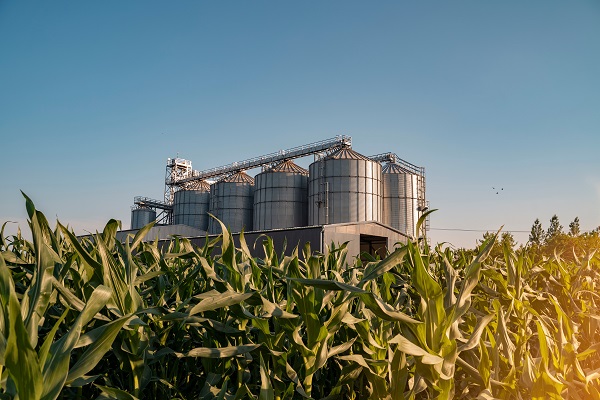
“From fruit grading lines and grain silos to irrigation pumps and feed processing plants, these operations demand equipment that can run continuously in challenging environments,” he says. “Machinery and components must withstand dust, moisture, variable loads and seasonal production peaks.”
Dusty environments are common in grain silos and milling facilities, while moisture ingress can occur through outdoor exposure or frequent wash-down cleaning in food processing environments. SEW-EURODRIVE addresses these challenges through a combination of protective design features and specialised motor technologies.
“One way we deal with these conditions is through high ingress protection ratings, ranging from IP65 up to IP69K,” Jacobs explains. “Dust-ignition-proof motors are also available for applications where combustible dust may be present, such as grain silos or milling facilities.”
Additional protection measures include corrosion-resistant coatings and stainless steel options for equipment exposed to harsh weather or aggressive cleaning processes. Jacobs also notes that SEW-EURODRIVE’s decentralised drives - where control electronics are mounted directly on the geared motor rather than in a central control cabinet - reduce cabling exposure in dusty or wet environments.
“We also offer corrosion protection levels from OS1 through to OS4 to withstand harsh environmental conditions,” he says. “Resin encapsulation can be applied in the terminal boxes, along with tropicalisation of the windings and drain holes for very wet areas.”
These protective coatings include primer layers and specialised resins designed to prevent corrosion and extend equipment life.
Variable loads are another common feature of agricultural drive applications, Jacobs explains, as the volume of product being conveyed or processed changes with seasonal cycles and production demands. To accommodate these variations, SEW-EURODRIVE’s modular solutions can be customised with heavy-duty gearing and bearings.
“With electricity tariffs rising faster than inflation, players in the agricultural sector are demanding greater energy efficiency from their equipment as a key cost control measure,” he says. “Our variable speed drives (VSDs) and automation systems therefore play an important role in improving the performance and efficiency of agriculture-related equipment.”
By enabling precise speed control, VSDs allow machinery to match operating speeds to the load requirements of the application, reducing energy consumption and improving overall efficiency.
“Our solutions go further by enabling energy-optimised operation through intelligent control algorithms,” Jacobs adds. “These can be tailored to agricultural loads to achieve significant electricity savings.”
One example is the option to operate 87 base Hz units which allows the motor to maintain torque up to 87 Hz before torque begins to drop off. This enables a wider operating speed range without sacrificing torque. Another important benefit of VSD technology is its ability to reduce electrical peak demand.
“When motors are started directly on-line, they can draw up to five times their rated current during start-up,” Jacobs explains. “Using variable speed drives allows a controlled ramp-up of the motor, reducing current spikes and helping lower peak demand charges from the electricity supplier.”
Soft starting and stopping also reduces mechanical stress on gearboxes and drive systems, further improving reliability and extending equipment lifespan. At the same time, SEW-EURODRIVE’s automation platforms support customers in improving productivity and product quality.
“This technology enhances users’ ability to synchronise operations across conveyors and processing lines,” he says. “Operators can speed up or slow down equipment depending on the product being processed or the seasonal throughput requirements.”
Real-time control also helps improve throughput consistency while reducing product damage.