A major civil engineering project is reshaping how stormwater is managed close to Cape Town’s northern coastline, protecting residential neighbourhoods and wetlands in the area.
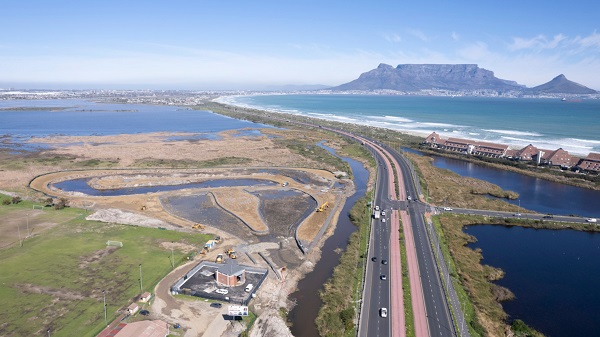
CSV Construction is deep into a substantial upgrade of the Bayside Canal outfall system in Blaauwberg, a critical intervention aimed at curbing flood risk in fast growing suburbs while protecting the sensitive Rietvlei Wetland Reserve. The scale of work demands exceptional volumes of rock and other materials, prompting the contractor to partner with AfriSam as its main supplier.
The canal is a single stormwater outlet for a broad catchment that includes Tableview, West Beach, Parklands and Sunningdale. But with increased development and years of reed encroachment downstream, the infrastructure has struggled to cope.
“This upgrade really broadens the system’s hydraulic capacity,” explains Alex Pospech, Contracts Manager at CSV Construction. “This is critical for preserving the Rietvlei reserve - an important recreational and wildlife resource - while also reducing flood risk in an area that sits very low.”
An important feature of the project is its balance between engineering and ecological considerations. Stormwater entering Rietvlei currently filters through dense reed beds that naturally trap solids and absorb nutrients. The expanded system must honour this natural treatment function, but on a more controlled and higher-capacity basis.
The redesigned outfall therefore includes two primary sedimentation ponds, each about 140 metres long, to allow heavier particles to settle. Downstream, a 460 metre secondary treatment canal slows the water further so that finer sediments can separate out.
“These structures give us a controlled way to manage sediment loads before the water reaches the reeds,” Pospech notes. “It is a more resilient version of what the wetland has been doing on its own.”
After passing through these treatment stages, the flow spills over a weir and into a reed-lined section for nutrient absorption and final polishing. To handle high volume storm events, CSV is also constructing a nearly 600 metre bypass channel along the R27, ensuring major surges can be diverted safely.
The engineering design demands unusually large rock sizes and consistent material availability - requirements that rely on the considerable capacity of AfriSam’s Peninsula Quarry. Ian Trimmel, Territory Sales Manager at AfriSam, says the supply chain has needed careful planning.
“Moving dump rock isn’t simple, as not every truck can handle that kind of load,” Trimmel explains. “We have had to finetune the logistics so the right vehicles can safely collect and deliver what the contractor needs.”
To meet the high demand for gabion stone, AfriSam even set up a dedicated production plant, shifting from the traditional method of hand-selecting stones to an industrial-scale process tailored for this project.
Work on upgrading the canal will continue into 2027, as most work can only be conducted during the dry summer seasons. Once completed, about 45,000 m³ of material - much of it reed-choked sludge - will have been removed using long-reach excavators and articulated dump trucks. The cleared footprint is being stabilised with 12,000 m³ of dump rock, followed by about 20,000 m³ of overburden and nearly 15,000 tonnes of gabion stone baskets lining key sections of the canal.