Noting the continuing escalation in electricity prices that South African households and businesses are facing, Lance Dickerson, MD of Revov SA, says, “Revov’s view is that South Africa needs a tariff framework that protects vulnerable households, supports industrial jobs, incentivises renewable investment, and ensures sustainable grid recovery.”
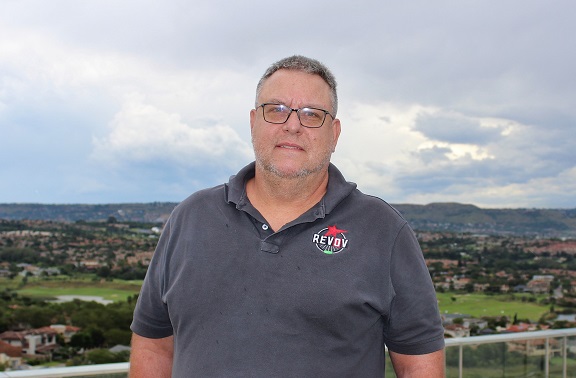
Lance Dickerson, Managing Director, Revov SA.
South Africans have faced sharp energy price increases over the past two decades. By Dickerson’s calculations, Eskom electricity tariffs have increased by over 172% over the past decade, and more if we look back 20 years.
Across the country households and businesses are under immense economic pressure. Now, as price pressures increase, they need to think local and invest in the circular economy, he says.
Dickerson points to two new developments potentially impacting prices further.
As of March 27, 2026, the International Trade Administration Commission (ITAC) proposed preliminary duties of 15% on fully assembled lithium-ion batteries and up to 30% on various solar and wind components – in order to promote local manufacturing.
Additionally, based on policy announcements from the Chinese Ministry of Finance and the State Taxation Administration released in January 2026, China is restructuring its export tax rebate system for renewable energy products, specifically targeting solar and batteries. In essence, the Chinese government is ending its 9% tax refund. This change is being implemented with 3% effective immediately and the balance phased in over the next year.
What this means for local industry
Revov has always advocated for a robust local industry. “We see an abundance of talent in the industry and support a shift towards local manufacturing as a good, sustainable move for the country. However, it won’t happen overnight,” Dickerson says.
Until the local supply chain is embedded and meeting regional demand, consumers and businesses will need to seek out suppliers in the renewables sector that have robust local technical and support teams. Teams that have a reach across the length and breadth of the country, and that assemble the batteries here. That technical expertise will become highly valuable.
He also notes that there are still large stockpiles of fully imported batteries in the market. The ITAC developments may well force a sell-off of these products, but even if that does not happen, the dangers of long-term storage and the resulting degradation of the cells will continue to harm the industry. These batteries will likely find their way into installations. And potentially inferior products with no local support will do little to support the industry’s reputation or the buyers’ pockets.
The circular economy
One of the potentially positive outcomes in this evolving trade environment will be a reinvigorated investment in 2nd LiFe batteries. These are lithium iron phosphate batteries, which come from electric vehicle batteries. When EV batteries are replaced, a strict testing and quality control process is implemented to assess and select individual cells and whole batteries for use in Battery Energy Storage Systems for industrial and residential use.
These batteries have several advantages. EV grade lithium batteries are superior to those made exclusively for storage. They can handle far more aggressive charge and discharge rates, higher temperatures and even penetration tests. 2nd LiFe batteries address two key concerns: What do we do with EV batteries when they are replaced? and, where do we find lithium batteries that are robust enough to handle the toughest conditions in Africa and perform on par with First LiFe LiFePO4 batteries?
If the rationale for switching to renewable energy is to take strain off the environment, an industry that invests in the circular economy is surely doing the right thing. Revov has successfully sold and supported thousands of 2nd LiFe batteries over the past decade, and the recent ITAC news provides an ideal launching pad for a reinvigorated 2nd LiFe economy locally.
Dickerson says, “We procured our first-generation cells from China, where there was an abundance of EVs. In South Africa, the sector has grown, with significant numbers of EVs now in large industry, mining and the local vehicle market.
“Now we must ensure that when those batteries need to be changed, partnerships are in place with experts to prevent those batteries from being dispatched to landfills, and instead to see them deployed to power renewable installations as reliable, robust backup batteries. This is a moment of immense possibility.”
For more information visit: https://revov.co.za/