Power quality meters are often treated as fit-and-forget devices, sitting quietly inside panels for decades and receiving little attention. As electrical environments evolve, many of these legacy instruments create blind spots. John Mitchell, Global Sales and Marketing Director at power quality specialist CP Automation highlights that long-life assets can quickly become vulnerable when product support disappears.
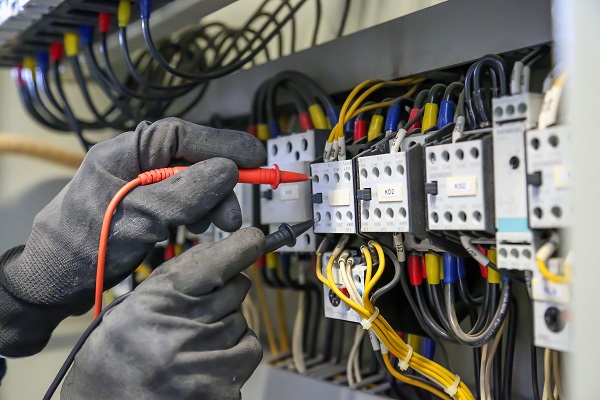
Where legacy power quality meters have not kept up with evolving electrical systems, retrofits can be straightforward.
For engineers still relying on discontinued and outdated power quality meters, the challenge is twofold: the hardware does not offer an upgrade path and modern electrical networks are becoming more complex. Consequently, users may soon be seeking guidance or a replacement, not just for high-end equipment, but for basic metering too.
One example is the ageing Dranetz 61000-series installations, a legacy family of power quality analysers commonly installed across industrial and utility sites. Form-factor constraints and obsolete components can limit replacement options for operators and engineers using this technology, unless they seek specialist support.
The risk with legacy equipment
Unlike equipment with a defined design life, such as variable speed drives (VSDs) or programmable logic controllers (PLCs), power quality meters sit in controlled environments and are rarely replaced unless a whole distribution panel is renewed. Panels can stay untouched for 20 years or more.
During that time, the wider ecosystem around the meter steadily moves on. Communications protocols change, monitoring software evolves and the original programming tools may no longer be supported. A meter may still appear to be functional, but it is no longer able to integrate with modern systems or capture the right data.
Today’s electrical environments present a bigger challenge. Modern loads, such as EV chargers and active front-end (AFE) drives, produce complex waveforms, high harmonics and, in some cases, supraharmonics. In these applications, legacy meters might give the impression that everything is healthy simply because they’re unable to measure certain network disturbances.
Retrofitting and replacing
The retrofit path is often straightforward. Many panel-mounted meters share the same 96 mm square cut-out, making like-for-like replacement simple.
For example, CP Automation’s metering range supports all major communication protocols, allowing new analysers to slot into existing networks seamlessly, with minimal disruption. For sites that prefer an internal installation, DIN-rail options are available too.
Accuracy levels vary across the market, but the portfolio spans everything from basic meters to Class A analysers that can meet the strictest utility and billing requirements. This range allows operators to match the measurement capability to the application’s criticality, deciding whether they require a simple energy meter or a high-end analyser that provides wider spectrum visibility.
Integration with platforms such as PQView is another advantage. Widely used by Distribution Network Operators for managing fleets of sites, PQView ensures that even large organisations can monitor hundreds of devices from a central point. More sophisticated meters can interface directly with this system, simplifying long-term management and reporting.
Condition-based maintenance
Looking ahead, the next generation of meters will be defined by connectivity and analytics. Standards, such as IEC 61000-2-2 and 2-4, include requirements for measuring supraharmonics.
Cloud integration, remote access and machine learning will become standard features, enabling meters to identify trends and warn operators when plant behaviour starts to drift from normal. Once operators see a before-and-after comparison that links a problem directly to poor power quality, the value becomes obvious.
With the grid under increasing strain, driven by renewables, increasing electrification, high-performance drives and the rapid growth of data centres, accurate, continuous monitoring is becoming essential.
Although power quality meters are often treated as fit-and-forget devices, they play a key role in monitoring power networks. When they become obsolete, it’s important to work with an experienced power quality partner that can provide continuity and ensure that any analysers installed are capturing the required data.
For more information visit: www.cpaltd.net.