The Energy and Water Sector Education and Training Authority (EWSETA), the United States Agency for International Development (USAID), in support of Power Africa, a US government-led partnership, and the United Nations Development Programme (UNDP) South Africa have launched Phase 2 of the Just Energy Transition (JET) Technical Training for Women in Electrical and Renewable Energy Programme in Limpopo. This provides for women electricians and artisans in Limpopo to receive specialised technical training at seven Technical and Vocational Education and Training (TVET) Colleges in the province.
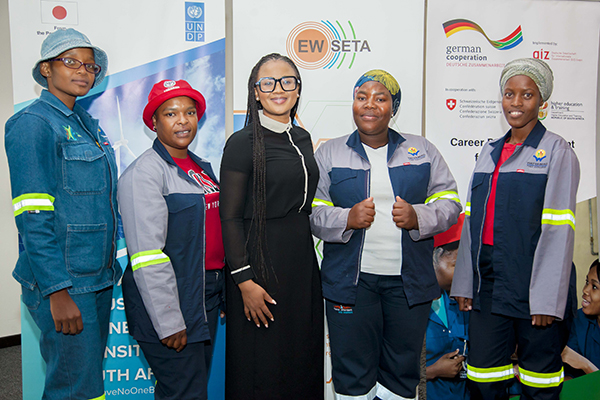
Students Thato Lemekwane, Tshepiso Kwenaite, Linah Molope and Winny Sefoloshe with EWSETA CEO Mpho Mookapele (centre).
The initiative marks a significant step forward in equipping women with the skills they need to succeed in traditionally male-dominated industries, fostering a more inclusive workforce in these sectors.
Building on the success of Phase 1, which focused on three TVET colleges in Mpumalanga, Phase 2 focuses on seven TVET colleges in Limpopo: Capricorn TVET College, Lephalale, Letaba, Mopani South East, Sekhukhune, Vhembe, and Waterberg TVET Colleges. In total, 140 women electricians/artisans and 35 lecturers are participating in this phase which marks a continuation of the EWSETA’s efforts to address the skills gap in the renewable energy sector. The University of Johannesburg is delivering theoretical and practical training over three weeks for the lecturers and the programme for students over six weeks.
“At EWSETA, we are dedicated to forging strategic alliances that propel skills development, capacitate the country’s TVET Colleges and champion gender inclusivity within the energy sector. Through targeted training and capacity building, we are creating pathways for women to enter and excel in this dynamic industry. Our continued collaboration with Power Africa and UNDP demonstrates our commitment to amplifying women's engagement in historically underrepresented domains,” said Mpho Mookapele, CEO of EWSETA.
Phase 1 was implemented in 2023 for 89 women electricians and 11 lecturers from Nkangala, Ehlanzeni and Gert Sibande TVET Colleges in Mpumalanga. Phase 2 of the programme, in Limpopo, aims to equip women with the skills to thrive in the fast-growing renewable energy sector, and thus to contribute to the economic development of Limpopo communities. By learning about renewable energy and the potential for harnessing the province's abundant solar energy resources, participants will be well-positioned to take advantage of emerging job opportunities in the green economy.
The JET Technical Training programme is focused on upskilling the women with the latest renewable energy technologies and enabling them to secure meaningful employment. The training will include the Solar PV GreenCard Assessment requirements in the curriculum. This is a safety certification, quality assurance standard and training programme for solar PV installers. EWSETA is committed to ensuring the sustainable impact of this programme by collaborating with reputable institutions such as the University of Johannesburg to deliver high-quality training that meets industry standards.
“As the renewable energy sector continues to expand, these trained women will play a role in driving innovation, fostering local entrepreneurship and promoting environmental sustainability. As well as advancing the Just Energy Transition in Limpopo, this programme catalyses broader socio-economic transformation. By investing in women's empowerment and renewable energy education, we are building a more sustainable energy future and paving the way for a more equitable and prosperous society for all,” says Mookapele.
For more information visit: www.ewseta.org.za