The Energy Council of South Africa recently issued a statement in which it clarifies its position on Eskom’s unbundling and the creation of an independent Transmission System Operator (TSO). It highlights a key issue that in its opinion, is not getting enough attention: The success of the unbundling will depend on how it is sequenced and managed from a system, cost and risk perspective. It notes a growing tendency in the public discourse to focus narrowly on the creation of the TSO as a milestone. The council’s view is that this is just one component of a much more complex transition, one that requires careful phasing, financial stability across entities and a credible market structure to avoid unintended consequences for tariffs, fiscal pressure and security of supply.
The council has continuously and openly backed the full implementation of the reform agenda set out by the Presidential Energy Action Plan. This includes establishing a fully independent, state-owned TSO and transmission entity responsible for owning and managing transmission assets as well as operating the electricity market. These efforts are aligned with the Electricity Regulation Amendment Act (ERAA) and the policies of the Department of Energy and Electricity (DEE).
The council’s focus is to work with government stakeholders and build capacity to support the national energy transition and advance South Africa’s economic and social goals. The council welcomed the SONA 2026 pronouncements on the timing and separation of assets and the announcement of a Task Team to develop a transparent and robust implementation roadmap.
The council’s engagements on reforms are aligned with broad business and the DEE and are guided by three core priorities.
- Embed structural reforms – including the launch of the South African Wholesale Electricity Market (SAWEM) (now pushed out to the third quarter of this year), supporting sustainable municipal electricity services through Electricity Distribution Industry (EDI) reform, and sustainably completing the unbundling of Eskom and establishment of an independent TSO and transmission system in line with the ERAA.
- Managing system cost and affordability for all consumers – through improved system efficiency, transparent price signals, and management of system costing.
- Ensuring security of supply – by accelerating grid expansion, strengthening system planning, and enabling a robust and carefully managed power system transition that accommodates all technologies.
The process of unbundling Eskom and establishing an independent TSO is a fundamental reform step but entails significant complexity and system interdependencies. As the sector transitions from the historic integrated utility structure to multiple stand-alone, state-owned entities, careful attention is required to manage total system cost and risk. Maintaining both financial and operational stability of all entities (old and new) through the transition is critical to ensure that the sector continues to function effectively and remains resilient. Poor system planning or a lack of holistic system planning and poor risk management in the unbundling process will translate directly into higher fiscal pressure and put energy security at risk.
The council is of the view that recent media focus on establishing the new independent TSO is just one aspect of the roadmap needed for a stable transition. A comprehensive TSO roadmap must address multiple other areas in detail, including:
- Early creation of an independent Market Operator to ensure confidence, transparency and regulatory compliance with NERSA licence conditions
- Independent grid planning and allocation for fair access
- A bankable investment model to lower borrowing costs and attract private investment
- Financial and operational stability at Eskom during its unbundling, including full transfer of fixed assets, and management of loan covenants and maturities – that is – lender restructuring
- Meeting the Electricity Regulation Amendment Act deadline of January 2030
- Minimising fiscal risks, especially arising from municipal debt and stranded asset costs of aging, high-cost coal stations
- Ensuring that all entities (new and old) are well-governed, resourced, and competitive in a future liberalised market.
The council emphasises that an orderly, risk-managed and phased transition reinforces the goals of fair competition, grid expansion and investor confidence.
It will continue to call for holistic analysis of the unbundling and options to mitigate risk through phasing. This includes the proposed early establishment of a new state-owned TSO entity in law, followed by the separation of transmission assets through an independent state-owned NTCSA as a dedicated Transmission owner and operator. These are viable options that will meet the reform objectives, the ERAA requirements and provide improved system and risk benefits.
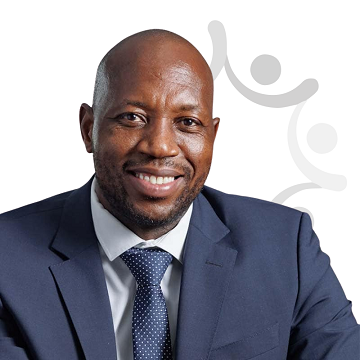
Simon Baloyi, Energy Council Board Chair reiterated that the council remains fully committed to working with all spheres of government to support the implementation of these critical reforms, which are foundational to ensuring investor confidence, enabling economic growth and creating jobs. He emphasised the importance of the DEE’s leadership role as the policy authority and the entity responsible for overseeing the implementation of reforms. Baloyi confirmed that the council remains committed to engaging constructively, transparently and in good faith to support the delivery of an electricity system that is affordable, secure and sustainable for all South Africans.
For more information visit: www.energycouncil.org.za