Duncan High, Processing Equipment Technology Manager for Haver & Boecker Niagara, highlights the advantages of adopting advanced vibrating screening technologies, including double eccentric screening with shear rubber mounts to improve screening performance and productivity.
Click to download and read pdf
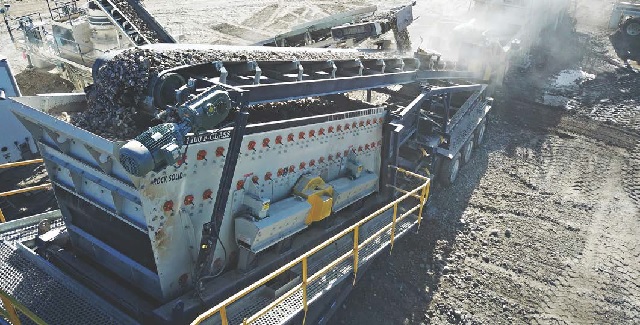
Integrating eccentric screening technology, state-of-the-art screen media, and diagnostic tools can prevent blinding, pegging, carryover, and contamination, thereby improving screening performance, productivity, and profitability.
Global demand for aggregates and mining materials is on the rise, with the industry expected to grow by nearly 4.2-billion tons over the next 15 years. That’s a lot of material, which means producers need efficient equipment to meet specifications and turn a meaningful profit.
Every ton of material must pass through at least one vibrating screen, so ensuring the equipment’s efficiency is critical to the operation’s success. The good news is that technologies are available today to improve screening productivity. Integrating cutting-edge systems such as eccentric screening technology, state-of-the-art screen media, and diagnostic tools can prevent blinding, pegging, carryover and contamination, improving screening performance, productivity and profits.
Double eccentric screening action
Vibrating screens engineered with a double eccentric shaft assembly deliver a constant stroke to maintain g-force during material surging. The double eccentric shaft design forces the screen body to follow the shaft's motion. As the shaft rises, the counterbalance weights move in the opposite direction, creating a force equal to that generated by the body. As a result, the forces cancel each other out, maintaining a consistent positive stroke that handles material volume spikes without losing momentum.
One producer in Western Canada quickly saw the benefits of switching to double eccentric screening technology after replacing two horizontal vibrating screens with one double eccentric, four-bearing inclined vibrating screen. Changing their equipment helped eliminate surging, blinding, pegging, and material contamination while increasing production by 25%.
Reduce damaging vibrations
A vibrating screen’s operation can significantly affect its surroundings. The metal springs on a traditional concentric vibrating screen, for example, can be noisy to operate. This metal-to-metal, up-and-down or side-to-side movement can cause excessive noise and vibration.
To resolve this problem, double eccentric technology uses shear rubber mounts strategically designed to minimise lateral movement. The rubber mounts reduce noise while maintaining smoother operation, even under extreme conditions such as overloading, surging and starting or stopping under load.
The use of eccentric technology virtually eliminates vibration in fixed structures or chassis when used with portable equipment, protecting the integrity of the machine. This also enables producers to use multiple eccentric vibrating screens within a single structure, boosting productivity. Operating multiple concentric machines within a structure can generate vibrations that negatively affect quality and increase safety and downtime risks.
A leading phosphate producer in North America, producing nearly 8 million tons per year, increased screening area by 60% percent by transitioning to double eccentric equipment. The mine features a six-story screening plant with multiple vibrating screens operating 24/7. Multi-story screen houses are common in the industry but can pose structural concerns due to the vibrating screens’ size, capacity and force. Opting for double eccentric technology eliminated those concerns.
Improve stratification
Combining advanced eccentric screening technology with the best screen media for the application is a recipe for success. Specifically, polyurethane screen media can be a valuable asset for any operation seeking to prevent blinding and pegging, improve material stratification, and increase wear life.
Polyurethane media offers the best combination of open area and wear life for both wet and dry applications. In particular, open-cast polyurethane screen media can deliver 1.5 to 2 times the wear life of injection-moulded products. Poured, open-cast polyurethane permanently hardens when cured to maintain its chemical properties and improve wear life. Alternatively, injection-moulded screen media can soften as temperatures rise, reducing wear life. Polyurethane screen media also features tapered openings to reduce the risk of blinding and pegging.
The solution to improving material stratification is to select the optimal screen media mix to ensure all screening phases operate correctly. A screen media company that offers a variety of screen media types can help evaluate how material progresses through the three screening phases – layered, basic and sharp – and provide recommendations on the best screen media for an application. Producers can customise the screen deck by selecting screen media that maximises productivity for each phase, blending the best combination of open area and wear life.
Prevent equipment damage
A vibrating screen needs regular checkups to run optimally. Vibration analysis and diagnostic systems designed by OEMs for vibrating screens are reliable tools for maintaining the efficiency and longevity of screening machines. To ensure optimal productivity, operations can partner with an OEM that specialises not only in manufacturing equipment but also in providing additional diagnostic tools, product-specific knowledge, and years of engineering experience.
Utilising vibration analysis software, for example, enables mining and aggregates operations to monitor a vibrating screen’s performance in real time, detecting issues before they lead to diminished performance, decreased efficiency, and increased operating costs. The most robust systems incorporate eight wireless sensors that magnetically fasten to key areas of a vibrating screen, measuring orbit, acceleration, deviations, and other key data points related to the machine's condition. The sensors send real-time data wirelessly for analysis, ideally by an OEM-certified service technician who can provide a detailed summary and recommendations.
Some manufacturers use vibration analysis to offer impact testing (a bump test), which helps ensure proper machine calibration and promotes efficient operation. Impact testing involves striking the machine at key points with a dead-blow hammer while it is off. Vibration analysis sensors are installed at key locations on the vibrating screen, and a technician measures the machine's natural frequency.
Based on the results, engineers can adjust machine parameters to avoid resonance, which can reduce productivity, damage vibrating screens, and pose safety risks. It is important to note that the natural frequency can shift over time as components are repaired or replaced, so impact testing should be conducted regularly. By incorporating impact testing into an operation’s regular maintenance routine, producers can ensure optimum screening performance and equipment reliability.
Another advanced diagnostic tool is condition monitoring, which uses modern algorithms and artificial intelligence to monitor the health of vibrating screens. The system utilises permanent sensors that monitor the equipment 24/7 to capture real-time information and provide alerts via e-mail immediately upon the first sign of a potential problem. By continuously monitoring the vibrating screen's acceleration, specific systems can forecast the equipment’s dynamic condition at intervals of 48 hours, 5 days, and 4 weeks. With consistent use, condition monitoring software will accurately identify and predict critical issues, advise on when to schedule maintenance, and focus on the right areas during planned downtime.
By using diagnostic programs for regular analysis and engaging in predictive and preventative maintenance, operations will see minimised downtime through faster problem-solving, lower repair costs, and greater peace of mind.
Increase profits through advanced technology
The development of the double eccentric screen and other screening technologies provides operations with innovative, cost-effective ways to increase profitability and efficiency. By integrating the right equipment, screen media, and vibration analysis systems, producers can achieve higher uptime, improved quality, increased productivity and greater profits.