BBE’s Russell Hattingh sees growing interest in using electric vehicles (EVs) in future underground mining: to meet increasingly stringent emissions requirements, improve efficiency and reduce ventilation demand. In this article, he highlights the need to thoroughly evaluate the benefits and consequences of transitioning to EV use.
Click to download and read pdf
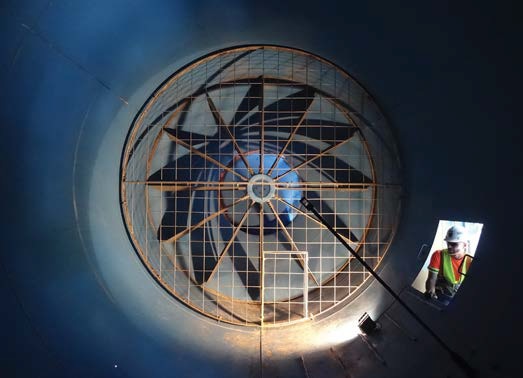
Contaminants released into the mine ventilation system must be diluted and exhausted from the mine, and the only way to do that is to increase ventilation levels.
“Across the mining industry, the transition to electric vehicles (EVs) is becoming increasingly topical. While we are seeing growing interest on South African roads, there is similar interest towards EVs for underground mining, with trucks and load-haul dumpers (LHDs) being particularly interesting candidates to switch to electric drives,” begins Russell Hattingh.
“Interest in replacing diesel-powered equipment is driven largely by the potential health and cost benefits. With the increasing mechanisation of mining operations, the use of diesel-powered equipment has continued to grow. While diesel fleets offer many operational advantages, the products of combustion emitted from the exhaust present significant challenges. Diesel exhaust gases and diesel particulates, formed through the incomplete combustion of diesel fuel and commonly referred to as diesel particulate matter (DPM), pose a substantial health risk. Exposure to these emissions can result in overexposure to toxic gases and carcinogenic particulates, with long-term health implications.”
“Traditionally, exhaust gas fumes and particulates have been managed through dilution ventilation by increasing the air volumes supplied to the mine,” he explains.
To meet ever-tightening legislative requirements, underground miners using diesel engines must invest in cleaner vehicles with higher Tier emission ratings and install diesel particulate filters (DPF) to keep combustion products out of the ventilation stream. They also now need to use higher-quality diesel with lower sulphur levels. “This shift is already happening, because mining companies care about the safety and long-term health of their workers,” says Hattingh.
“The bigger and more mechanised the operation becomes, the more mining owners need to care because, ultimately, it becomes material. Not only does it affect the health and productivity of underground miners, but it also requires more surface ventilation to handle dirtier air. If not captured or treated at the source, contaminants released into the mine ventilation system cannot be easily removed from the underground air stream. Instead, they must be diluted and exhausted from the mine, and the only way to do that is to increase ventilation levels,” he explains.
“More air means more shafts and tunnels and more fans. As electricity consumption increases, operational costs rise, making the dilution approach an expensive way to eliminate emissions. So the obvious first solution to look at is to improve the engines used underground, so they consume less fuel and produce less exhaust gas,” he argues.
On transitioning to EVs, he says that a fleet of underground mining machines is not a consumable that can easily be swapped out for a better option, though. “Investments typically target a 7 to 10-year life or, in lower-cost operations, longer. So long-term planning has to come into play when considering any switch, be it to more fuel and emissions-efficient engine options or phasing out all diesel vehicles as part of a long-term migration towards full electrification,” he tells MCA.
Challenges to electrification
Replacing an underground diesel fleet with electric vehicles is not a silver-bullet solution, Hattingh continues. “Electrification has its own issues. First off, an electric truck or LHD is still more expensive than a diesel equivalent. In addition, EVs need to be charged, so the charging infrastructure has to be carefully planned. You cannot bring these vehicles to the surface every evening to recharge them, so a dedicated charging station is needed underground. This requires additional electrical infrastructure with sufficient capacity to charge multiple vehicles simultaneously at the end of each shift.
“Additional batteries are also an option, which can speed up the turnaround time for charging a vehicle and reduce the number of EVs required. Either way, charging an EV is not nearly as quick as filling a diesel fuel tank. And while charging is getting faster, the faster the charge, the higher the heat rejection, which becomes a capacity factor for the ventilation system. The whole charging station has to be ventilated with careful consideration given to airflow management and exhaust air handling,” he says.
The potential risk associated with an EV battery fire must also be taken into account. Battery management systems monitor temperature and actively control charging rates to prevent overheating. A lot of time and effort has been put into these systems to prevent uncontrollable thermal runaway, which can occur if battery cells become critically overheated.
Once thermal runaway starts, however, it is extremely difficult to stop. “This causes a very high fire safety risk that has to be mitigated in underground EV battery charging stations. In the event of a battery fire at a charging station, measures such as dedicated exhaust routes, compartmentalisation, suppression systems, or other emergency ventilation strategies are needed to prevent smoke and harmful gases from endangering miners.
“The large numbers of possibilities involved in mitigating these risks create engineering and infrastructure challenges, which all need to be factored into any evaluation of EV technology,” Russell Hattingh points out.
BBE transition evaluations
“What often drives these developments is legislation relating to DPM and NOx exposure, for example, and the drive to reduce these exposures is already underway in South Africa. The use of EVs has the potential to reduce many of these concerns. As a result, mine operators are working closely with OEMs to develop practical electric vehicle and battery charging solutions suited to the mining environment, to reduce significantly or potentially eliminate DPM and NOx exposure,” he continues.
In terms of direct operating costs, EVs are known to be more energy-efficient and generate less heat in the mine environment than diesel trucks and LHDs, resulting in significant long-term savings.
“Saving comes at a cost, though, largely in terms of the infrastructure changes required and the capital investment in the EV fleet and the long-term cost equations obviously need to be favourable.
Ultimately, Hattingh believes that in time, this transition will definitely happen in some mines. Reducing exposure to mining personnel makes the underground environment safer and more comfortable. In addition, EVs can significantly reduce refrigeration demand compared with diesel fleets. However, the reduction in ventilation demand is often less pronounced because minimum air-velocity requirements govern airflow underground. As a result, the overall benefit depends strongly on the mining method. “This is particularly relevant in mechanised mining environments using large fleets of underground vehicles, typically where mining methods are used to mine thick ore body deposits.
“The benefit depends on many, many aspects, though, the mining method, how big the existing fleet is, dust loading, whether it's a greenfield or brownfield project, and much more.
“So, as one has to do with any displacement technology, we need to do our homework to see if it's worthwhile: in terms of cost benefits, miner safety, legislation, the environment and long-term mine sustainability,” concludes Russell Hattingh.