‘Breaking New Ground: Shaping a Successful Future for Mining’ is a new whitepaper from Shell that explores the biggest challenges facing miners over the next 3-5 years and examines how they can overcome them.
 Miners face an unprecedented challenge. The world relies on them for the materials that power today's advanced digital businesses, while supporting the drive towards a zero-emissions tomorrow.
By 2050, annual copper demand will more than double.1 And decarbonising transport alone will require a six-fold increase in global lithium production.2 Whether it is the transition to electric vehicles (EVs) or renewable energy, mining is crucial to a more sustainable, advanced, digitalised future.
Additionally, miners are under pressure to deliver on their own commercial and sustainability goals. They must produce more while emitting less. And with this, the challenge lies in finding feasible ways to achieve this.
The ‘Breaking New Ground’ white paper from Shell explores the biggest challenges facing miners over the next 3-5 years and examines how they can overcome them. Building on more than 500 interviews with mining decision-makers worldwide, it provides insights into how mines can operate more productively and sustainably – while accelerating the digitalisation of operations and addressing a growing skills shortage.
This Shell paper identifies four challenges that miners must overcome to meet society and industry’s needs and achieve miners’ own ambitions.
- Delivering more cost-effective site operations
Cost is miners’ number-one priority over the next 3-5 years. One in three (33%) say the rising cost of consumables such as fuel and lubricants will have the biggest impact on site operations.3 One in five (19%) identify supply disruption and production shortages (18%) as major concerns.3
Despite this, 21% believe that addressing shareholder demand to increase profits and maintain low operating costs will remain a top priority for their business.3 This is especially challenging as soaring inflation and talent costs are significantly increasing mining overheads, squeezing productivity, and delaying expansion plans.4
There might be no easy route, but working towards more cost-effective operations is a journey that all miners will need to make if they are to set themselves up for success in the future.
- Reducing CO2 emissions and environmental impact
In addition to meeting commercial targets, miners must prioritise sustainability. Pressure to reduce CO2 emissions is the factor that will have the biggest impact, say 26% of miners. But emissions are not the only element they need to address.3
Water and soil contamination are also key issues. A quarter of miners cite societal expectations (25%) and regulatory influence (23%) as factors shaping their operations.3 Miners are also facing increasing demands to improve the way they assess risks and opportunities, and to become more rigorous in their reporting, partially to avoid any accusations of greenwashing.4
The opportunity miners should not overlook is how more sustainable operations can also be more profitable. Businesses with higher environmental, social and governance (ESG) ratings on the MSCI index, a leading provider of investment research and tools, showed a 10% higher-than-average shareholder return.5
- Accelerating the digitalisation of mining site operations
Because of its importance in driving productivity and sustainability, the digitalisation of mining is accelerating. Miners are looking to new digital tools and technologies to help them build smarter mines, automate processes, and unlock efficiency gains. Three-quarters (75%) are already investing in digital tools to drive operational efficiency, or plan to do so in the next two years.3
While digital technology is already a key enabler for mining, it will continue to be a disruptor as well. Roughly a quarter (24%) of miners see the emergence of technologically advanced equipment as a significant change they must adapt to in the next 3-5 years.3
The next challenge will be adopting the tools behind smart mining to scale. Not only could this help to reduce emissions by 20%7. It could also help the sector save up to $390 billion each year.8 Digitalisation is key to improving operational efficiency so that mines can meet their commercial and sustainability goals.
- Addressing the shortage of new skills required across the sector
Digitalisation can significantly improve mining productivity and sustainability. But it is also a challenge. Miners face an acute skills shortage – particularly in digital.
The more mines bring digital tools onto their sites, the more they need people with digital and data skills. Along with the gathering transition to data-centric, autonomous, and remote operations, this shift is changing the skills profile needed for mining.5
One in five (20%) of the mining leaders surveyed expressed concern about their workforce lacking these digital skills or qualifications.3 Most mines (78%) are working to train their workforces on digitalisation and sustainability practices to tackle the issue, but 75% are still not confident in their ability to resolve the current labour shortage.3
Cross-sector collaboration is essential to mining success
Three-quarters of miners do not feel well-equipped to tackle rising costs, and 71% say they are not ready to handle the pressure to reduce CO2 emissions.3 The reality is that they face a complex range of issues, and no single site or business can master the challenges alone.
Collaboration will be critical to future mining success. Miners must work closely with expert partners to deliver the solutions and support needed to improve operational efficiency. Similarly, it will take sector-wide cooperation to scale up and accelerate the decarbonisation of mining.
Driving operational efficiencies through effective maintenance
The whitepaper demonstrates a clear path forward for mines to break new ground and achieve their future objectives. The common element of efficiency will be vital in helping miners to understand that they do not have to compromise their commercial or decarbonisation ambitions. An efficient mine can be both productive and sustainable.
To control rising costs and deliver greater sustainability, miners must operate more efficiently with the equipment they have today. Equipment health is critical in driving productivity and sustainability. And while the cost of consumables such as lubricants might be rising, they can still deliver savings when used effectively, while also having the potential to reduce both emissions and total cost of ownership (TCO). Therefore, lubricants have a much greater impact on overall site performance than their cost alone.
However, 60% of miners agree that senior stakeholders do not give lubricant selection and management the importance it deserves.3 A scientific approach to equipment lubrication and a data-driven lubrication regime, together with high-performing lubricants tailored to the task and the application, can extend equipment life, improve productivity, and minimise unplanned downtime. Additionally, the better the lubrication regime, the less energy is lost due to friction. This improves fuel efficiency, which reduces emissions. Adopting carbon-compensated and biodegradable lubricants can help further reduce emissions.
Moreover, working with the right lubrication partner, mines can build a digital ecosystem to gather performance data from critical equipment and subsystems. Using this data — both historical and real-time — miners can improve the performance and reliability of equipment across the whole operation — while also tackling the growing skills gap in the industry through collaboration with trusted partners.
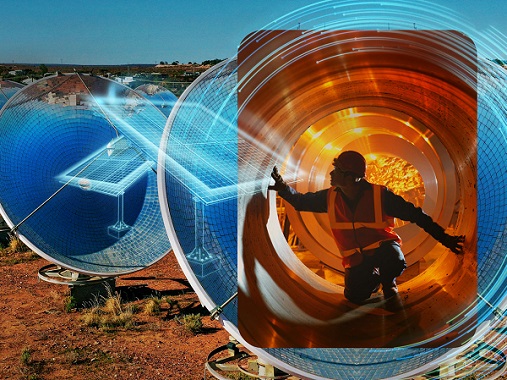
Shell’s ‘Breaking New Ground: Shaping a Successful Future for Mining’ whitepaper can be accessed by clicking this cover image.
Article Sources
- S&P Global. “Looming Copper Supply Shortfalls Present a Challenge to Achieving Net-Zero 2050 Goals, S&P Global Study Finds.” 2022.
- Mining Weekly. “Mining vital in net-zero transition.” 2023.
- ‘Breaking New Ground: Shaping a Successful Future for Mining’: A Shell white paper based on a survey of 561 decision-makers in the mining industry across 7 markets conducted in July 2022. The survey was commissioned by Shell Lubricants Solutions and conducted by research firm Edelman Intelligence.
- EY. “Top 10 business risks and opportunities for mining and metals in 2023.” 2022.
- Frost & Sullivan. “Key Trends and Impact on the Metals & Mining Sector.” 2023.
- Shell. “Reducing the Total Cost of Ownership in Mining & Quarrying.” N.D.
- WEF. “Digital solutions can reduce global emissions by up to 20%. Here’s how.” 2022.
- Mining Digital. “Top 10 technologies and strategies in mining.” 2022.
- Charge On Innovation Challenge. “Winning Technology Innovators Announced.” 2022.
- IBM. “Energy giant Shell eyes net-zero emissions.” 2022.