Battery metal development company, Giyani Metals Corp reports robust economics following results of the feasibility study for the K.Hill battery‑grade manganese project in Botswana.
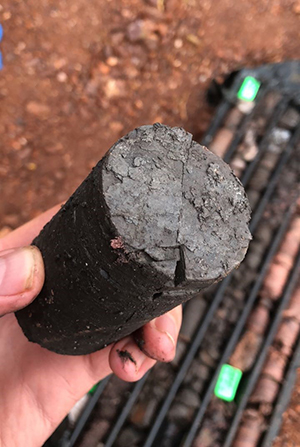
The FS has been prepared by SRK Consulting, as lead, on an integrated mining and processing operation for the onsite production of high‑purity manganese sulphate monohydrate (HPMSM) directly from manganese oxide ore mined at K.Hill. HPMSM is a refined precursor material used in the production of cathode powders for lithium‑ion batteries (LI Batteries) deployed in electric vehicles (EVs).
K.Hill’s total Indicated Resource of 2.1 million tonnes, estimated by SRK in February 2022, was evaluated for the purpose of the FS and almost 100% of the Indicated Resources have been converted into 2.0 Mt of Probable Reserves. The Inferred Resource of 3.1 Mt for K.Hill, estimated by SRK, is in the process of evaluation to be upgraded into the Indicated Resource category. New Mineral Resource Estimates for K.Hill and the nearby Otse manganese oxide prospect are currently targeted for completion in H1 2023.
Highlights:
- Robust economic returns: a post‑tax net present value (NPV), at an 8% discount rate, of US$481M (C$649M) and a post‑tax internal rate of return (IRR) of 28%.
- Low capital intensity for what will be one of the largest HPMSM projects in the world: estimated initial capital expenditure of US$281 (C$379M), including contingency of US$32M (C$43M), for a fully integrated battery raw materials project.
- Strong free cash flow: net free cash flow over the life of the Project is estimated at US$1,093M (C$1,476M), equivalent to US$99M (C$134M) per year with first commercial production in 2025.
- Significant geological upside offers potential to expand Project and extend mine life: exploration work to upgrade the 3.1 Mt of Inferred Resources in the K.Hill southerly extension is progressing and the addition of these resources and the Otse prospect provides the potential to expand the Project in future years and extend the mine life significantly.
- Operational advantage of higher grade ore and conventional mining: Giyani's Probable Reserve grade of 18.9% manganese oxide (MnO) is the highest among its listed battery‑grade manganese peers and underpins a scalable operation with an initial throughput of 200 thousand tonnes (kt) ore production per annum, offering potential future production capacity expansion.
- LI Battery demand expected to increase significantly: CPM Group LLC (CPM), an independent research and consultancy company, projects demand for HPMSM in LI Batteries to grow by nearly 30 times between 2021 and 2036.
- Pathway to becoming a low‑carbon producer: Giyani’s HPMSM production process directly from manganese oxide ore does not require power‑intensive calcining or electrorefining and the planned integration of 4.5 MW of solar power contributes to a very competitive Scope 1 and 2 emissions footprint of only 1.4 kg of carbon dioxide equivalent per kilogram of HPMSM (see Giyani News Release of September 29, 2022).
- Strong environmental, social and governance (ESG) credentials: the Project’s development strategy has been formulated around the mitigation hierarchy of “avoid‑minimize‑mitigate” with initiatives such as renewable energy integration, water self‑sufficiency and dry stack tailings management to be included in the Environmental and Social Impact Assessment, currently estimated to be completed and submitted to the authorities in Botswana in Q1 2023.
- Optimization work opens opportunities for enhancing Project value: in addition to potential life-of-projectextensions through further exploration success, work is ongoing to lower operating costs, particularly related to certain consumables affected by supply chain disruption and global inflation.
Jonathan Henry, executive chair of Giyani, commented:
Our flagship K.Hill manganese project has the potential to be one of the most significant and largest battery-grade manganese producers globally. The feasibility study shows how far the scope of the Project has developed since the April 2021 preliminary economic assessment and is the next step to bringing this project into production. These results demonstrate the robust economics of K.Hill, with our ongoing work also highlighting the expansion and optimization potential.
Giyani has an early-mover advantage to meet the growing demand for HPMSM from the EV sector, which is prioritizing responsible, low‑carbon producers outside of the dominant Chinese supply chain. Our hydrometallurgical process, which treats our captive ore without the need for calcining or electrorefining, saves both cost and carbon emissions, as evidenced by the results of the recent life cycle assessment for K.Hill.
Alongside the optimization work that will be completed after the FS release, which will review opportunities to enhance the Project’s value, we continue to evaluate the 3.1 Mt of Inferred Resources at K.Hill and potential additional resources at nearby Otse still to be consolidated into the Project plan, with the view to extend K.Hill’s operating life and production capacity significantly.
In parallel to the FS work, the team has progressed the construction of our demonstration plant and it remains on track to produce HPMSM samples for testing by potential off‑takers in H2 2023.