By Martin Jackson: Head of Battery Raw Materials at CRU
Industry research firm CRU lays out the short-term supply-demand fundamentals of the major lithium-ion battery metals.
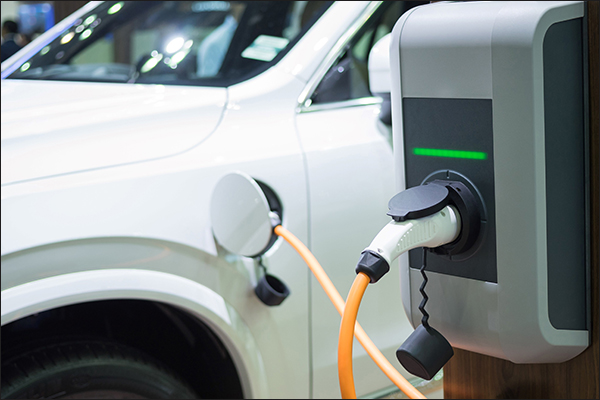
Volatility and complexity risks investments in the battery market
The energy transition is driving unprecedented demand for lithium-ion batteries and their constituent raw materials. In this decade, the largest end-use sector is battery-electric vehicles (BEV), although stationary energy storage is rapidly growing in line with the build out of renewable energy capacity.
However, the rate of growth in demand is slowing down in the short term, inventories are high across the supply chain, shifts in battery technology are enabling material thrifting, and mined supply of materials is surging from new sources. The combination of these is pushing prices lower, enabling cheaper electric vehicles and energy storage systems. This in turn will increase the risk that growing demand will overshoot supply again in the longer term.
Supply overshoots demand across the supply chain
Battery material prices were elevated in 2022 as demand overshot raw material supply, which subsequently led to a slowdown in early 2023. In China, the world’s largest BEV and battery market, on this occasion the dip in demand was due to a combination of an early Spring Festival and the expiry of BEV purchase subsidies. At the same time, battery manufacturers built up burgeoning inventories of battery cells, and this rippled up the supply chain into much lower spot market activity for raw materials.
A seasonal lull in BEV sales is to be expected and should not be extrapolated into the long term, but the level of inventories in China will take time to draw down on, and consumers have reduced their spending due to macroeconomic factors. From a demand perspective, this contributes to the bearish outlook into 2024.
Shifts in battery technology are enabling thrifting and substitution of battery materials, softening the demand outlook
At the same time, improvements to the electrochemical performance of cathode materials and efficiency elsewhere in the battery and vehicle powertrain, are altogether making a positive effect on energy density. This in turn means less material is needed for the same battery capacity.
This will continue for many years, but in the short term another trend is having a more profound effect on nickel and cobalt demand, namely the uptake of low-cost lithium-iron-phosphate (LFP) batteries.
Thanks to technical advancements, the traditional disadvantage of low energy density and EV driving range of LFP is now a thing of the past. Combined with a robust ramp-up of the supply chain, LFP now accounts for 60% of battery production in China. Batteries destined for energy storage in China are virtually all LFP.
The damage to nickel and cobalt battery demand in China will almost certainly last into 2024, although it will take longer for LFP to make an impact in other markets. Chinese NMC precursor producers have been aided by substantial orders from South Korean cathode producers, which in turn are exporting to Europe and North America. On the global level, NMC batteries will continue to maintain the dominant share in 2024.
Supply: Slower demand growth has combined with a supply surge as new developments in Indonesia, Zimbabwe, Brazil, and Canada come online.
- For lithium, as large mine investments continue to be announced despite a rapid fall in pricing, oversupply is increasingly a risk.
- For cobalt, thrifting and substitution has lowered intensity of use drastically. In parallel, growing supply from African miners and Indonesian laterite operations is pushing the market into oversupply.
- For nickel, production from laterite resources in Indonesia continues to grow more rapidly than nickel-based battery demand can absorb.
Lithium deficit rapidly narrows
Booming prices over the past couple of years have encouraged a large contribution of supply from high-cost sources. The tables are now turning and not in the favour of producers.
Forecast supply growth continues to exceed demand in the short term. Overall, the market is still tight, but operators in the supply chain are struggling to draw down on built up inventories.
In the short term, setbacks for Australian producers have been more than offset by miners in emerging jurisdictions – Brazil, Zimbabwe and Canada. Several key projects have accelerated their development schedules, and these mines are now already in production. For example, Chinese investment in southern Africa is adding meaningful volumes from mixed petalite and spodumene resources.
The result is that a supply surplus will become apparent in 2024. This will place downward pressure on prices and, beyond this time horizon, will test the feasibility of producers and projects.
Cobalt market surplus will weigh on prices as battery demand decelerates
Cobalt is almost solely sourced as a by-product, with less than 5% coming from primary mines. With weak prevailing market conditions, new primary cobalt producers are unlikely to come online in the medium term, edged out by copper and nickel miners. During this period, robust copper and nickel prices will incentivise producers, and hence ensure that an abundant supply of cobalt continues to flood the market.
Restocking requirements will bring buyers back to the market, but prices will remain under pressure into 2024. A sustained period of oversupply will mean that, in real terms, metal prices will persist at some of the lowest levels seen for the past 15 years.
The outcome of the looming presidential election in the DRC has the potential to swing the market into a deficit, but this is unlikely to be seen in the short term.
Nickel production from laterite resources in Indonesia continues to grow
Indonesian HPAL producers continue to ramp up production despite an oversupplied market. Their cost-competitive product, MHP, continues to see firm appetite from buyers in the Chinese market.
Nickel sulphate prices have dropped 18% this year to September. There has been a mild degree of restocking but, overall, there is ongoing weakness in demand from the battery sector. Although high-nickel cathodes are increasingly replacing low-nickel chemistries, intensity of use in Li-ion batteries has fallen 40% over the last three years due to the rise of nickel-free LFP batteries.
EV manufacturers outside China are equipping with high-nickel batteries, but BYD and Tesla, both of which make heavy use of LFP, will continue to lead the market in 2024.
Battery metals will boom again
Large scale investments into the BEV and battery supply chain continue to be made in anticipation of further growth. Regulation and policy have always been the catalysts for this.
There will continue to be periods of short-term volatility in the next few years, but sustained low prices of raw materials will enable cheaper electric vehicles and energy storage systems. This in turn will accelerate demand and make it more likely that markets swing back into deficits in the long term.
This is not necessarily a good thing – volatility and extreme prices are not good for any investments – but as the battery industry grows, those periods should become less frequent and mined supply will be increasingly diversified.