Rainbow Rare Earths has successfully built, commissioned and commenced pilot scale operations as the final phase of process test work for the Phalaborwa project in South Africa.
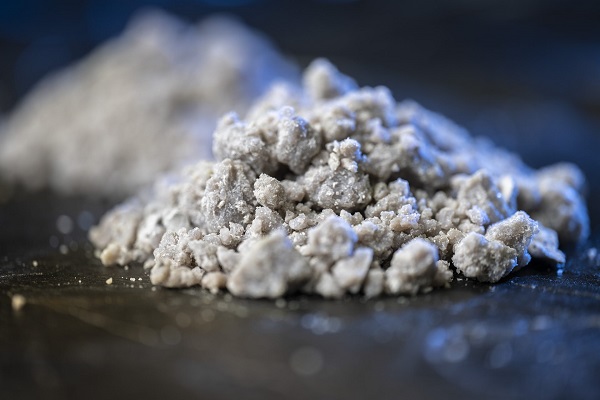
This unique project will be the first commercial recovery of REE from phosphogypsum, a waste product from phosphoric acid production, which means that many of the costs, risks and long timescales associated with traditional mining projects are eliminated.
- This final phase of test work includes the primary flowsheet pilot operations in Johannesburg and off-site solvent extraction (SX) test work to confirm the SX separation process to deliver separated neodymium and praseodymium (NdPr) oxide and the SEG+ Group (a mix of medium and heavy rare earths) at >99.5% purity
- Rainbow’s pilot plant will operate the fully optimised Phalaborwa leach circuit, feeding pregnant leach solution (“PLS”) to a pilot scale continuous ion exchange (“CIX”) and impurity removal circuit developed using Rainbow’s intellectual property (“IP”) and deliver the bulk feed sample for off-site SX test work
- The pilot plant will operate through H1 2026 and will produce data that underpins the process design for the Definitive Feasibility Study (“DFS”) and third-party validation for project finance
- Outlook for rare earth element (REE) market remains strong in 2026, with the West remaining focused on developing alternative supply chains and NdPr oxide pricing having recently risen to over US$100/kg
The large-scale pilot operation will run the optimised primary flowsheet with a leach process producing sufficient volumes of PLS to allow for optimisation of the CIX and impurity removal processes, as well as delivering the bulk feed sample for off-site SX test work. It will also provide the data that underpins the DFS, including process flowsheet development, mass balance, equipment sizing and capital and operating costs, and will be used as the basis for third-party validation for project finance.
George Bennett, CEO, commented: “This new piloting operation is the final phase of process test work for Phalaborwa, as it will demonstrate the project flowsheet that has been considerably updated over the past 18 months via a number of key optimisations. These efficiencies further reinforce the project’s position at the bottom of the industry cost curve to deliver high-purity (>99.5%) separated NdPr oxide and SEG+ products. The pilot operations are important to the finalisation of the DFS this year and ensure the long-term success of the Phalaborwa project. We are very proud of our technical team, which has commissioned this pilot plant quickly and efficiently. We are looking forward to showing the operation to investors and other market participants at the two site visits in early February prior to the Mining Indaba conference. The outlook for the REE market remains strong going into 2026, with pricing for the light REE NdPr having effectively doubled since the lows of 2025 to over US$100/kg, following the major price rises we have seen already for the medium and heavy REE that are subject to Chinese export controls. Phalaborwa is a unique project in that it will produce the full range of economically and strategically important REE, which is why it has been backed by the US International Development Finance Corporation as a key contributor to supply chain resilience.”
Johannesburg Pilot Plant
The pilot plant is operating at Rainbow’s in-house laboratory premises located at Mintek, South Africa’s national mineral research organisation and one of the world's leading technology organisations specialising in mineral processing.
This operation is the second pilot plant to be run by Rainbow as the Company has made significant progress over the last 18 months towards the finalisation of the Phalaborwa flowsheet, which is expected to be the first project globally to commercially produce REE from phosphogypsum.
Since the first pilot plant operation was concluded in mid-2024, there have been a number of important changes and optimisations made to the Phalaborwa flowsheet. As previously announced, Rainbow has achieved a significant reduction in volumetric flow from the leach circuit to the separation circuit via the incorporation of a CIX circuit for impurity rejection, as well as subsequent impurity precipitation steps. These two steps have been a major driver of project efficiency using Rainbow’s IP and have enabled simpler and more cost-effective SX circuits for separation than are the industry norm.
The leach process has been fully optimised via large-scale locked cycle tests that have yielded several benefits, including:
- the leach process has been reduced from three stages to two;
- the residence time has been reduced from 32 hours to 8;
- the number of filters has reduced from 14 x 180m2 to 7 x 163m2; and
- leach heating requirements are significantly reduced.
The above optimisations are all expected to positively impact capital and operating costs.
The pilot plant will deliver the bulk feed sample for off-site SX test work. This will allow Rainbow to finalise the product specifications for the planned separated NdPr oxide and SEG+ products, which is an important component of concluding offtake agreements for these in-demand products.
This final pilot campaign will continue through H1 2026 whilst the work to finalise the DFS runs concurrently to enable the study to be completed this year, as planned.