Everyone knows energy efficient light-emitting diode (LED) light bulbs are the best lighting option today, lowering our energy bills and freeing up capacity on the grid. Plus, LED bulbs are more environmentally friendly because they last longer and don’t contain any mercury like fluorescent and compact fluorescent bulbs. With so many positives to sell these new LED light bulbs to consumers, why would lighting companies in South Africa feel it’s necessary to mislead consumers with exaggerated claims on the box? Surely, lower cost, longer life, zero mercury and better-quality light are enough on their own – but apparently not.
 Testing shows the lighting industry isn’t telling the truth
LED light bulbs were purchased from normal retail shops like MICA Hardware, Pick n’ Pay and Makro and they were tested in a lighting laboratory to see if the claims on the box were accurate.
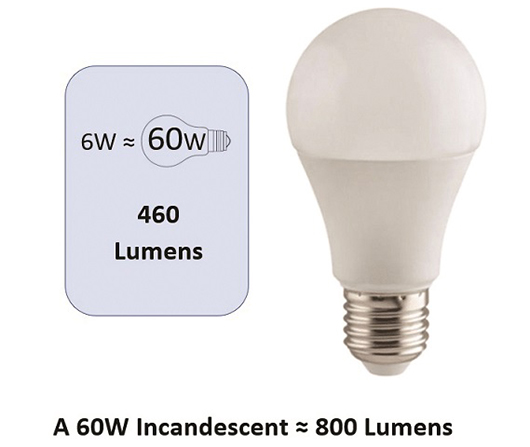
These boxes contain a lot of information, including terms and numbers that are not always familiar to us (the consumer) – like beam angle or colour temperature. But one thing that is clear to everyone is the light output equivalency. With this infographic, the company is telling us that this new LED light bulb will give you the same light output that you were used to from the old incandescent technology. For example, the LED box might show a picture of a 60 W incandescent bulb and say that it produces the same amount of light as that old, and very inefficient, light bulb.
The testing of such claims on LED lamps has found that manufacturers are claiming light output equivalency to incandescent bulbs that are more than 50% higher than they actually produce. These misleading claims can lead to very disappointed consumers – you get home thinking your new 7 W LED bulb will produce the same amount of light as a 60 W incandescent you had in the past, and yet your room isn’t bright enough.
Take ‘Brand A’ for example, they have a bulb which is very popular. The 7 W model was tested and found that the packaging was exaggerating the brightness of this lamp by 53% through the claim that it was equivalent to a 60 W incandescent bulb. In Europe, the government requires suppliers to guarantee 806 lumens of light from the LED bulb before they can claim they are the same as a 60 W incandescent – but our testing found this lamp in South Africa was only producing 524 lumens.
And Brand A isn’t the only problem here. Samples of lamps were also purchased and tested under the Brand B (7 W), Brand C (6 W) and Brand D (6W). The worst offender was Brand B, who overclaimed its light output equivalency by 68%. Brand C exaggerated its incandescent lamp equivalency by 43% and Brand D overclaimed by 42%. Why are manufacturers doing this? Don’t consumers in South Africa deserve to have clear, accurate information on the boxes of light bulbs so we know what we’re buying?
What is the government doing about it?
The South African government has been working on a national lighting regulation which would stop industry from misleading consumers like this. In March 2021, the Regulator published a draft lighting regulation (VC 9109) that would, among other things, require by law that all light bulb suppliers be honest on their packaging, and not make any false or misleading claims. These findings provide even more evidence that a mechanism is needed to hold industry to account and protect consumers. Needless to say, the electricity supply shortages of 15 years and counting in South Africa should be motivation enough.