SAIChE Member Trisha Govender, whose latest start-up was chosen by WomHub to participate in the Economic Growth Accelerator, talks about her career journey from employee to entrepreneur and encourages engineers to follow a similar path.
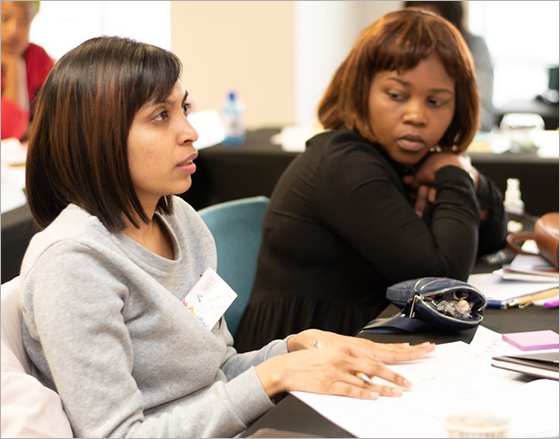
Trisha Govender with Zisanda Poswayo, founder of Izithwalandwe Farming.
I’m a chemical engineer by qualification and eventually landed my dream job in a typical engineering environment, begins Trisha Govender. But I felt I wasn’t being challenged enough, so I expanded my horizon to try to drive the organisation forward into the 4th industrial revolution.
That it didn’t go too well, so I decided to transition from a chemical engineer to a data scientist and this is where my mind-set began to shift. I eventually left my job to focus on a new company I started while actively pursuing opportunities in data science, she says.
When I initially started my company, it was just a way of earning an income whilst looking for a job. I never thought it would change me or the way I think. In the process, I began to read books far away from my usual ‘Harry Potter’ vibe: Rich Dad, Poor Dad – truly if you will only read one book in your life, let it be this; Why ‘A’ Students work for ‘C’ students and ‘B’ students work for the government; The Richest man in Babylon, and others. These books made me view school and workplaces very differently. I realised that the ultimate goal in school is to get us jobs, but it taught us nothing about how to make money without a job. Basically, school teaches us to be good employees, not entrepreneurs.
Bridging the gap between employee and entrepreneur requires a shift in mind-set from job seeker to job creator. Having a STEM degree gives one the required skills to solve problems and develop high growth start-ups. Engineers who decide to remain in research are in the perfect space because universities have also realised the benefit of commercialising research. Therefore, before performing any type of research, check the commercialisation potential. It may just lead to a high growth start-up!
For engineers in the corporate and industry space, my recommendation is start with consulting. But whatever business venture you decide to do, ensure you are capable of scaling up. Side income must eventually overtake current income and when it does, the engineers starting their own companies become job creators.
Entrepreneurship is not as glamorous as it seems, however. Some of the negatives include:
- An engineer who leaves her or his job will ultimately be judged by everyone: friends and family included.
- The word ‘entrepreneur’ ought to be changed to solo-preneur because the journey really is lonely.
- Overheads need to be kept low in the initial stages. This means no fancy car or fancy house in the first few years of business.
- Expect payment delays from client companies: the bigger the organisation the more painful the payment process.
It’s not all bad, though. Here are some positives:
- Going beyond the eight-hour work day is to your personal advantage as it grows your own company.
- Entrepreneurship offers freedom and flexibility with respect to working hours and spaces.
- It creates opportunities for the unemployed, impacts the economy and, depending on the start-up, may advance your field of specialisation.
- Having a company enables owners to pay expenses before paying tax, as opposed to paying tax on a salary before settling necessary expenses.
Many people say having a business is risky, but with ongoing retrenchments in many sectors, I say it’s a bigger risk to depend on a single company for your income. Job stability has really become a thing of the past and many people now depend on multiple streams of income.
I currently have three businesses across various sectors: education; web and software development; data analytics and machine learning, while my latest is a start-up in the circular economy.
By sharing my experiences, I hope to encourage engineers of all ages and sectors towards entrepreneurship, in any capacity, from part time to full-time. Please feel free to reach out to me via LinkedIn to schedule a consultation for planning your own journey and understanding your role in the economy.