Dennis White, of the Southern African Metal Cladding and Roofing Association (SAMCRA) and the Hot Dip Galvanizing Association (HDGASA) argues the case for the new SABS standard for self-supporting metal cladding to be made mandatory.
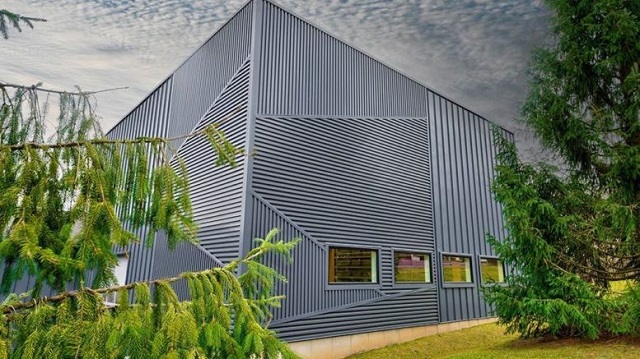
For metal cladding, product strength and the ability to span two supports depend on the steel core thickness, while coating thickness determines corrosion resistance and durability.
Steel roofing is becoming increasingly popular in both commercial and residential spaces. However, many end users, including members of the industrial value chain, are not fully aware of the different steel and protective coating thicknesses. This increases the risk of substitution by inferior, lower-strength products, especially at the price-sensitive lower end of the market.
This is why Dennis White, head of the Southern African Metal Cladding and Roofing Association (SAMCRA) and the Hot Dip Galvanizing Association of South Africa (HDGASA) are lobbying for the new South African Bureau of Standards (SABS) standard that was developed specifically for self-supporting metal cladding, including metal tiles, to be elevated from best-practice to mandatory status, as part of the soon-to-be revised National Building Regulations. This will make the standard a legal requirement.
Old technology, contemporary challenges
Corrugated galvanised steel roofing dates back to the Victorian era, when the sheets were hand-dipped to produce a very thick coating of approximately 79 microns. Today, the steel is pre-galvanised, with coatings ranging from 4 to around 19 microns thick, and often augmented by organic or painted coatings of varying quality and thickness.
Contemporary challenges include draining from photovoltaic (PV) panels or inert surfaces onto a galvanised surface. This accelerates corrosion, producing a characteristic drip-spot pattern. Within 18 months of placing PV panels onto an existing galvanised roof, rust spots appear. SAMCRA and the South African Photovoltaic Association are now developing a joint code of practice to address this.
Another challenge revolves around preventative maintenance: “If there is proper preventative maintenance, a roof will virtually last forever. However, if reactive maintenance is performed only after a leak, it is too late. That can be a very costly,” White observes.
Safety and quality concerns
In South Africa, one of the biggest concerns is the thickness of both the steel core and coating on hot dip galvanized steel sheeting typically used for informal, sub-economic housing: “Currently, material sold into this sector by unscrupulous dealers is 0.18 mm thick, with a 4 micron galvanised coating, compared with 0.46 mm of steel with a 14 micron coating necessary to satisfy National Building Regulations. People are being misled about what they are purchasing.
“This reduces the quality of the product to a point where it is no longer safe. There is a mandatory national standard that specifies the forces sheeting has to withstand, but unscrupulous dealers ignore this,” White warns.
He explains that a rudimentary structure, or shack, typically consists of a couple of blue gum poles forming the skeleton. The steel sheeting is the so-called weatherproof skin on the outside. The contents of a shack are often made of synthetic fabrics, such as bedding, which burn very quickly at high temperatures. A fire burns through this sub-standard thin metal and jumps from one shack to the next. This is a crucial safety issue.
“That is why we want this new standard to be converted to a mandatory specification, which will make it illegal to sell sub-standard steel sheeting. The committee that is working with this has determined a minimum thickness for the steel core because, when it comes to metal cladding, the strength of the product and its ability to span between two supports relate to the thickness of the steel core, while the thickness of the coating only provides the durability of the product.”
‘Steely’ collaboration
“Collaboration between organisations such as SAMCRA and the HDGASA is crucially important. Not only do we contribute to the development of these critical quality standards, but we also help the broader steel supply chain and industry as a whole understand the real problems arising from poor quality and non-compliance.
“It comes down to two pools of knowledge focused on one particular area: safety and quality. We are a network of specialists and industry associations, staffed by dedicated technical experts, working in close collaboration to keep this ship afloat and on a steady course,” White concludes.