A shift towards structured service level agreements (SLAs) is redefining how conveyor systems are managed with moving operators away from a cycle of breakdown and repair towards proactive performance optimisation.
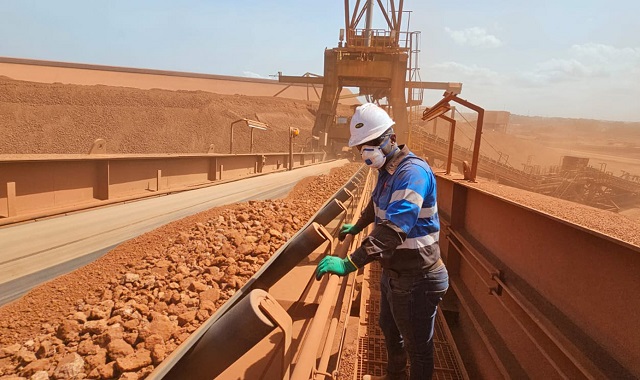
According to conveyor systems specialist Tru-Trac, this trend recognises the central role that conveyors play in high tonnage mining and bulk materials handling operations, where conveyor downtime poses a direct threat to production, safety and profitability.
“Misalignment, belt wander, spillage and premature component wear can quickly escalate into unscheduled stoppages and costly repairs,” AJ van Eyssen, Business Development Manager at Tru-Trac, says. “Production losses alone can run into millions, making conveyor reliability a critical strategic priority for these operations.”
From a field service perspective, Van Eyssen notes that catastrophic events causing serious downtime rarely occur in isolation. Instead, they are usually the cumulative result of neglected fundamentals.
“From my experience, the root causes are usually found in a lack of conveyor maintenance,” he says. “This leads to issues such as conveyor belt misalignment and product carry-back, which in turn create knock-on effects like idler failure and pulley lagging damage, eventually resulting in major breakdowns.”
He emphasises that the operational efficiency of all conveyor components is interconnected and that one problem inevitably leads to another. Inadequate maintenance allows relatively minor issues to accelerate wear across the system, from idlers to tail pulleys and chute structures. Left unchecked, this cascade can result in spillage events, environmental risks and unplanned shutdowns.
“An SLA can change this dynamic fundamentally,” he explains. “By introducing scheduled inspections, continuous monitoring and structured maintenance interventions, operators can have real-time ‘eyes on the plant’ before problems escalate.”
He estimates, for instance, that up to 60% of conveyor belt performance issues could be resolved by identifying belt misalignment at an early stage and addressing it effectively.
This shift in maintenance strategy also reflects a changing relationship between conveyor specialists and end-users. While traditional procurement models in the conveyor space have typically focused on component supply, many mines today are looking for partners that offer holistic solutions.
“Where trackers, idlers or scrapers are delivered as standalone products, the burden of system integration, maintenance and performance optimisation remains with the operator,” Van Eyssen explains. “Tru-Trac’s SLA model represents a marked departure as we are not there just to sell products. We are there to resolve problems and look at the broader picture to provide a 360-degree solution.”
The company’s interventions begin with a detailed on-site assessment, where specialists evaluate conveyor system performance and identify opportunities for improvement. From there, a tailored SLA is developed, aligned to the specific conditions, constraints and priorities of the operation.
David Pereira, Head of Sales at Tru-Trac, highlights the strategic rationale behind this approach.
“The logic behind using SLAs is to move away from ad hoc decisions and reactive maintenance,” Pereira says. “Putting a service level agreement in place gives operators a data-driven basis for decision-making and a clear plan for action.”
Instead of fragmented interventions, he explains, the SLA model introduces structured service delivery, predictable costing and a framework for continuous improvement. One of the most tangible benefits is its ability to drive optimisation efforts.
“Conveyor belts are high-value assets, and even minor inefficiencies can undermine an operation’s productivity and profitability,” he says.
A mining customer in the Democratic Republic of Congo (DRC), for example, has seen plant availability rise dramatically. Tru-Trac began the relationship with a basic SLA, which later evolved into a full maintenance contract. Based on the client’s own records, plant availability improved from 65% to over 90%.
“The result of a tailored SLA is not simply fewer stoppages but a conveyor system that operates more efficiently, more safely and at a lower lifecycle cost,” Van Eyssen concludes. “This allows mines and processing plants to focus on what matters most: sustained and efficient production.”