Traffic management planning has come under the spotlight recently as requirements for Proximity Detection Systems (PDS) and effective risk management interventions become enforceable under the provisions of the Mine Health and Safety Chapter 8 MHSA Act 29 of 1996.
According to Nico Pienaar of surface mining industry association Asapsa, the provisions require positive interventions, risk assessments and meticulous record-keeping in order to remain compliant. Smaller-scale surface mining operations with limited access to resources, or skills, may be particularly prone to underestimate requirements and should therefore work with the association to become compliant.
In a presentation prepared for the association’s regional meetings across the country, no matter the size or scale of an operation, it remains the responsibility of the employer to take reasonably practicable measures to ensure that pedestrians are prevented from being injured as a result of collision between trackless mobile machines and pedestrians.
Pienaar says that at any mine where there is significant risk of such collisions, measures need to be taken to mitigate them. As a result, in order to establish what the requirements will be, the mine needs to undertake a physical assessment to look at each scenario critically, identify and assess the risks, make provision for “the impossible” and identify what measures can be implemented. “Remember to keep it simple and try to predict the impossible,” he says.
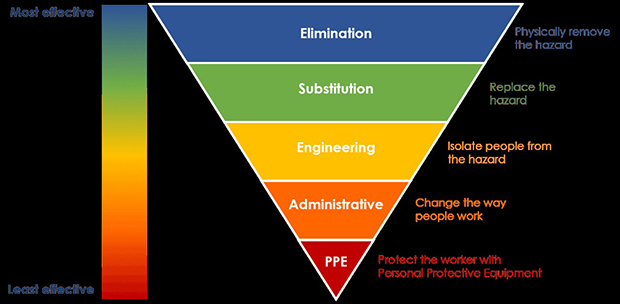
“Traffic management is required wherever there is a hazard (something that can cause harm). Unwanted events are usually a consequence of a hazard and risk is the chance of something happening that will have an impact on objectives. Chance = exposure x likelihood x consequence. Wherever there is a risk controls should be put in place like a barrier that either prevents or mitigates an unwanted event.
“A control therefore can only be a human act, an object (engineered device), a technical system or a combination of these. Traffic management deals with the safe movement of traffic and therefore also requires that historical data from ASPASA’s TMM Risk Evaluation reports, MOSH risk analysis and other information be incorporated to complete the mines own findings,” says Nico.
He adds that the compilation of a comprehensive traffic management plan is a difficult and ongoing task that is fraught with challenges, not least of which is the requirement to change behaviour of staff, contractors and customers in order to implement the required systems which takes resources and time. Thereafter the challenge is to ensure continued compliance with systems and extend it to satellite industries and these require the full commitment of the management team.
“Perhaps the best measure of success is seeing the segregation of pedestrians from TMM’s and gauging the eagerness of plant staff to adopt the new measures. If it achieves the test of appeasing spouses at home, then it means it is working. This extends to those who deliver and collect goods and people to and from the site.
“Although it is an intensive undertaking, it is a requirement by law and is well worth the time and effort wherever lives and the safety of humans are concerned. Although they should be common sense and simple, such plans do require the commitment and effort of everyone on the mine in order to succeed,” says Pienaar.
He concludes that a well-prepared traffic management plan should improve productivity, ensure the safety of all on the mine, ensure the safe flow of traffic, reduce congestion and contribute the overall success of the mine.