Work happens with people, by people, and around people. The drive for organisations to grow, innovate, and compete comes directly from their people. In this context, design that truly accommodates human needs—human-centric design—is no longer a “nice-to-have”; it is foundational.
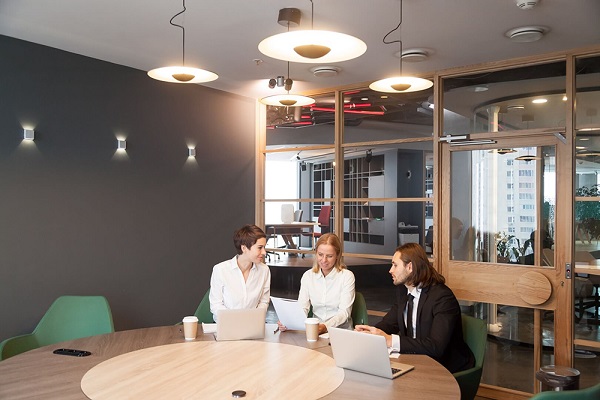
Within the built environment, lighting plays a critical role in bringing this philosophy to life.
While human-centric lighting (HCL) is not a new concept, it remains one of the most important and rapidly evolving trends in 2026. As organisations continue to rethink workplaces, employee wellbeing, and performance, lighting professionals are uniquely positioned to influence outcomes that extend far beyond illumination.
What is human-centric lighting?
Human-centric lighting refers to lighting systems designed to support human health, well-being, and performance by aligning with our natural biological rhythms, particularly our circadian cycles.
It considers factors such as:
- Light intensity
- Colour temperature (warm to cool light)
- Timing and duration of exposure
- Visual comfort and glare control
Unlike traditional lighting design, which focuses primarily on compliance and energy efficiency, HCL places people at the centre of the design process.
Why human-centric lighting matters
Modern work environments are increasingly disconnected from natural light patterns. Long hours indoors, screen exposure, and static lighting conditions can disrupt circadian rhythms, leading to:
- Fatigue and reduced alertness
- Lower productivity
- Increased stress levels
- Poor sleep quality
Human-centric lighting addresses these challenges by mimicking natural daylight patterns, supporting alertness during the day, and promoting relaxation as the day winds down.
At its core, it is about creating environments that work in harmony with people, rather than against them.
From concept to value: how HCL drives business outcomes
For organisations, the value of human-centric lighting extends well beyond wellbeing; it directly impacts performance, culture, and the bottom line.
- Enhanced productivity and performance
Lighting that supports alertness and focus can significantly improve cognitive function. Employees are more engaged, make fewer errors, and sustain concentration for longer periods.
- Improved employee wellbeing
By supporting natural rhythms, HCL contributes to better sleep, reduced stress, and overall healthier employees, leading to fewer sick days and improved morale.
- Talent attraction and retention
Workplace experience has become a key differentiator. Organisations that invest in environments that prioritise people are more attractive to top talent and better positioned to retain them.
- Increased creativity and innovation
Dynamic lighting environments stimulate creativity and collaboration, key drivers of innovation in knowledge-based industries.
- Measurable ROI
When productivity gains, reduced absenteeism, and improved retention are considered, human-centric lighting becomes a strategic investment rather than a cost.
The role of lighting professionals in HCL
For lighting designers, engineers, and specifiers, the shift to human-centric lighting represents both a responsibility and an opportunity.
It requires a move beyond:
- Compliance-driven design
- Static lighting schemes
- Cost-only decision-making
Towards:
- User-focused design thinking
- Integration with architecture and workplace strategy
- Collaboration with HR, wellness, and sustainability teams
Lighting professionals must ask:
- How does this space make people feel?
- Does the lighting support the task and the person performing it?
- Can this design adapt throughout the day and over time?
Looking ahead
As organisations continue to evolve, the importance of human-centric environments will only grow. Lighting, one of the most influential environmental factors, will remain at the forefront of this transformation.
Design that prioritises people will ultimately “rule the roost” - not only because it enhances the experience, but also because it delivers measurable business value.
Human-centric lighting is no longer merely a trend. It is a strategic imperative.