Emergency lighting is one of the most critical safety systems in the built environment, yet it remains one of the most misunderstood and poorly managed aspects of lighting design. Recent observations across a wide range of occupied buildings, including offices, hotels and hospitality venues, highlight a recurring and concerning pattern of inadequate emergency lighting provision.
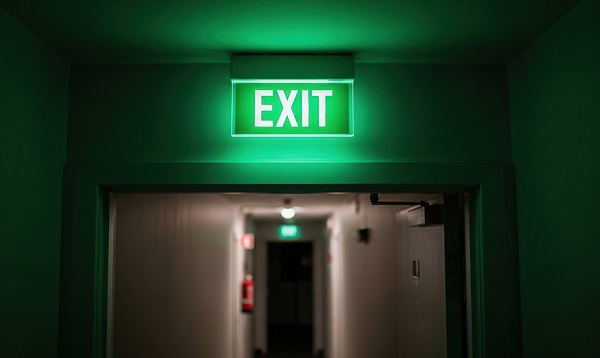
In several cases, emergency escape lighting systems were incomplete, poorly distributed, or entirely absent. Some buildings relied on only a few emergency exit luminaires, providing no meaningful illumination along escape routes. In other instances, emergency luminaires failed immediately when normal power was isolated, revealing degraded or non-functional battery backups due to age, lack of testing, and inadequate maintenance.
These findings raise serious questions about oversight, compliance processes, and professional responsibility across building design, operation, and sign-off.
Understanding the purpose of emergency lighting
Emergency lighting exists for one reason: to protect human life when normal lighting fails. Its role is to ensure that occupants can safely evacuate a building, avoid obstacles, recognise level changes and locate exit routes without confusion or panic.
Emergency lighting is not optional, decorative or supplementary. It is a regulated life-safety system with clearly defined technical requirements that must be met from initial design through to long-term operation.
The absence of functional emergency lighting during a real emergency can result in injury, loss of life and significant legal consequences for those responsible for the building.
Typical compliance failures observed in practice
When building operators and facilities managers are asked about emergency lighting compliance, it is not uncommon for essential requirements to be unknown or misunderstood.
Frequently missing elements include:
- Regular functional testing of emergency luminaires
- Annual full duration testing in line with standards
- Inspection by a suitably qualified professional
- An up-to-date logbook recording all tests and defects
- A valid annual Certificate of Compliance
In many cases, there is no evidence that emergency escape lighting would function effectively in a real emergency.
Another common oversight is the lack of clear identification markings. Emergency escape luminaires must be clearly marked with an “E” to enable quick identification during testing and inspection. This simple yet mandatory requirement is often overlooked, making it difficult to ensure that systems are properly maintained.
Emergency lighting categories and design intent
To design compliant systems, lighting professionals must clearly understand the functional categories of emergency lighting.
Escape route lighting provides illumination along defined escape paths, including corridors, staircases, changes of direction, level changes and final exits.
Open area, or anti-panic lighting, reduces the risk of panic in larger spaces by helping occupants orient themselves and move safely towards escape routes.
High-risk task area lighting enables the safe shutdown of hazardous equipment or processes, where a sudden loss of light could pose further danger.
Each category has specific requirements for illuminance, uniformity, response time and duration, defined by standards.
European emergency lighting standards
Emergency lighting in Europe is governed by harmonised standards with which every lighting professional must be familiar.
EN 1838, Lighting applications, Emergency lighting: This standard sets out the photometric performance requirements for emergency lighting, including minimum illuminance levels, uniformity ratios and glare limitations for escape routes, open areas and high-risk task areas.
EN 50172, Emergency escape lighting systems: This standard covers system design, installation, commissioning, inspection, testing and maintenance. It specifies routine testing intervals, fault reporting, logbook requirements and long-term system management.
EN 60598 Part 2 22, Luminaires for emergency lighting: This product standard ensures that emergency luminaires meet safety, performance and durability requirements, including battery integrity, charging systems and environmental resilience.
ISO 7010, Graphical symbols and safety signs: This international standard specifies exit sign symbols and colours to ensure universal recognition across languages and regions.
This article focuses primarily on European emergency lighting standards, which form the regulatory framework for projects within the EU and are widely referenced in professional lighting education. However, it is important to recognise that most countries maintain their own national or regional standards, often supported by international ISO or IEC documents. While these standards are not usually identical to EN requirements, the underlying safety ethos is consistent worldwide. Across jurisdictions, emergency lighting is expected to provide reliable illumination of escape routes, clear exit identification, automatic operation on power failure, and verifiable performance through regular testing and maintenance.
Emergency lighting as a professional responsibility
Emergency lighting should never be treated as an afterthought or delegated without adequate oversight. It must be integrated into the lighting design process from the earliest stages and coordinated with architectural layouts, fire safety planning and occupancy strategies.
Lighting designers and engineers have a professional responsibility to understand how standards apply in real buildings, how systems are verified, and how compliance is demonstrated over time, not merely at project handover.
Studying emergency lighting at the BHA School of Lighting
Emergency lighting is examined in depth at BHA School of Lighting as part of the professional training of lighting designers.
This subject is covered in Module 14, Standards and Compliance in Lighting Design, of the Advanced Diploma in Illumination Engineering and Lighting Design e-learning course. The module focuses on general and emergency lighting principles, European and international standards, compliance documentation, inspection requirements, and the real-world implications of design decisions.
For those seeking to deepen their understanding of life-safety lighting and strengthen their professional competence, this module provides essential knowledge that directly supports responsible and compliant lighting practice.
Click here for course info, fees, value add-ons and more.