Booyco Engineering’s advanced HVAC systems for mining machinery cabs, which include Sy-Klone filtration units, ensure compliance with ISO 23875 by managing air quality, cab pressure and CO2 levels in harsh environments. These integrated solutions protect operator health, enhance productivity and provide valuable data for mine-wide health and safety compliance.
Click to download and read pdf
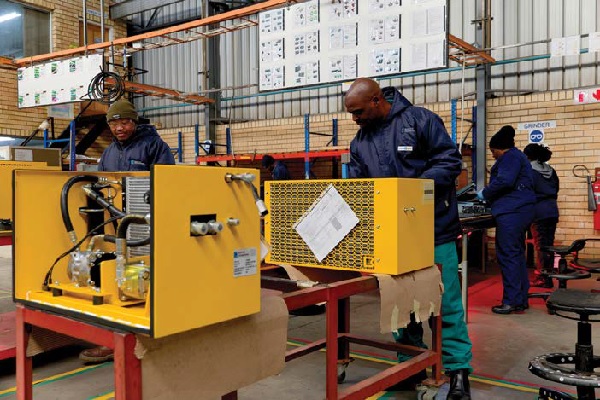
Engineered to meet ISO 23875 requirements, Booyco Engineering’s cab climate control solutions ensure clean, pressurised air and effective CO2 management for safer operator conditions.
With over 40 years of specialised expertise, Booyco Engineering continues to lead the way in climate control solutions for South Africa’s mining and quarrying sectors, industries where airborne pollutants and extreme thermal conditions pose serious occupational health hazards.
Recognised as a key contributor to the South African economy, the mining sector faces mounting pressure to ensure safer, healthier working environments, especially in the face of stringent legislation. The Mine Health and Safety Act (MHSA), Act 29 of 1996, requires that every mine must be designed, constructed and equipped to facilitate safe and healthy operations.
More recently, industry efforts have shifted from reactive to proactive occupational hazard management, with a growing emphasis on monitoring, controlling, and reporting worker exposure to environmental risks.
“Mobile machinery operators are often confined to enclosed cabs for extended periods in high-risk areas where dust, heat and toxic gases such as CO2 can quickly compromise their health,” Brenton Spies, Managing Director of Booyco Engineering, explains. “Addressing this challenge has been the cornerstone of our business for decades, and today we can offer a fully integrated HVAC solution that aligns with international standards, including ISO 23875, to ensure that operators remain protected at all times.”
ISO 23875 specifically governs air quality in enclosed cabs, with key performance criteria including the provision of fresh air into the cab, positive pressurisation to prevent ingress of contaminated air and effective control and management of CO2 levels.
While these requirements may be straightforward in on-road vehicles, achieving compliance in harsh mining and quarrying environments is far more complex. High levels of airborne particulates, diesel fumes and fluctuating ambient temperatures all add layers of technical difficulty when it comes to implementing effective climate control systems.
Booyco Engineering’s HVAC systems are engineered to meet these exacting standards. The company’s bespoke solutions incorporate Sy-Klone filtration technology to introduce clean filtered air into the system. This air is cooled and distributed into the cab while maintaining the required internal pressure and limiting CO2 buildup.
“We don’t just build air conditioners, we engineer environmental control systems that protect the health of machine operators and provide mines with actionable data,” Spies says. “Our integrated system continuously monitors cab air pressure, dust concentrations, CO2 levels and particulate contaminants, ensuring a controlled internal atmosphere at all times.”
Crucially, this real-time data can be downloaded for analysis, enabling mines to track operator exposure levels, demonstrate compliance with health and safety standards and improve overall risk management. This also supports broader ESG (Environmental, Social and Governance) initiatives, which are becoming increasingly important for both investors and regulatory authorities.
Booyco Engineering’s approach is not only preventative but also performance-driven, enhancing machine uptime, reducing maintenance downtime due to clogged filters or overheating, and ultimately improving productivity across mine and quarry sites.
“By aligning our engineering capability with global health and safety benchmarks, we are empowering mines and quarries to be both compliant and competitive. It is about going beyond compliance – safeguarding people and performance,” Spies concludes.