Multotec’s cyclone specialists, Blane Pillai, Ernst Bekker and Erick Herbs discuss the use of cyclones for tailings management and the importance of matching each cyclone choice to the specific onsite factors that influence their performance.
Click to download and read pdf
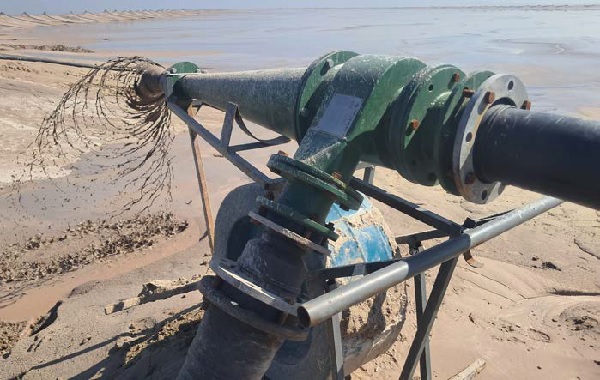
Their lightweight, durable design, simple spigot change system, and adaptable components make Multotec's GV Cyclones an operator-friendly and technically reliable solution for tailings dams.
Tailings management is a significant challenge for the mining industry and is under greater scrutiny than ever, as global industry standards call for safer, more sustainable practices. The rising demand for minerals and metals means that modern mines must raise throughput, control costs, and reduce their environmental footprint, all while responsibly managing their Tailings Storage Facilities (TSFs). Meeting these demands starts with a technology that is often overlooked but essential: the cyclone.
Mining companies carry a long-term responsibility to manage tailings and waste material left behind after ore is processed and valuable minerals and metals extracted, from operation through to closure and even post-closure. This management is critical for preventing catastrophic failures, protecting human safety, and minimising environmental impacts.
Responsibly managed TSFs are characterised by knowledgeable mine owners and tailings contractors who implement good engineering practices and use technologies that support safety, compliance, and efficiency. While several factors influence cyclone selection, choosing the right one is crucial to ensuring efficient, cost-effective, and environmentally responsible tailings management.
No two TSFs are the same; each requires a tailored cyclone solution. “Tailings deposition is far more complex than people think, which is where correctly specified cyclones make the difference,” explains Ernst Bekker, process specialist for cyclones at Multotec.
“When chosen and applied correctly, cyclones are more than just classification devices. They directly impact how efficiently tailings are deposited in a TSF, the stability of the TSF structure, and the effectiveness of water recovery for reuse in the plant. This means that the right cyclone can transform tailings management from a costly necessity into a driver of best practice standards for sustainable tailings management.”
Selecting the appropriate cyclone for tailings management is therefore not a one-size-fits-all exercise; several factors must be carefully weighed.
Durability: Harsh operating conditions, abrasive material and considerable pressure spikes during start-up demand equipment that lasts. Multotec’s GV Cyclones were introduced after earlier polyurethane units frequently failed on TSFs due to fluctuating start-up pressures. Multotec engineered a spin-cast steel shell with a 12 mm bonded rubber lining to combine strength with longevity, while keeping the weight manageable.
Cyclones designed with wear-resistant linings, durable composite construction materials and simplified maintenance requirements not only extend service life but also reduce downtime and operating costs.
Erick Herbst, applications manager at Multotec, says, “cyclones may look simple, but we have put a lot of thought into durability, usability and maintenance because these are the factors that determine long-term performance in harsh tailings environments.”
Ease of handling: A lightweight cyclone is faster to install and easier to move around on-site, facilitating quick modifications, upgrades and ore replacements without downtime. This is particularly important in tailings-dam environments, where cyclone relocation is done by hand. A 250 mm cyclone size has emerged as the most economical compromise: small enough to be easily handled yet large enough to reduce the number of units needed. A lightweight cyclone also requires a smaller tailings contractor team for operation and maintenance.
The quick-release screw spigot couplings on Multotec’s GV Cyclones allow for easy spigot changeouts, which is vital because spigot wear directly affects underflow density, wall stability, and overall TSF safety.
Flexibility: The ability to alter the combination of the cone angle, spigot and vortex finder of a cyclone to meet the specific operational parameters, material characteristics and TSF requirements ensures fit-for-purpose equipment for tailings management applications. This equipment flexibility considers evolving project needs throughout the life of the TSF.
Process efficiency: Cyclones with optimised geometries ensure the optimal volumetric split between overflow and underflow is achieved to match the required TSF rise rate. This supports faster tailings deposition and stable TSF wall construction while maximising throughput without compromising process reliability. Operators can achieve the necessary balance of coarse fraction to the wall and fines to the centre, improving drainage and enabling more reliable water recovery with Multotec’s GV Cyclones.
Environmental impact: Modern cyclone designs enhance water recovery from tailings and improve tailings drying by ensuring that drier, coarser material reports to the wall, stabilising the TSF, while ensuring that finer, more liquid material reports to the central decant structures. This is especially critical because finer ore grinds, now increasingly common due to lower ore grades, reduce the natural supply of coarse material needed to construct the TSF wall.
By improving water recovery and stability of TSFs, Multotec’s GV Cyclones mitigate both environmental and safety risks and help reduce the overall footprint of storage facilities. This is increasingly important in water-scarce regions, where responsible resource use is not only an environmental imperative but also a regulatory and operational one.
Equipment optimisation: Safe and responsible tailings management requires a collaborative knowledge-sharing approach between equipment suppliers, the mine owner, and the tailings contractor. Accurate sampling is critical, as poor sampling can lead to biased results and incorrect recommendations. Multotec can mitigate this by directly assisting with on-site test work.
Herbst adds, “Our value lies in being on site, testing equipment under real conditions, and making sure clients have a cyclone they can trust.”
“This ensures ongoing optimisation of cyclone performance, consistent efficiency through capacity and flowrate refinement depending on feed conditions, and cost-effectiveness by improving the cost per ton over the life of tailings deposition.”
Blane Pillai, Applications Engineer at Multotec, says no two tailings dams are the same and cyclone selection, therefore, cannot be a copy-and-paste exercise. “Each site has different feed conditions and operating practices, which is why on-site testing is essential and is used to ensure that solutions are not only technically correct but also practical.”
Multotec also provides training and support to help close knowledge gaps among operators, thereby reducing risks associated with TSF mismanagement.
Prioritising these considerations in cyclone selection allows mines to fine-tune their tailings strategies to achieve both operational and sustainability targets where above-ground tailings deposition in a TSF is the only option.
GV Cyclones: enablers of responsible tailings management
Modern, fit-for-purpose cyclones enable tailings contractors and operators to better manage deposition rates, enhance water recovery, and minimise risk, directly supporting compliance with the Global Industry Standard on Tailings Management, which sets the benchmark for safe management and the goal of zero harm.
Multotec’s GV Cyclones reflect lessons learned from industry challenges, failures of polyurethane units, heavy steel units that were too difficult to handle, and operator frustration with hard-to-change spigots. The lightweight yet durable design, simple spigot-change system, and adaptable components make the GV Cyclones both operator-friendly and technically reliable.
Placing cyclones at the core of a mine’s tailings management strategy is not optional but essential. While tailings management will always demand effective governance and good engineering practices, having the right cyclone is a small but powerful tool that supports continual improvement in TSF management.