The new AAA grade head office for Cube Route Logistics is located within the Boundary Park Industrial Park, and was carefully designed with the wellbeing of both people and animals in mind.
https://www.crown.co.za/lighting-in-design/case-studies/10826-lighting-plays-crucial-role-in-human-centric-office-design?layout=default&print=1&tmpl=component#sigProId5bc101dd9e
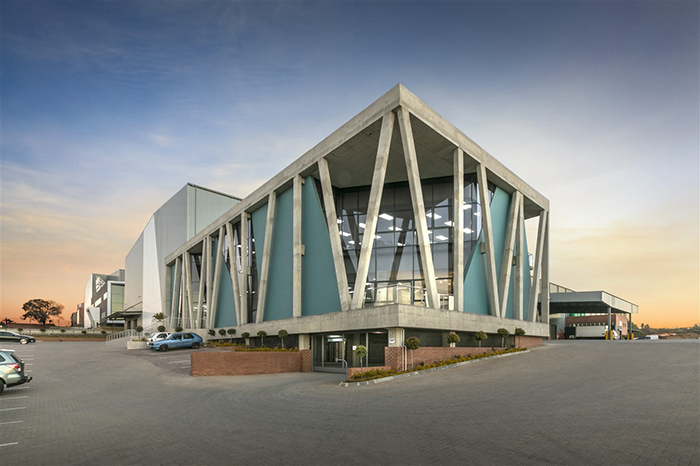
The prominent Malibongwe Drive frontage created an opportunity for Architects Of Justice (AOJ) to design a landmark building that would be impressive to onlookers passing by. The notable, non-conventional façade features an array of off-shutter concrete columns set around the building, over an envelope with coloured wall panels spaced between the glass curtain walls. Described by the architects as an ‘ultramodern structure’, their vision was to present a raw concrete exoskeleton, filled by a pristine, smooth envelope containing a modern, clean and sleek interior. The juxtapositions of raw and smooth, dull and bright make interesting, striking and memorable architecture.
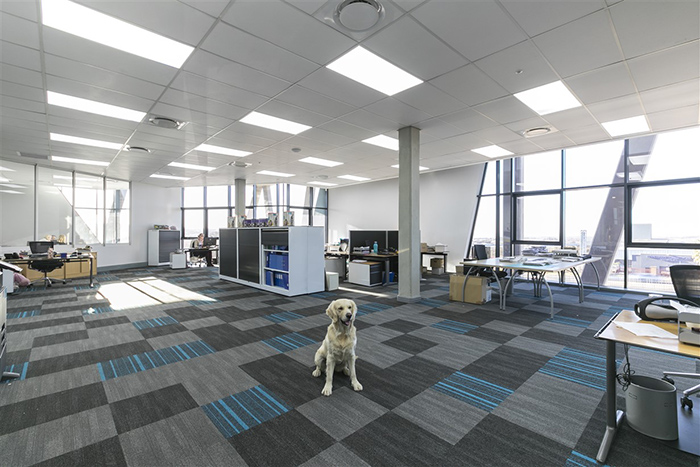
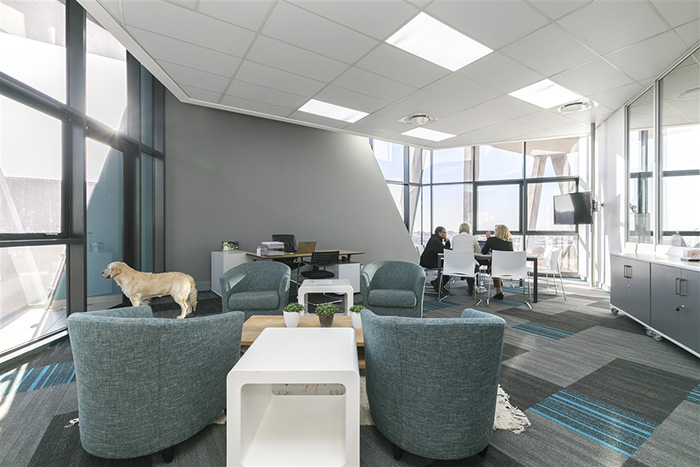
Having designed the shell of the 1000 square metre office block with warehousing and e-Pet store facility measuring approximately 9000 square metres, AOJ then set about creating an interior which harmonises with the striking façade. “With a very modern exterior, we wanted to create contemporary interiors as well, which complement the geometry of the building,” says Mike Rassmann. Owing to the step backs in the façade, the office building has a geometric form which created many angles to work with. “We provided spaces for staff to sit outside on a large terrace, and balconies which overlook the yard areas and the activity below. Internally, the spaces complement the lines and angles of the façade, and we used different finishes, such as striped, colourful carpets mixed with more muted tones so it is not too heavy on the eye,” he says. The architects brought through a fair amount of patterning to follow the diagonal geometries of the façade, working with different carpet colours to create visual interest.
“The advantage of having one company dealing with both, is that you have a better sense of understanding the conceptual design of the building, and can bring that thread right through into the interior which gives you a better product at the end of the day,” says Rassmann. The interior doesn’t disregard the exterior, and vice versa. “The way interior and exterior intersect is very conscious,” explains Alessio Lacovig. “We haven’t hidden the concrete structure within the building; you can see how the ceiling edges have been stepped back to expose the underside of the concrete slab and you see the concrete beams perforating the ceiling and glass façade to intersect the columns and support the floor slab, making the expression of the structure visible from the office interior.
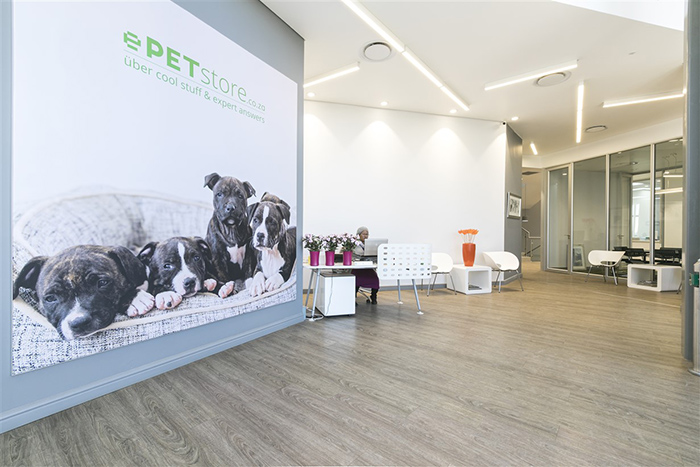
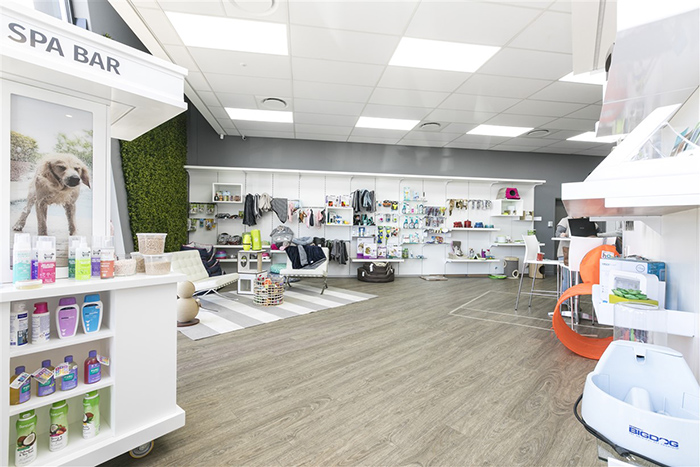
Rassmann notes that the project presented an interesting scenario, as there are two companies that run internally – the logistics company for pet products and an e-Pet store. This new head office is the amalgamation of two Johannesburg operations, with the third still located in Durban. “We had to incorporate the two companies within the one building, and while they are essentially the same company, they needed to appear as separate for product branding. Part of the solution was splitting the two by floor and aligning the corporate identity accordingly.”
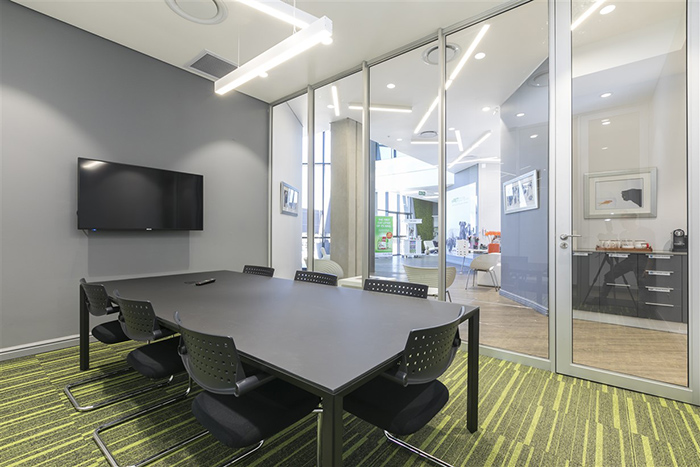
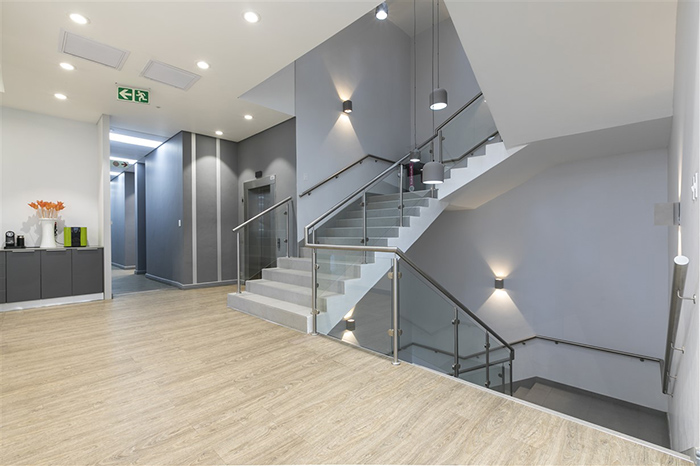
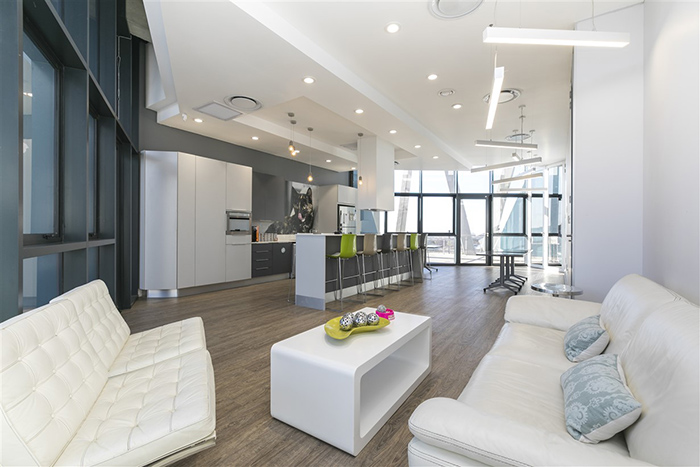
The lighting design was critical to the interior, especially in the spaces where the architects were able to embellish a little more, such as the reception spaces, meeting rooms and in the large communal kitchen area in which the staff can congregate, eat or even work in a more relaxed environment. “We started with a high end design, and one of the big challenges was trimming that design back to budget whilst still maintaining the same kind of appearance. A hierarchy of the spaces can be seen in the chosen finishes, most notably in terms of the lighting. This included picking the right light fittings, surface mounting them instead of cutting into the ceilings and recessing them, without going completely overboard with bulkheads. We used several pendant lights, hung at different heights, and picked the fittings very carefully to complement the exterior, thus many of the fittings that were picked have a geometric and angular concrete finish,” says Rassmann.
The main lighting directive was reducing energy consumption, thus the use of LEDs, yet at the same time, the lighting concept was informed by the striking lines across the façade. “This we echoed in the lighting design with long, thin LED linears,” Rassmann notes. Lighting was limited on the façade to security uplighters, as the designers wanted the building to ‘glow’ from within through the double volume glass entrance. Lighting challenges experienced on the project included the fact that time and cost constraints dictated that much of the lighting had to be surface mounted rather than recessed, as well as getting staff to understand and use the motion activated lights correctly.
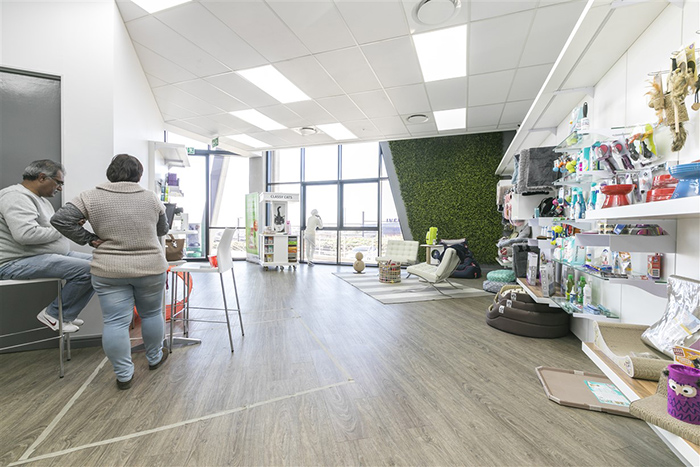
Glass played a large part in the interior due to the high ceiling volumes of the space. “We had to get the balance right between glass and dry wall partitioning,” explains Lacovig. “With glass costing close on seven times as much as drywall partitioning, we raised certain portions of the drywall partitioning to hide the desks and the assorted cabling, but then raised the glass above desk height. This allowed us to offset the cost of glass, but at the same time strategically position it in the interior to allow a maximum ingress of natural light.
The warehouse portion of the logistics facility had to be well laid out to accommodate the multiple daily deliveries via a fleet of 30 trucks which travel to approximately 800 outlets in South Africa. An array of drive-in bays, a large covered side curtain loading area and dock-leveller loading bays offer a variety of vehicles the space required for an efficient operation. “While translucent sheeting in warehouses is standard,” says Lacovig, “we created a natural light band at around 9 m high to keep the translucent sheeting above the racking level to supplement the high bay LED lighting To allow even more natural light into the facility we introduced a monitor at the centre of the roof design and included a newly patented system, one of the first to be installed, featuring a translucent smoke vent which, unlike conventional solid louvres, will let light in and also flap open completely when smoke needs to be extracted.”
From a sustainable point-of-view, general sustainable practices were followed. Correct orientation and the use of double glazing on the façade – coupled with correct proportioning of this façade – ensures a passive control of natural light entering the building, as well as the thermal temperature gains and losses, improving energy efficiency. In addition, the façade’s design assists in reducing the noise from the busy road alongside the office. “We kept the size of the west façade small, thereby limiting exposure to the harsh afternoon sun and have a smaller ratio of glass to solid walls,” states Lacovig. “
Roughly 50-60 people will be employed in the main office space, and the architects note that the business almost has the feel of a large family business. “Very early on in the process we were informed that the old office had a tiny kitchen space, but that was where all the office staff interacted. In this new office, we ensured that the staff have enough space to gather, work in a café-style area and even cook meals together. Cube Route’s head office is a busy yet relaxed environment where people are encouraged to bring their pets to work, so it really was a project where we could explore the boundaries of the modern workspace,” says Lacovig.
The interiors were designed to be as human-centric as possible with abundant natural light, high volumes and extra colour, without coming across as being overpowering and garish. “From the shape of the façade, it gives staff an interesting interior space, not your conventional four wall box. That in itself changes the quality of the space and the perception of the space you are working in, making it a building which is exciting to be in,” states Lacovig.
This emphasis on aesthetic appeal – coupled with a human-centric design approach – has resulted in a unique, eye-catching building which deviates from the norm of a ‘one-size fits all’ approach to head office design