CAPITAL EQUIPMENT NEWS
MAY 2014
28
TRAILERS
W
hen it comes to heavy transport,
no two jobs are the same and the
companies involved must tailor
make each contract to ensure safe, cost
effective and timely delivery.
THE CHALLENGES
of heavy loads transport
Depending on the weight and dimensions
of the equipment being transported, parts
might have to be disassembled for the
move, the street ‘furniture’ might need to be
temporarily taken away and police escorts
arranged for all or part of the journey.
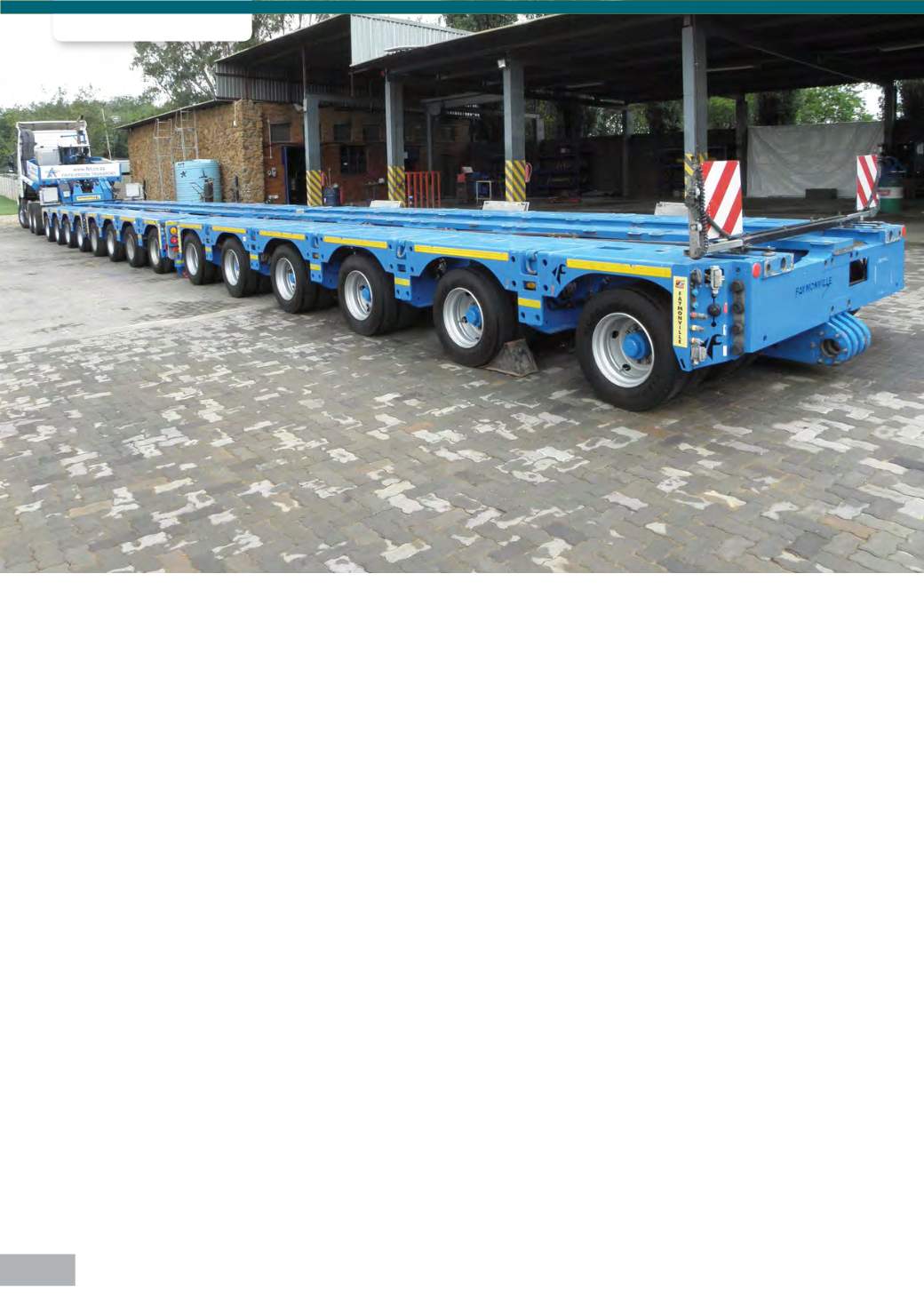
A number of new specialised trailers have
entered the transport industry in the past 12
months as manufacturers strive to increase
the options available to contractors.
With their latest designs, some of the
producers have tried to reduce the cost of
regulatory compliance to contractors.
Also new to the industry is an emissions
free battery-electric hydrostatically driven
ESPT-H self-propelled transporter from
Nicolas Industrie. The 8 m long transporter
has a 20 tonne payload, a dead weight of
9.5 tonnes and can be operated without a
direct power supply for up to eight hours.
Each axle line can carry a maximum of
14.7 tonnes and the vehicle can be remote
controlled. The manufacturer claims that it
is capable of working in temperatures of
between 40
o
C and -10
o
C.
Another specialised application trailer called
a slag-pot trailer has been introduced. It is
basically a U-frame machine designed for
transporting slag in steel plants.
The Kamag Type 2802-130 is the biggest
slag pot carrier ever manufactured by the
company. It weighs 82 tonnes and is 11.9m
long, 7.7 m wide and 4.3 m high. Power
comes from a Caterpillar C15 diesel engine
offering 403 kW. The machine has a tipping
angle of 130° and can be modified to
transport molten steel.
The Type 2802-130 can transport payloads
up to 130 tonnes in the 45 cum slag pot
which is 5.8 m long and 4.35 m high.
With new transport records being broken
all the time in terms of size and weight of
loads being transported, the specialised
heavy transport sector is all about thinking
and planning ahead and, most particularly,
thinking big.
b
By Pierre Sanson
“Each axle line can carry
a maximum of 14.7 tonnes
and the vehicle can be
remote controlled. The
manufacturer claims that
it is capable of working in
temperatures ranging from
40
o
C to -10
o
C.”


