CAPITAL EQUIPMENT NEWS
MAY 2014
34
VEHICLE MANAGEMENT
T
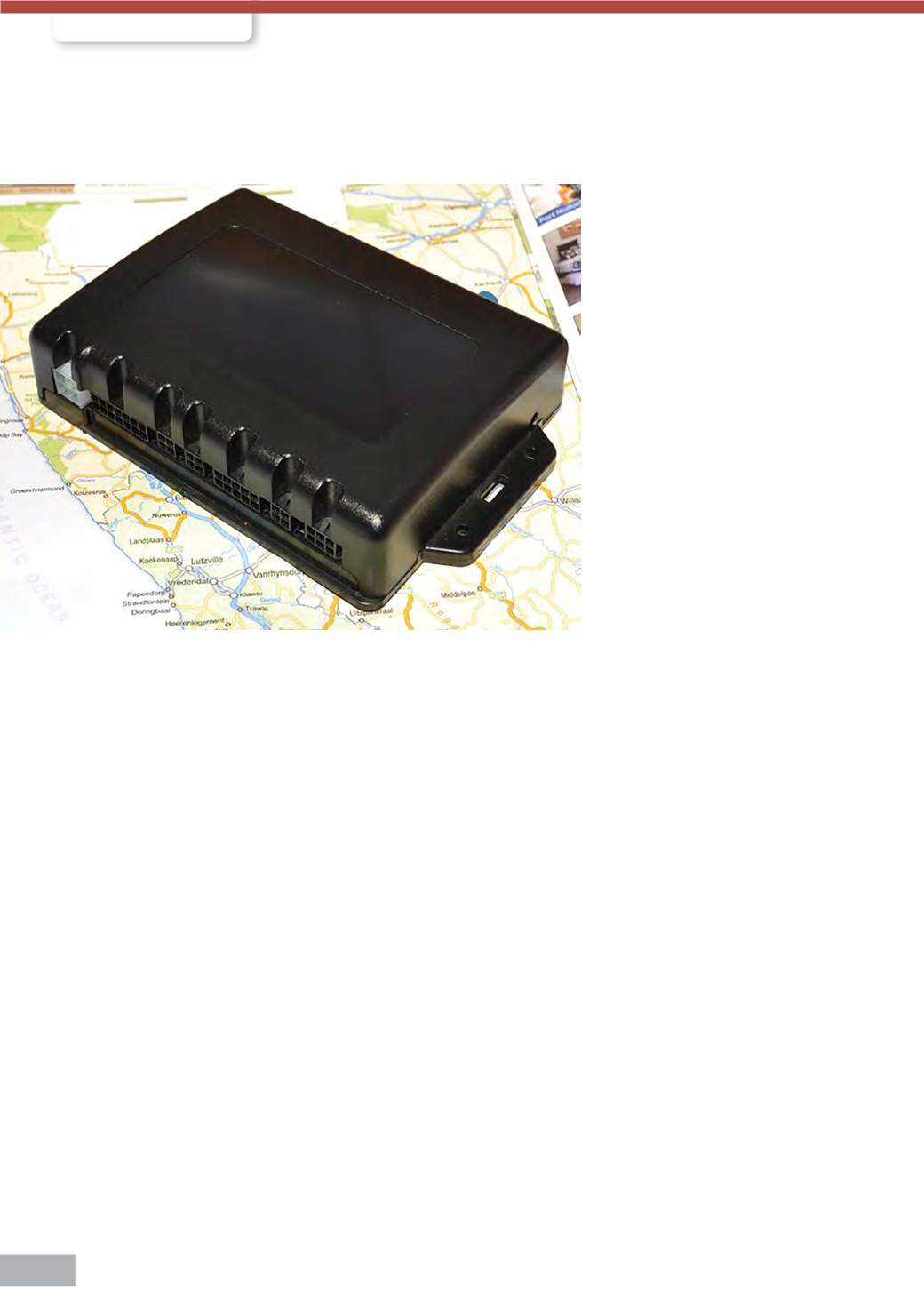
he QIC-FLEET solution enables fleet
owners to effectively and affordably
manage numerous variables related to
the location and performance of individual
vehicles and equipment, by transmitting
relevant data on the GSM network via a
preferred network partner.
QIC-FLEET boasts an on-board global
positioning system (GPS) that tracks
vehicles and manages on-site productivity,
and QCIC director Brian McKenzie points
that a combination of labour unrest and
financial constraints has led to an increase
in demand for QIC-FLEET in local mining
applications.
“Mining companies are turning to asset
management solutions such as QIC-FLEET,
which can locate a number of mobile
assets, which can then be rerouted to areas
of greater importance by directly contacting
the vehicle operator,” he explains.
QIC-FLEET can be installed on all mining-
related vehicles, including forklifts, handling
plant, bulldozers, loaders, ADTs, RDTs,
cranes, and on transport vehicles such
as buses used by mining companies to
transport labourers to and from the mine.
QCIC is currently in the process of supplying
multinational engineering and electronics
GSM FLEET MANAGEMENT TECHNOLOGY
gains ground in local mining
conglomerate Hitachi with the QIC-FLEET
system, which has been installed on a
fleet of approximately 400 assets at the
Kusile and Medupi coal-fired power station
projects.
“The QIC-FLEET system has been
installed on light-duty equipment such as
generators, compressors, cranes, elevated
work platforms and materials handling plant
equipment,” adds McKenzie. “It is being
used by Hitachi to monitor productivity, the
availability of machinery, breakdowns and
the hours worked for internal billing of cost
centres at the respective power stations.”
Using a complementary CAN-BUS add-on,
QIC-FLEET plots the data on a map with
GPS positions to identify the cause of an
incident, and the precise location where it
occurred. Another advantage of the CAN-
BUS and QIC-FLEET combination is the fact
that it has the ability to warn of a potential
accident through an in-cab buzzer, based
on the set-up of the device installed in the
vehicle.
Strictly-enforced low speed zones are
common in mining sites as a result of
stringent safety requirements, and McKenzie
reveals that QIC-FLEET monitors near real
time driver behaviour and reports on vehicle
speeding. He continues: “Accountability
and visibility are increased, as records
of individual operator performance are
available at the push of a button. Companies
can use this data to identify operators who
do not adhere to speed limits and those who
need more training.”
McKenzie notes that essential data such
as RPM, speed and braking is recorded,
while a warning is sounded to the driver to
take necessary action before failure occurs.
“Should the driver fail to take the action that
was prompted, the system boasts a crash
analysis feature, which makes all recorded
data 21 seconds before and six seconds
after the incident available to the relevant
manager.”
According to McKenzie, these recordings
provide valuable insight in determining the
circumstances surrounding the cause of
an accident, and what action the company
should take moving forward. “It is also
invaluable for insurance purposes, as the
information is captured and recorded,
and eliminates the complexities related to
hearsay from the various parties involved in
the incident.”
McKenzie reveals that QCIC currently
manages a call centre that monitors all
QIC-FLEET fitted vehicles on a 24/7 basis.
“A major safety advantage of establishing a
call centre is that the operator can contact
the driver, should any alarms or exceptions
be ignored,” he states.
McKenzie believes that the local mining
industry will eventually move from labour
intensive practices towards remote mining -
whereby equipment operators will no longer
be required to physically work in the cabin
of the production equipment.
He continues, “the rapid advancement of
technology now enables mining vehicles to
be equipped with high-resolution cameras
and high-speed fibre-optics or local RF
networks that enable operators to control
the equipment from a remote location”.
Bearing this in mind, McKenzie concludes
by adding that he is confident that QCIC will
continue to gain measurable market share
in the mining industry through its range of
telemetry solutions and services that act
as complementary add-ons to mechanical
automation technology.
b


