November 2013
CONSTRUCTION WORLD
14
environment
PERRIESAYSTHE
current averageworldwide
consumption of concrete is about a ton per
year for every living person. “Notwithstand-
ing this extensive use, the global cement
industry still accounts for only about 5%
of man-made carbon-dioxide emissions.
Approximately 40%of this comes fromburn-
ing coal and 60% from the calcination of
limestone. It should also be remembered that
structures are not constructed out of cement
but from concrete – of which cement is but
one ingredient.”
The average international level of carbon-
dioxide emissions is about 1 000 kg per ton
of pure cement.“This value is being reduced
by new technology and the use of alterna-
tive fuels in cement kilns, including the
burning of waste tyres. The primary method
of significantly reducing the emissions is to
lower the clinker factor in cement by the use
of extenders such as blast furnace slag, fly
ash, limestone and other similar materials
whichwould end up in landfills if not used by
the cement and concrete industry. Another
industry contribution towards sustainability
is the sourcing of synthetic gypsum from
industrial by-products from the fertiliser and
sulphuric acid industries.”
Perrie says when selecting aggregates for
Possessing ‘excellent ecological profile’
Concrete and cement are
often unfairly blamed for
unacceptably high carbon-
dioxide emissions, says
Bryan Perrie, MD of The
Concrete Institute.
sustainable concrete production, it is impor-
tant not to choose the cheapest sand as this
may result inmore expensive concretewith a
significantly higher carbon-dioxide footprint.
The use of recycled concrete as an aggre-
gate will further reduce the carbon-dioxide
emissions of concrete while simultaneously
preserving natural resources and eliminat-
ing the need for dumping old concrete at
landfill sites.
“Although theproportionof admixtures in
a concretemix is relatively small, recent devel-
opments in admixture technology nowallow
admixtures to be used to control important
properties of concrete, such as workability,
pumpability, durability, aesthetics and cost
effectiveness. Consequently, admixtures can
have amajor positive effect on sustainability,”
he explains.
Concrete readymix plants are also en-
gaged in environmental preservation prac-
tices such as recyclingwash andwaste water,
saving costs and reducing consumption of
precious water resources.
“Concrete has an excellent ecological
profile compared to other construction
materials and its social contribution cannot
be overestimated. It is the second most used
resource in theworld after water, and contrib-
utes significantly to our standard of living,
from the houses we live in, the schools and
universities we attend, the offices we work
in, the infrastructure of water reticulation
and sewers, the dams that hold our water,
to the roads that make transport for all our
needs possible.”
Perrie believes using concrete‘makes en-
vironmental sense’ because properties such
as economy, thermal mass, fire resistance and
water-tightness all add to the sustainability of
concrete in the built environment.“Concrete
structures have optimal energy performance
with associated positive effects onwhole-life
energy usage,”he concludes.
●
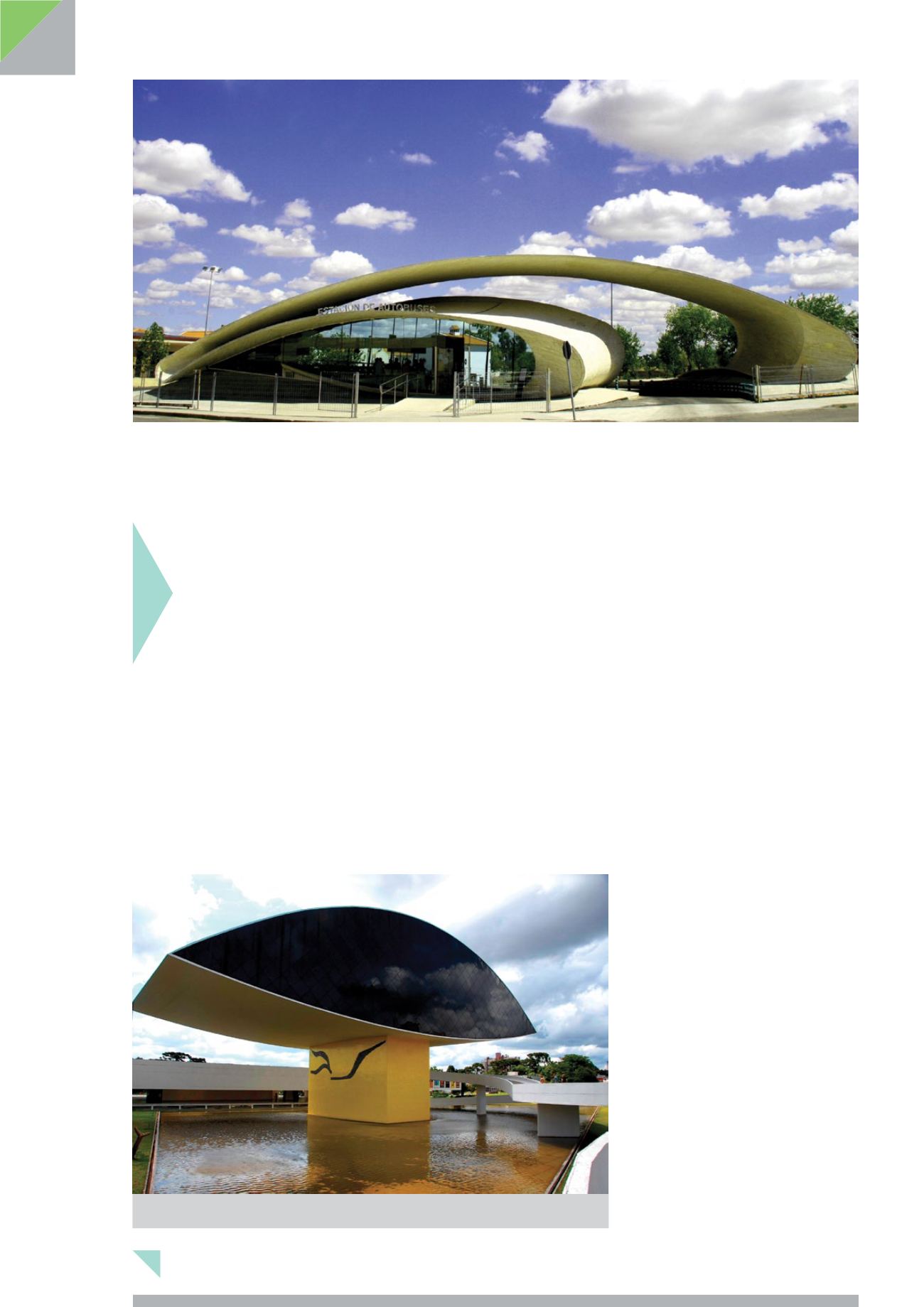
Sustainable – and striking – structures can be achieved with concrete, the second most used resource
in the world, says The Concrete Institute.


