19
CONSTRUCTION WORLD
JUNE
2014
ENVIRONMENT
This forward-thinking report, undertaken by Arup’s Foresight
+ Research + Innovation and Landscape Architecture teams,
addresses global issues such as climate change, urban popula-
tion growth, resource scarcity and risk of urban flooding.
‘Cities Alive’ analyses existing research and trends in landscape
and city design to show how the creation of a linked ‘city ecosystem’
encompassing parks and open spaces, urban trees, streets, squares,
woodland and waterways can help create healthier, safer and more
prosperous cities. Some of the more innovative elements such as urban
farms, glow in the dark trees and solar powered pathways are illustrated
in an artist impression, to demonstrate how the futuristic components
can integrate into the city’s network.
“Often green space is employed as an after-thought in urban
development, either due to costs, a lack of space, or a lack of under-
standing of the benefits it can deliver, but its impact on the health and
wellbeing of citizens and the carbon footprint of the city warrants far
more attention. We should be developing cities to promote biodiver-
sity rather than hamper it, as part of a drive for higher quality external
design to create better places for urban citizens to live, work and relax,
where people can lead healthier and happier lives. As space in cities
becomes more precious, planning for green needs to be considered as
a fundamental consideration and not as an optional add-on or a nod
towards biodiversity. We need to plan our external environment in a
multi-layered way, so we can use our city space more effectively by
exploiting and adapting existing spaces,” says Tom Armour, landscape
architecture group leader at Arup.
“‘Cities Alive’ highlights that we need to make the natural environ-
ment a primary concern in urban development, and one that should
be considered from the earliest planning stages.
“By working with nature and through high quality landscape design,
‘Cities Alive’ proposes an economic way of addressing the challenges
of population growth and climate change in our cities, to deliver
significant social and environmental benefits.”
Arup is the creative force at the heart of many of the world’s most
prominent projects in the built environment and across industry. From
90 offices in offices in 38 countries, over 11 000 planners, designers,
engineers and consultants deliver innovative projects across the world
with creativity and passion.
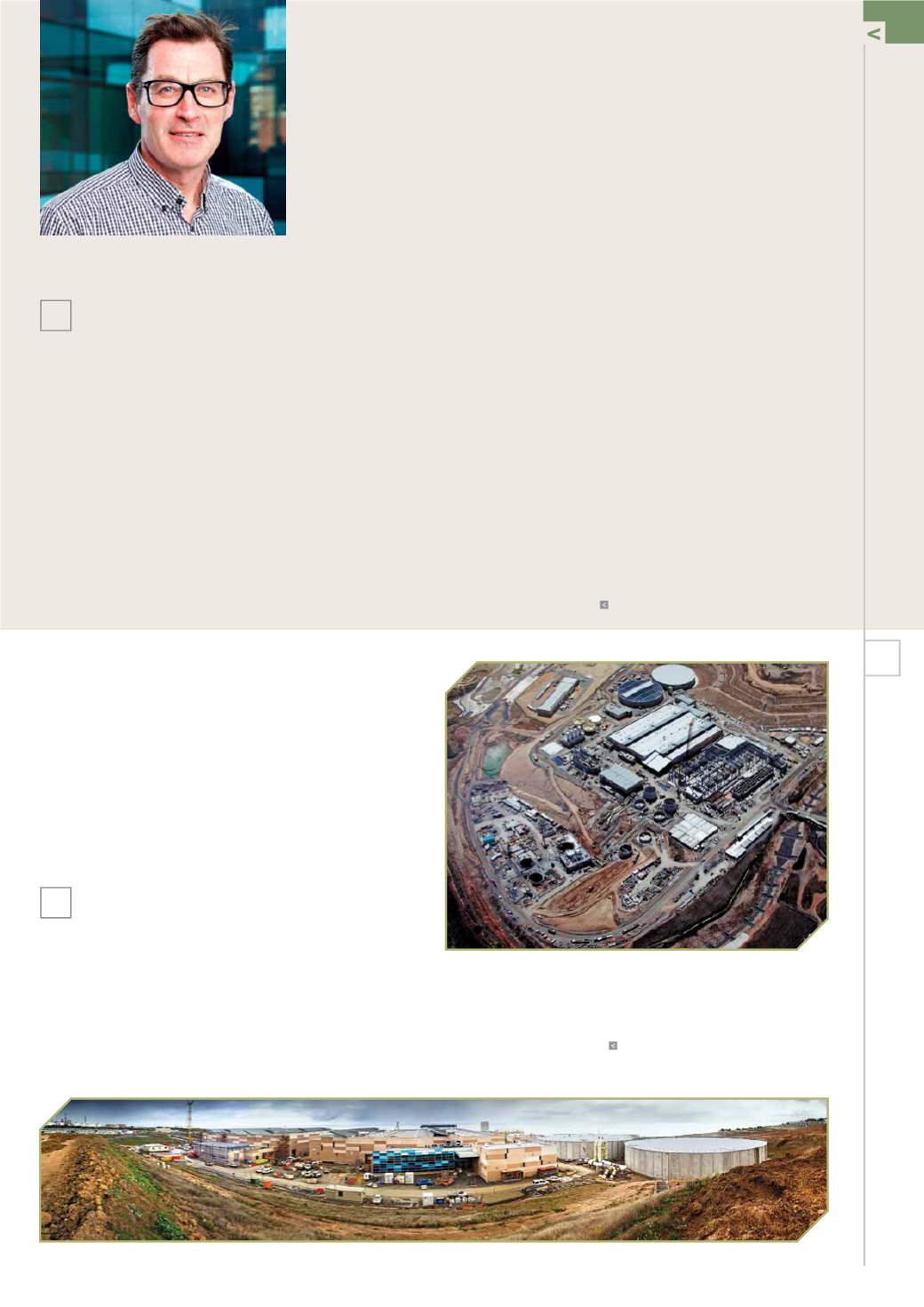
The A$1,83-billion desalination facility is designed to deliver
100 GL of potable water per year. The plant is powered by
100% accredited renewable green energy sources within South
Australia. The Hatch-SMEC joint venture provided design services for
the project including: architectural, civil, structural, building, process
detail design support, geotechnical, marine, tunnels, earthworks,
drainage, underground services, environmental and landscape.
The award was established in 2011 and recognises a project
manager or organisation that demonstrates the impact and relevance
between sustainability and project success from both a process and
objective perspective.
In addition to the GPM Global Sustainability Project of the Year Award,
VISION FOR THE CITIES
OF THE FUTURE
Arup recently launched ‘Cities Alive’ – a new report that envisages
cities of the future as integrated networks of intelligent green
spaces, designed to improve the health and wellbeing of citizens.
Tom Armour, landscape architecture group
leader at Arup.
>
AWARDS FOR
The Adelaide desalination plant project – designed
by the Hatch-SMEC joint venture – is the recipient
of the 2013 Green Project Manager (GPM) Global
Sustainability Project of the Year Award.
Panoramic view of the Adelaide desalination plant.
DESALINATION PROJECT
Aerial view of the Adelaide desalination plant.
the Hatch-SMEC joint venture has also been awarded the Project
Management Institute’s (PMI) Project of the Year Award. Hatch Goba
forms part of Hatch – an international consulting engineering and
project implementation firm.
>


