Hazardous areas and safety
E
xnL (Energy Limiting) was a technique used for zone 2 which
was effectively IS in normal operation ie with no safety factor
required. ExnL has been reassigned as Exic in IEC/SANS60079-
11 [1] and IEC/SANS60079-25 [2]. Previously, although not spelled
out in the standards, it was a generally accepted practice to run ExnL
loops in the same trunking as IS loops. With the new standards, it is
clear that Exic loops can be run in the same multi-core or trunking
as other Exic loops. This means that single multi-core (or trunking)
can be used for IS instruments in Zones 0, 1 and 2. However, shared
multicore must be Type A or B in accordance with system standard
IEC/SANS 60079-25 [2], that is not subject to faults.
The CENLEC standard, and subsequently the IEC standard,
changed the capacitive reference curves because of some tests done
in Germany. This reduced the allowed cable capacitance from 2002
which had an impact on plants built between 1995 and 2002 based
on earlier ATEX standards where longer cable runs were required.
For a standard 24 V loop (Uo = 28 V) this changed the Co from 130 nF
to 83 nF, reducing the maximum cable length allowed. When these
plants require a distributed control system (DCS) upgrade and a new
isolator is to be fitted, the IS loop calculation now fails.
How can we handle this? Firstly and importantly, there is a mis-
conception that the Co values are defined by the design of barrier/
isolator. The Co value is actually defined in IEC/SANS60079-11: 2012
(Table A.2 on page 96 (102 of 149). So any barrier or isolator with 28 V
safety description will have Co = 83 nF (Zone 0/1; IIC). In practice this
parameter will define the maximum allowable cable length.
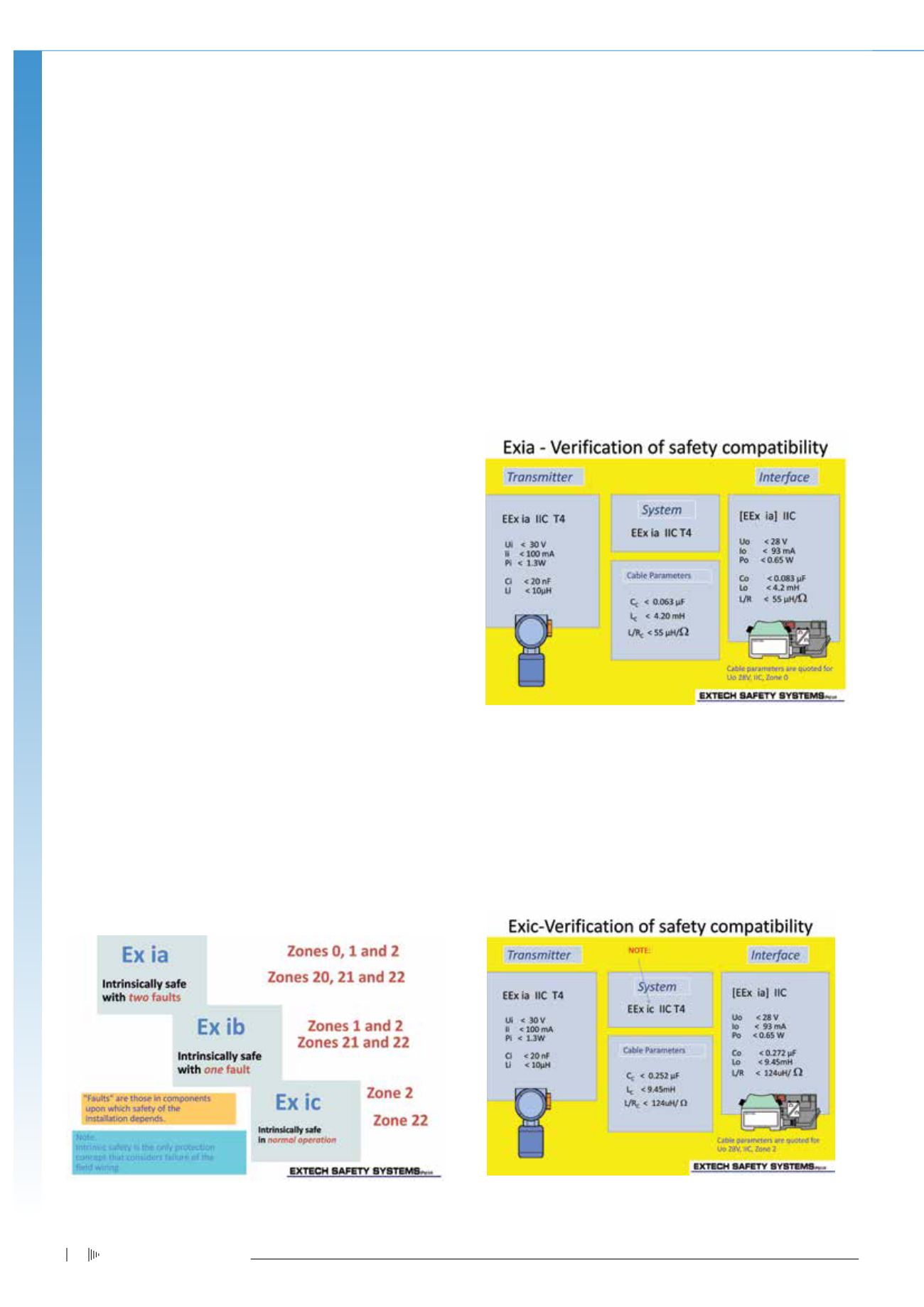
Figure 1: Intrinsic safety levels of protection.
Figure 2. Instrument located in Zone 0 (or 1).
Figure 2 shows an Exia loop with a Co = 83 nF. The max cable ca-
pacitance Cc = 63 nF. With a typical cable capacitance of 95 nF/km,
this would equate to maximum cable of 660 m. If the loop were Exic,
the Co = 272 nF, so Cc = 252 nF would theoretically allow 2,5 kms of
cable - ie no longer a limiting factor. (The limiting factor in this system
is likely to be operating voltage at the end of the cable being high
enough for the transmitter to work). In Figure 3, you can see that the
system is Exic certified.
Figure 3: Field instrument in Zone 2.
Intrinsic Safety for zone 2 (Exic)
using longer cable runs
By G Friend, Extech Safety Systems
The impact of Exic and how to handle long cable runs in IS loops.
Electricity+Control
December ‘13
24


