T
here is no doubt that there is a certain
appeal to the heavy lift side of the
crane sector. Their sheer size and
the presence they exude, place them in
the forefront of engineering brilliance. But
further down the weight categories there is
a move towards more economical solutions
and innovations with new designs that
contribute to those solutions.
The global construction industry may not
be as buoyant as it was years ago but
there are sectors that continue to provide
a steady stream of work. One of the big
concerns worldwide is the need for more
energy as the global population grows and
increasingly migrates from rural to urban
areas.
This not only feeds into the construction of
conventional energy projects, but the lifting
sector is not bothered as either type of
work tends to require large and specialised
cranes.
The flow of work brings challenges,
particularly when it comes to on-site space
restrictions. This often means lifting at a
wider radius since the cranes have to be
positioned further away from the target.
In other words, cranes have to be placed
further from the lifting area, whereas
previously they could be closer. The greater
the distance the crane is placed from the
actual lift site, the stronger the crane has
to be.
The move towards larger individual modules
on power and petrochemical plants also
plays to this trend for bigger cranes and
this has been one of the most active areas
of development for manufacturers over the
past few years.
Meanwhile, in the sustainable energy
sector, the move towards more wind energy
is driving the development of different sorts
of cranes. Not only are there challenges
associated with lifting heavier and heavier
nacelles (turbines) to greater heights but
the locations of the new wind farms cause
complications as environmental pressures
demand they are located in increasingly
remote areas, including weaker wind
regions, up mountains or in forests.
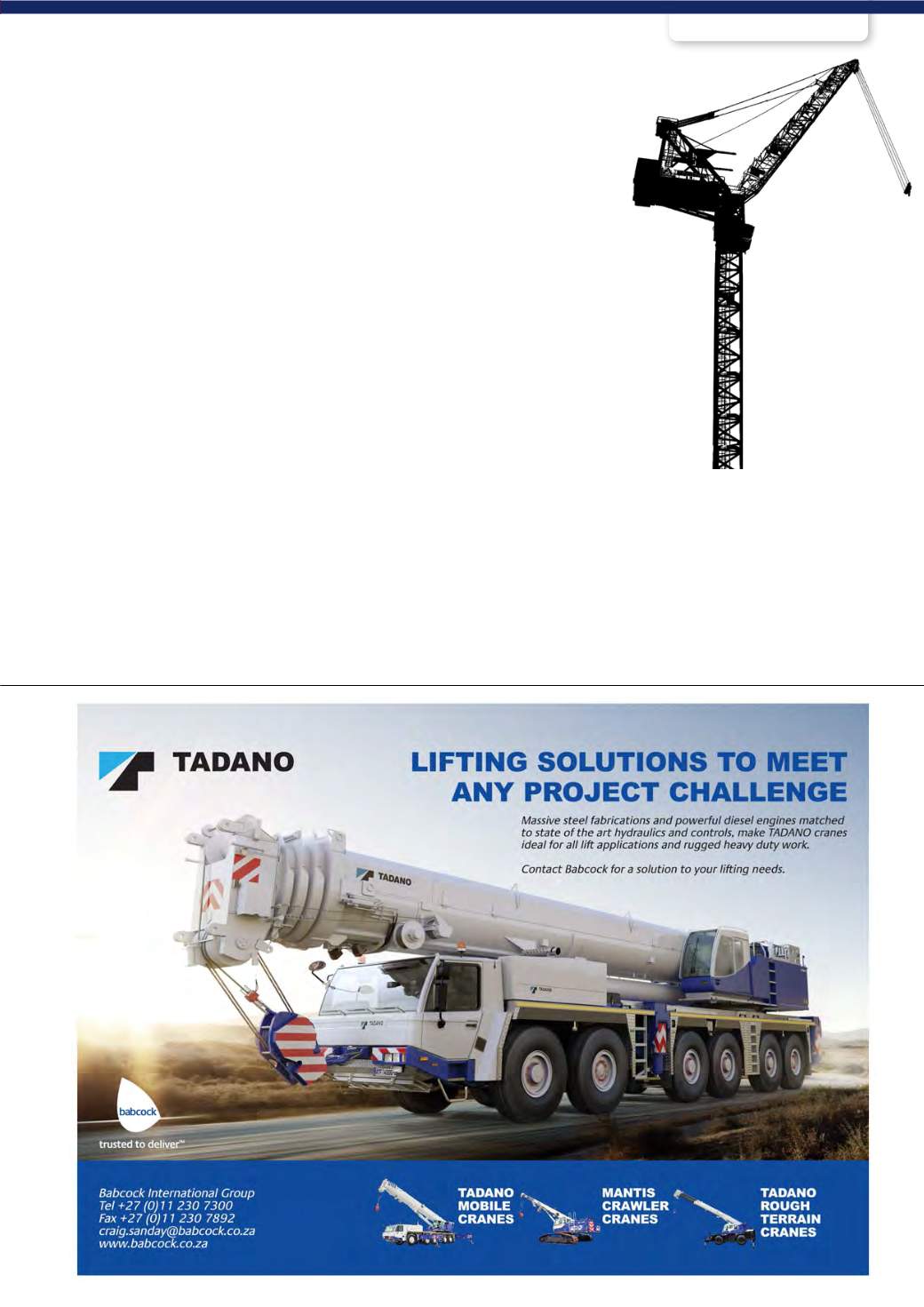
In these cases, tower cranes have become
serious contenders for wind power work.
The space needed for the erection of a tower
crane is only 40% of the space needed for
other lifting appliances.
The use of tower cranes in the wind power
sector may be a trend in the future. For
now, it is still the larger crawler and mobile
cranes that are the workhorses, although
they are often modified to be better suited
to the specific requirements of the job.
b
INTRODUCTION TO LIFTING
By Pierre Sanson
LIFTING


