
Africa's premier manufacturing event, the Manufacturing Indaba, returns to the Sandton Convention Centre on 14–15 July 2026 under the theme “Made in Africa: Scaling Growth, Shaping Trade”. The two-day conference and exhibition will bring together industry leaders, policymakers, investors, and innovators determined to transform the continent from a minor player contributing just ~3% of global manufacturing output into a competitive industrial force. Africa is home to 15% of the world’s population and possesses abundant natural resources, yet its share of global manufacturing value added remains disproportionately low at around 2–3%. This stark reality underscores both the challenge and the immense opportunity. The 2026 Manufacturing Indaba positions itself as the strategic platform to accelerate the “Made in Africa” agenda, driving localisation, intra-African trade, and value addition in line with the African Continental Free Trade Area (AfCFTA) objectives.
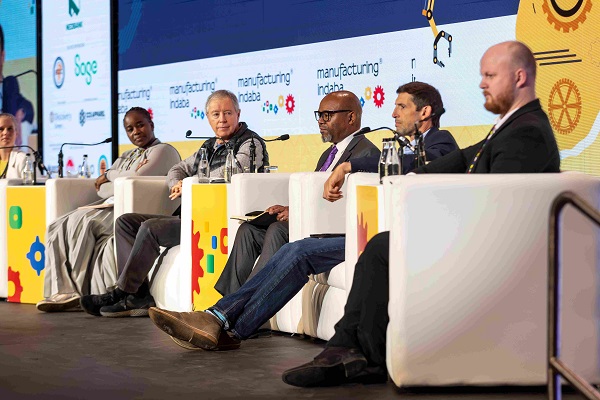
“Despite our demographic dividend and resource wealth, Africa continues to export raw materials while importing finished goods. The Manufacturing Indaba 2026 is where we move from potential to production,” said Liz Hart, Managing Director of the Manufacturing Indaba. “Delegates will engage in practical discussions on scaling competitive industries, building resilient supply chains, and leveraging technology to create jobs and economic sovereignty.” Over two intensive days, the programme will feature high-level keynote addresses, panel discussions, workshops, and an exhibition floor showcasing innovative solutions and technologies. Key focus areas include:
- Scaling Industrial Growth — Strategies to boost manufacturing productivity, attract investment, and integrate into regional and global value chains.
- Shaping Trade under AfCFTA — Practical pathways to increase intra-African trade in manufactured goods and reduce dependence on external markets.
- Technology and Innovation — Adoption of Industry 4.0 solutions, automation, AI, and smart manufacturing tailored to African contexts.
- Skills Development and Inclusive Industrialisation — Addressing the skills gap, youth employment, and gender-inclusive workforce strategies.
- Sustainable and Resilient Manufacturing — Energy solutions, circular economy practices, and building resilience against global supply chain disruptions.
The overall event is expected to attract over +4,000 participants, government officials, C-suite executives from leading manufacturers, development finance institutions, and international partners. An exhibition area will enable direct engagement with solution providers in machinery, digital technologies, logistics, and industrial services. Recent momentum in African industrialisation — including growth in sectors such as agro-processing, automotive components, pharmaceuticals, and green technologies — will be highlighted through real-world case studies. Speakers will share actionable insights on overcoming infrastructure bottlenecks, accessing finance, and navigating policy environments to support local production.
The Manufacturing Indaba has established itself as the leading platform for deal-making and knowledge exchange in sub-Saharan Africa’s manufacturing sector. Past participants have praised the event for generating concrete partnerships and providing clarity on emerging opportunities. “Attending the Indaba feels like discovering the whole of Africa’s industrial potential in one place,” noted a previous delegate. This year’s edition promises even stronger outcomes as the continent aligns efforts toward Agenda 2063 and sustainable development goals. With global supply chains facing ongoing volatility, geopolitical shifts, and rising demand for diversified sourcing, Africa’s manufacturers are uniquely positioned to become reliable partners. The Indaba will equip participants with strategies to capitalise on this moment — turning raw potential into powerful, value-added progress.
Who should attend?
Manufacturing executives, policymakers, investors, technology providers, skills development specialists, and anyone committed to building a vibrant “Made in Africa” ecosystem.
