
The conversation about automation in Africa has shifted. What was once framed as a future ambition is now a present-day requirement for industries under pressure to improve productivity and remain competitive in a volatile global economy.
This will take centre stage at Africa Automation Indaba 2026, taking place on 13–14 May at the Radisson Collection Hotel, Waterfront, in Cape Town. As the continent’s leading executive forum on automation and industrial digitalisation, the Indaba brings together decision-makers, engineers, policymakers, and technology innovators to examine how quickly Africa can translate automation into tangible industrial progress.
Advances in artificial intelligence, robotics, industrial IoT, and digital manufacturing are already reshaping sectors such as mining, manufacturing, energy, and logistics. While the opportunities are clear, the challenge is to translate that potential into scalable, practical implementation across diverse and often constrained operating environments.
This year’s Indaba reflects this. The programme has been designed to move beyond high-level discussions and focus on the operational, economic, and strategic considerations shaping automation adoption across the continent. Through keynote sessions, panel discussions, and real-world case studies, delegates will gain insight into how organisations are approaching automation today, where progress is being made, and what barriers remain.
The Indaba is grounded in the premise that automation in Africa is not just about technology but also about productivity, competitiveness, and long-term economic resilience. For many industries, particularly those still heavily reliant on commodities or legacy systems, automation offers a pathway to improve efficiency, strengthen supply chains, and expand manufacturing capacity.
That opportunity does not exist in isolation. A complex set of factors, including infrastructure readiness, skills availability, policy frameworks, and investment conditions, shapes it. The Indaba provides a platform for unpacking these dynamics in a way that is both realistic and actionable.
Over two days, discussions will explore how organisations are integrating digital technologies into existing operations, how automation is being applied to improve safety and decision-making across sectors such as mining, and how smart manufacturing approaches are beginning to redefine production environments. The agenda also reflects the growing recognition that automation must be implemented in ways that support inclusive growth, balancing efficiency gains with broader socio-economic outcomes.
Speakers at this year’s event will bring a mix of policy, technical, and commercial perspectives to the conversation. Alderman James Vos, Mayoral Committee Member for Economic Growth for the City of Cape Town, will open the Indaba, focusing on how cities and governments can create enabling environments for industrial growth and investment. Arthur Goldstuck, founder of World Wide Worx, will provide a data-driven view of Africa’s digital and automation readiness, offering insight into how the continent compares in an increasingly competitive global technology landscape.
Dr Devon Hagedorn-Hansen, Managing Director at AMT3D, will address the skills gap, one of the most pressing challenges to the adoption of automation. As industries digitise, demand is rising for engineers, data specialists, and technicians capable of supporting advanced systems, yet the talent pipeline remains constrained. Building that capability is essential if automation is to move from isolated implementation to widespread adoption.
Other speakers, including Professor Horman Chitonge of the University of Cape Town and technology strategist Jean-Pierre Murray-Kline, will offer perspectives on policy, economic transformation, and the broader societal implications of automation. Their participation underscores the Indaba’s role as a forum shaping Africa’s industrial future.
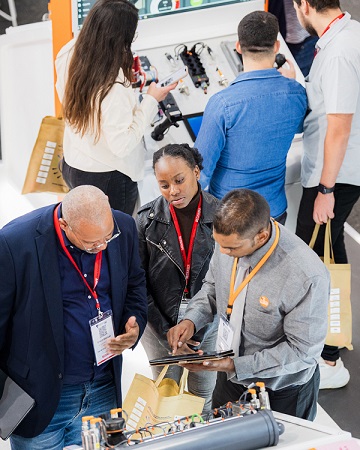
Beyond the conference sessions, the Indaba offers delegates direct engagement with companies developing and deploying automation solutions across the continent. Sponsors and exhibitors represent a cross-section of the industrial ecosystem, spanning industrial IoT and connectivity, process automation, and advanced instrumentation, providing a practical view of how these technologies are applied in real-world environments.
For many attendees, the opportunity to engage with peers facing similar challenges and to explore solutions in a focused, executive-level environment is as important as the content itself.
Africa stands at a defining moment in its industrial evolution. The technologies driving the Fourth Industrial Revolution are advancing rapidly, and the decisions made now will shape the continent’s participation in the global economy for decades to come. Automation alone will not solve Africa’s challenges, but when paired with the right investments in skills, infrastructure, and innovation, it has the potential to unlock new levels of productivity and growth.
🎟 Register today at: https://evolve.eventoptions.co.za/register/aai2026/details
📍 Venue: Radisson Collection Hotel, Waterfront, Cape Town, South Africa
📆 Dates: 13-14 May 2026
