


In industries where machinery reliability determines productivity, cost, and competitiveness, lubrication is far more than a consumable. Juanita Pienaar spoke with Gregory Tarr, Application Engineers Manager at FUCHS LUBRICANTS SOUTH AFRICA, to understand how advanced lubricant formulations contribute directly to uptime, longevity, and lower total cost of ownership across mining, construction, and industrial sectors.
 Not just lubricant, but a strategic tool
Heavy-duty equipment in South Africa is exposed to some of the harshest operating conditions anywhere in the world - extreme temperatures, dust-laden environments, heavy shock loads, long duty cycles, and constant pressure to perform. For operators in mining, construction, material handling, and industrial applications, unplanned downtime can rapidly translate into significant losses.
It is within this context that lubrication becomes a strategic tool. As Gregory Tarr explains, FUCHS develops lubricants “tailored for mining, construction, and industrial applications where shock loads, water ingress, and dust are common,” ensuring reliable performance and long-term protection. Tarr emphasises that the right lubricant does not merely reduce friction, it fundamentally shapes equipment lifespan, availability, and overall operating cost.
Building uptime from the inside out
According to Tarr, the foundation of equipment reliability begins with protection against wear. “FUCHS formulations include advanced anti-wear additives that reduce friction and surface degradation,” he says. This reduction in wear is especially critical in high-load applications where bearings, gears, and hydraulic systems are constantly under stress.
He notes that superior wear protection is complemented by robust thermal and oxidation stability. “Heavy-duty environments often involve extreme temperatures. FUCHS lubricants maintain viscosity and resist oxidation, preventing sludge and varnish formation.” This stability ensures that lubrication remains consistent even when temperatures rise, protecting components from premature failure.
Tarr explains that lubrication goes beyond merely coating surfaces. “High-quality base oils and polymers create a strong lubricating film that resists rupture under stress,” he says. This level of film strength is essential for preventing metal-to-metal contact - the root cause of accelerated component wear across engines, gearboxes, hydraulics, and drivetrains.
Targeting the most common lubrication failures
In the heavy-equipment sector, lubrication-related failures are widespread and costly. Tarr identifies some of the most frequent issues: “Insufficient lubrication, contamination, incorrect lubricant selection, overheating and oxidation, and grease hardening or separation.”
Each of these failures has a measurable impact on uptime. Contamination alone can rapidly accelerate abrasive wear, while incorrect lubricant selection can lead to viscosity loss, increased friction, or total component failure. FUCHS mitigates these risks through both formulation and product design.
“Many FUCHS products have superior sealing and corrosion protection properties, reducing contamination risks,” he explains. When exposed to dust, water, high loads, and vibration, these properties become crucial for keeping systems clean. Tarr notes that their RENOLIT range of greases “is produced using a highly stable formulation designed to resist hardening and prevent oil separation,” addressing a common cause of bearing and bushing failure.
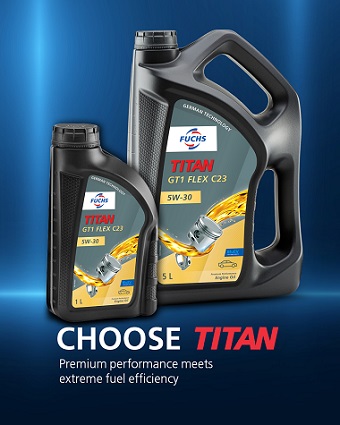
The company’s approach is to simplify maintenance and reduce risk by offering products that cover a range of applications. Their TITAN, RENOLIN, and RENOLIT series, Tarr says, are “designed for extreme applications fortified with selected additive technology to ensure proper film strength.”
Customised protection for harsh African conditions
South Africa’s diverse operating landscapes, from humid coastal regions to the heat and dust of inland mining belts, demand lubricants built for extremes. Tarr confirms that FUCHS engineers its formulations precisely for these environments.
He outlines multiple protection mechanisms including “formulations that use premium base oils and oxidation inhibitors to resist breakdown at elevated temperatures, advanced anti-wear (AW) and extreme-pressure (EP) additives that form protective films on metal surfaces, detergent and dispersant systems that keep abrasive particles suspended, reducing scoring and pitting, and special additives that protect against rust and emulsify water, which are critical for equipment exposed to rain or humidity.”
In addition, products such as RENOLIT LCWP 2 “maintain structure even during water ingress,” supporting equipment operating in wet or variable conditions.
Tarr emphasises that this engineering approach is not generic. Every formulation is developed with specific applications in mind. “FUCHS tailors formulations for industries like mining, automotive, and manufacturing, ensuring compatibility with unique operating conditions,” he says. This ensures that lubrication contributes meaningfully to uptime rather than being merely an operational requirement.
Extending drain intervals and reducing Total Cost of Ownership
For operators managing large fleets, lubrication impacts more than equipment reliability, it directly affects cost structures. Tarr highlights the role of extended drain intervals in reducing downtime: “High-performance base oils and additive technology allow for longer oil-change intervals without compromising protection.”
This supports lower scheduled downtime, reduced oil consumption, and fewer maintenance interventions.
He adds that choosing the right lubricant has a measurable impact on operating cost. “The right lubricant is not just a consumable, it’s a strategic investment that can cut operating costs by 5–10% over the lifecycle of heavy equipment.”
Several FUCHS product lines are specifically engineered for long intervals. Tarr points to examples such as TITAN UTTO PRO 102 for mining/off-highway use and TITAN CYTRAC for transmissions and axles, both designed to support extended drain periods and reduced wear.
Predictive maintenance through oil analysis
To further support uptime, FUCHS provides oil analysis and condition monitoring services designed to detect failures before they occur. Tarr outlines the benefits clearly: “spectrometric analysis identifies wear metals allowing intervention before breakdown, tracks oxidation, viscosity changes, and additive depletion, and detects dust, water, fuel dilution, and coolant leaks.”
Trend analysis, he says, allows maintenance teams to move towards condition-based servicing rather than fixed intervals, reducing unnecessary costs while improving reliability.
FUCHS also offers on-site technical assessments, lubrication audits, product consolidation strategies, and training through the FUCHS Academy, strengthening operator understanding and reducing the risk of lubrication-related failures.
Sub Header: Collaborating with OEMs
Developing lubricants for modern machinery requires strong OEM alignment. Tarr confirms ongoing collaboration: “Currently we are conducting a transmission trial with a Chinese OEM that has been the longest in the South African market.” Such partnerships ensure that lubricants meet the latest performance specifications and integrate with new-generation equipment technologies.
Lubrication as a strategic asset
When asked for his key advice to operators wanting to maximise uptime, Tarr is clear and direct: “Treat lubrication as a strategic asset, implement condition-based maintenance, consolidate and standardise lubricants, focus on contamination control, train your teams, and importantly, partner with lubrication specialists for audits, product selection, and optimisation plans.”
Through this lens, lubrication becomes a proactive investment. One that supports the longevity of high-value assets and strengthens the operational resilience of entire fleets.