

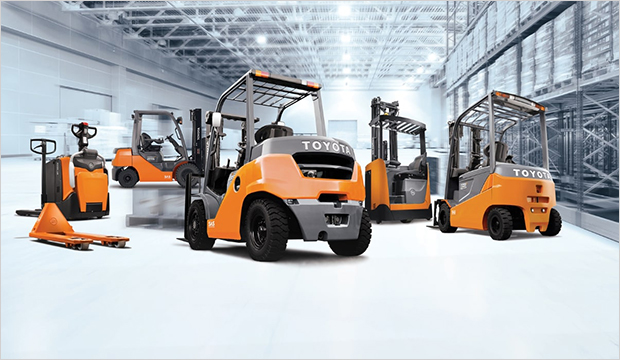
Businesses face numerous challenges, including increasing customer demand and greater competition. It is, therefore, more important than ever for businesses to have an approach to drive efficiency in their operations and ensure customer satisfaction. One such approach is Toyota Lean Logistics Management (TLLM).
 Developed when Toyota established the concept of lean manufacturing with the Toyota Production System, the TLLM approach focuses on continuous improvement in a business. TLLM incorporates two key concepts: Jidoka, a form of intelligent automation, and Just-in-Time, which focuses on eliminating waste in manufacturing processes and encouraging efficiency.
Although a product of lean manufacturing, TLLM extends beyond the realm of manufacturing and applies to businesses in various sectors. TLLM’s primary goal is to minimise waste in all business operations. Implementing TLLM also drives the profitability of a business by looking at ways to provide the highest quality products at the lowest cost and in the shortest time possible. Adopting the concept of TLLM helps businesses to think differently about their operations.
“Imagine TLLM as a house, with its roof symbolising business goals. You need to have the walls, pillars and a solid foundation to ensure the house is in order. TLLM provides the components to build a strong house for your business to be sustainable and effective in the long term,” says Vuyokazi Bangazi, National Sales Manager for Toyota Material Handling, a division of CFAO Equipment SA that sells forklifts and value-added solutions.
“Toyota Material Handling can assist our customers in implementing the concept of TLLM in their business. Combined with our premium brand equipment, this collaboration will empower our customers to outshine their competition,” says Bangazi.
One of the essential components in TLLM is the implementation of 5S, which includes the pillars or principles of sorting, setting order, standardisation, sustaining and shining. This system ensures that the workspace is clear, organised, and efficient, contributing to the overall effectiveness of a business.
TLLM also recognises and addresses seven types of waste, known as Mudas, that can hinder business efficiency. These include overproduction; waiting or time on hand, including machine downtime and waiting for materials to arrive; excess inventory or information, for example paper archiving; and unnecessary transportation or bad timing in the movement of goods. Further Mudas include motion inefficiencies, processing errors, and making defects.
Implementing TLLM requires a strategic approach, starting with the foundational step of 5S implementation. Once this foundation is laid, businesses can move on to addressing the seven Mudas, identifying and addressing these wasteful elements to streamline their operations and maximise profitability.