

Capital Equipment News’ Juanita Pienaar spoke to Shumani Industrial Equipment Managing Director Victor Nemukula about how materials handling providers are responding to rising efficiency demands, accelerating electrification, and the growing role of smart fleet technologies in South Africa.
A sector under pressure to perform
Across South Africa’s warehouses, factories, and distribution centres, materials handling fleets are being asked to do more with less. Rising operating costs, tighter margins, and heightened safety and sustainability expectations are forcing companies to rethink how they deploy, manage, and power their equipment. For providers such as Shumani Industrial Equipment, this pressure is translating into a clear focus on efficiency, fleet optimisation, and the rapid evolution of technology.
Nemukula says the conversation with customers has changed markedly in recent years. “Customer needs have increased,” he explains. “They want cheaper, good-quality equipment. Days of offering them highly expensive branded equipment are behind us.” This shift is not about compromising on performance or reliability, but about finding smarter, more flexible ways to deliver value over the full lifecycle of the fleet.
At the centre of this evolution is a combination of data-driven decision-making, electrification, and a more hands-on approach to support and maintenance.
Fleet optimisation through data and visibility
One of the most significant trends shaping the materials handling sector is the growing emphasis on understanding how fleets are actually used. According to Nemukula, efficiency starts with visibility. “So far we’re giving companies tools that allow them to monitor fleet utilisation and safety,” he says. “These allow them to plan properly and manage their costs.”
Fleet management technologies have become the most widely adopted digital tools among Shumani’s customers. By tracking utilisation, operators can identify underused machines, peak demand periods, and inefficiencies that would otherwise remain hidden. This data then feeds directly into smarter deployment decisions, helping businesses right-size their fleets rather than defaulting to overcapacity as a buffer against downtime.
Beyond technology, Shumani also supports customers with the interpretation of this information. “Apart from technologies, we assist with data for them to make informed decisions on the deployment of their fleet,” Nemukula notes. In practice, this means advising on the mix of equipment required for specific applications, shift patterns, and operating environments.
The accelerating shift to electric equipment
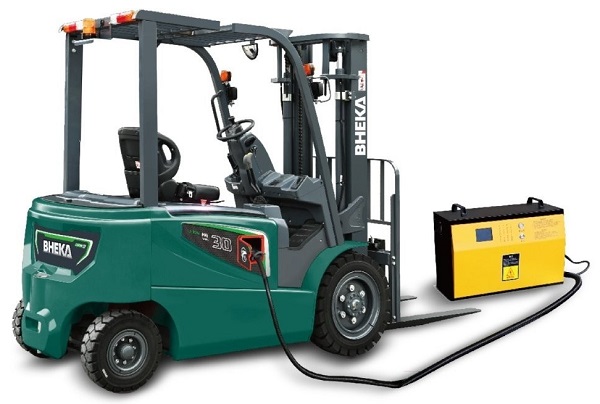
Perhaps the most visible change in the materials handling landscape is the steady move away from internal combustion engines towards electric alternatives. While this trend has been building for several years, Nemukula says demand has reached a new level of urgency.
“There’s been a shift from internal combustion to electric forklifts in the past few years,” he says. “Food manufacturing companies are increasingly asking for electric forklifts in their procurement process, and the market is gaining traction.”
The food and beverage sector has emerged as the fastest adopter of electric materials handling equipment, driven by hygiene requirements, indoor air quality considerations, and a desire to reduce operating costs. Electric forklifts offer quieter operation, zero on-site emissions, and fewer moving parts, which translates into lower maintenance requirements and improved uptime.
Customers making the transition are seeing tangible benefits. “Reduced operating costs and downtime,” Nemukula says simply, when asked about the advantages of moving from internal combustion to electric equipment. Over time, these savings contribute to a lower total cost of ownership, particularly in high-utilisation environments.
Managing the realities of electric fleets
While electric equipment brings clear advantages, it also introduces new operational considerations. Battery management, charging discipline, and operator behaviour become critical factors in maintaining performance.
“Electric equipment needs to be charged to its maximum at all times, and we ensure that operators adhere to the requirement,” Nemukula explains. This hands-on approach reflects Shumani’s recognition that technology alone is not enough; successful adoption depends on training, processes, and ongoing support.
Downtime remains one of the biggest challenges customers face, particularly when dealing with ageing fleets. “Downtime is one big problem, more so with aging fleets,” Nemukula says. To mitigate this risk, Shumani sometimes provides additional equipment to ensure continuity of operations. This flexibility can be the difference between meeting production targets and costly disruptions.
Supporting uptime in demanding environments
In sectors where materials handling equipment is mission-critical, aftermarket support is as important as the machines themselves. Shumani has structured its service offering to reflect this reality, particularly for customers operating large or complex fleets.
“With most of our customers, we offer on-site technicians to minimise downtime,” Nemukula says. “Sometimes with very large fleets, we also have a manager on site.” This embedded support model allows issues to be addressed quickly, often before they escalate into major failures.
Maintenance programmes play a central role in sustaining long-term efficiency. “We provide standard scheduled and unscheduled maintenance to all our customers,” Nemukula explains. By combining preventative servicing with responsive support, Shumani aims to extend equipment life while keeping operating costs predictable.
Flexibility as a competitive advantage
As customer expectations evolve, flexibility has become a defining feature of Shumani’s value proposition. Rather than pushing a one-size-fits-all solution, the company offers a wide range of equipment and commercial models designed to align with different operational and financial needs.
“Shumani offers a wide range of equipment at flexible terms to support our customers,” Nemukula says. “We offer all sizes of forklift, either gas, diesel, or electric at different options, either short or long-term rental, outright purchase, and any other options customers need.”
Crucially, these offerings are typically bundled with maintenance support to reduce the burden on in-house teams. “We offer our products with maintenance to minimise downtime,” he adds. For many customers, this integrated approach simplifies fleet management and allows them to focus on core operations rather than asset upkeep.
Rethinking value in the South African market
The broader South African context is also shaping decision-making in the materials handling sector. Cost pressures, energy considerations, and competitiveness in global supply chains are forcing businesses to scrutinise every aspect of their operations.
According to Nemukula, there are no insurmountable operational challenges, but expectations have shifted. “There aren’t any operational challenges, except that customers' needs have increased,” he says. The emphasis is now on achieving the right balance between affordability, reliability, and performance.
This environment has opened the door for alternative brands and solutions that can deliver comparable results without the premium price tag traditionally associated with the sector. It has also accelerated interest in technologies that promise step-change improvements in efficiency.
The rise of automation and AGVs
Looking ahead, Nemukula sees automation playing an increasingly important role in materials handling strategies. Shumani already has access to Autonomous Guided Vehicles (AGVs), which represent a significant departure from conventional equipment models.
“We have access to Autonomous Guided Vehicles (AGVs) which require no operators,” he says. For operations facing labour constraints, safety concerns, or the need for consistent, repeatable movements, AGVs offer a compelling proposition.
The combination of electric forklifts and automation has the potential to reshape cost structures across the industry. “Companies are looking at ways to reduce their operational costs,” Nemukula notes. “Electric forklift plus AGV will cut operational costs, thereby ensuring competitiveness.”
An accelerating adoption curve
While AGVs and smart fleet technologies are still at an early stage of adoption in many parts of the South African market, Nemukula is confident that momentum is building. “We anticipate that adoption of these technologies will accelerate in the coming years,” he says.
As more businesses experience the benefits of electrification, data-driven fleet management, and automation, these solutions are likely to move from optional extras to strategic necessities. Providers that can guide customers through this transition - addressing both the technical and operational dimensions - will be well positioned to lead.
Building efficiency, one fleet at a time
Ultimately, Shumani’s approach reflects a broader shift in the materials handling sector: away from simply supplying equipment and towards delivering measurable operational outcomes. By combining flexible product offerings, robust support structures, and a growing portfolio of electric and smart technologies, the company aims to help customers navigate a complex and rapidly changing landscape.
For Nemukula, the goal is clear. Efficiency is not a single upgrade or purchase decision, but an ongoing process of optimisation, informed by data and supported by the right partnerships. As South African businesses continue to seek ways to do more with less, that philosophy is likely to resonate well beyond the warehouse floor.