


Juanita Pienaar spoke with Stuart Potter, MD of Volvo Trucks South Africa, about the realities shaping the local heavy truck market, the shift towards sustainability, and how partnerships are becoming central to fleet success.
A market under pressure
South Africa’s heavy truck industry is navigating a complex and often unforgiving operating environment. According to Stuart Potter, fleet owners are contending with a convergence of pressures that go beyond the usual cost considerations.
“For fleet owners, the current environment is one where fuel volatility, infrastructure constraints, and security risks add constant pressure,” he explains.
These challenges are not isolated. They form part of a broader global context marked by geopolitical instability and supply chain disruptions. Yet, in the South African context, they are often amplified by local realities, placing operators under sustained strain.
Against this backdrop, the traditional transactional relationship between OEMs and customers is shifting. Increasingly, operators are looking for more than just a vehicle – they are seeking long-term value and operational support.
“Volvo Trucks is committed to helping fleet operators stay profitable. And profitability comes from partnership,” says Potter. “Our role is not just to supply a truck, but to support their business.”
This shift reflects a deeper industry evolution. Fleet operators are no longer evaluating trucks purely on acquisition cost, but on their ability to contribute to overall business resilience.
Beyond the purchase price
One of the most persistent misconceptions in the truck-buying process, Potter notes, is an overemphasis on the initial purchase price.
“A common mistake that buyers make is to focus on the sticker price when first buying a truck,” he says. “There are more considerations, such as fuel efficiency, maintenance, and, more importantly, the resale potential of the brand.”
This broader perspective is encapsulated in the concept of total cost of ownership (TCO), which is gaining increasing traction among South African operators. However, even within TCO calculations, critical factors are sometimes overlooked.
“There are also other parts of the TCO calculation that are not always measured by all transporters, such as uptime,” Potter adds. “The cost of waiting for parts to be available for repairs is often underestimated.”
In a country where long-haul routes can stretch across vast distances and infrastructure reliability can vary significantly, downtime can have a disproportionate impact on profitability. As such, uptime solutions, parts availability, and service support are becoming key differentiators.
Built for tough conditions
South Africa’s operating environment presents unique challenges that set it apart from many other markets. From demanding terrain to extended long-haul routes, trucks must be engineered to withstand conditions that are often described as among the toughest globally.
“It is a well-known fact that South Africa has some of the toughest long-haul conditions globally,” says Potter.
To address this, Volvo Trucks places significant emphasis on local testing and adaptation. New models are not simply introduced into the market – they are rigorously evaluated and optimised to meet local requirements.
“When we introduce new models into the country, we carry out extensive local testing to optimise vehicle productivity and ensure they meet the benchmark standards required for South Africa’s demanding conditions,” he explains.
This localisation extends to vehicle configurations, ensuring that fleets have access to solutions tailored to different terrains and operational needs. It is a strategy that underscores the importance of aligning global innovation with local realities.
The rise of the complete transport solution
As operational complexity increases, so too does the demand for integrated solutions. Fleet operators are increasingly seeking partners who can deliver a holistic approach to transport.
“Customers are also increasingly looking for a transport partner that can deliver a complete transport solution,” Potter notes.
This encompasses not only the vehicle itself, but also a suite of services designed to enhance efficiency, safety, and profitability. From connected services and fuel-saving technologies to uptime solutions and support packages, the focus is on creating a seamless ecosystem around the truck.
“The most effective way we do this is by working side by side with our customers, understanding their operations, priorities, and pain points, and tailoring the right mix of products and services to support them,” he adds.
This collaborative approach reflects a broader industry trend towards co-creation, where OEMs and customers work together to optimise outcomes.
Connectivity and safety at the forefront
Digitalisation is playing an increasingly central role in the evolution of the heavy truck industry. Connectivity, in particular, is unlocking new opportunities for improving efficiency and safety.
“With the use of advanced analytical methods and AI, we can analyse large amounts of data and use the findings in our product development,” says Potter. “We can develop new products and services that benefit our customers, and make transportation more productive, more sustainable, and safer.”
In the South African context, the potential impact on road safety is especially significant. Despite the availability of advanced connected solutions, adoption has not yet reached its full potential.
“With road safety being a major issue in South Africa, a missed opportunity could be the full adoption of connected solutions that contribute to improving driver behaviour and overall road safety,” Potter points out.
These systems provide fleet operators with real-time visibility into vehicle performance and driver behaviour.
“With the geo-positioning services and connected fleet support, customers can use this to follow everything from the position of the truck to detailed information about the driver, load, and type of vehicle,” he explains. “The safety service also allows fleet controllers to monitor truck speed, harsh braking, and unsafe driving behaviour. This allows the owner to intervene and to coach and correct the driver’s behaviour.”
Such capabilities not only enhance safety but also contribute to improved fuel efficiency and reduced wear and tear, further reinforcing the value of connected technologies.
Advancing sustainable transport
Sustainability is another key driver of change in the industry, with OEMs and operators alike seeking ways to reduce environmental impact without compromising performance.
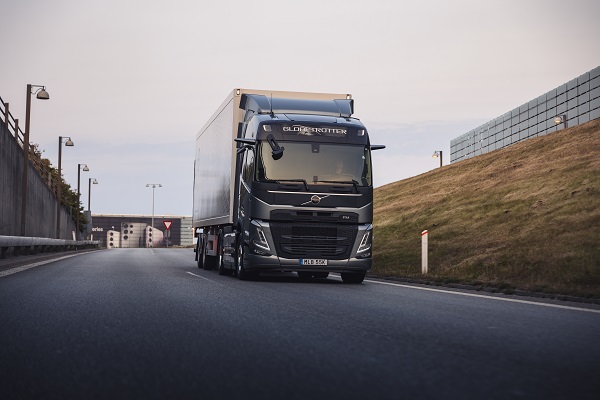
Volvo Trucks has taken a significant step in this direction with the local assembly of Euro 6 and FH Aero trucks.
“Earlier this month, Volvo Trucks announced the local assembly of Euro 6 and FH Aero trucks, reinforcing Volvo Trucks’ leadership in sustainable transport solutions while continuing to support the development of the local manufacturing sector,” says Potter.
The introduction of the FH Aero range marks a notable milestone for the South African market.
“This revolutionary product was launched globally in 2024 and is seen by the company as the ideal long-haul truck,” he explains. “Its aerodynamic extended cab is designed to save fleet owners energy and reduce their carbon footprint.”
Customers have the flexibility to choose between electric and diesel models, with technologies such as I-Save further enhancing fuel efficiency.
At the same time, the local assembly of Euro 6 trucks brings advanced emissions technology closer to home.
“This technology offers fleet operators the synergy of sustainability, efficiency, and performance that underscores Volvo Trucks’ commitment to offering cleaner, more sustainable transport solutions,” Potter adds.
The reality of electrification
While the global shift towards electric vehicles is well underway, the transition to electric heavy trucks in South Africa presents a unique set of challenges.
“I’ve seen first-hand how challenging it can be for some operators to visualise this transition,” Potter admits.
A key barrier is the need for a fundamental shift in how fleets approach their operations. Unlike conventional trucks, electric vehicles require careful planning around routes, charging infrastructure, and energy management.
“The first step is to be realistic about your operational setup and long-term sustainability vision, supported by the right EV partner,” he says.
This is where the concept of partnership becomes particularly critical.
“This is not a ‘sell a truck and watch it leave the yard’ scenario – successful EV adoption requires a genuine, ongoing partnership that is tailored to each unique operation,” Potter emphasises.
Despite the challenges, there are encouraging signs of progress.
“Adoption is happening with real-world operational successes in South Africa, proving that the transition is not only realistic but entirely achievable,” he notes.
Enabling the transition
For electric trucks to gain wider traction, several enabling factors need to be addressed – particularly in the regulatory space.
“One area that requires attention is road traffic legislation,” Potter explains. “Adjustments are needed to enable operators to run electric trucks in their fleets without significant limitations on payload capacity, including both weight and dimensions.”
These limitations stem from the physical characteristics of batteries, which can impact vehicle weight and, consequently, payload capacity. Addressing these constraints will be essential to making electric trucks commercially viable for more operators.
Looking ahead, Potter sees a multi-technology future for South Africa’s transport sector.
“All the possible technologies have potential in South Africa,” he says. “In the shorter term, we will see ICE still dominant in longer-haul operations. We could also expect to see a rise in biofuels and natural/biogas-powered trucks.”
Battery electric vehicles (BEVs), meanwhile, are expected to play a growing role in shorter-haul and regional applications.
“An increase will be seen in BEVs for short-haul and regional work. The BEV share will start to grow faster once legislation is adapted to accommodate the physical weight and dimension limitations imposed by the physics of batteries,” he adds.
A steady path forward
While the pace of change may vary, Volvo Trucks remains committed to driving progress across all fronts.
“Volvo Trucks is fully committed to our sustainability ambitions, while recognising that leading in this space comes with its own challenges,” Potter concludes. “Every market progresses at its own pace, with sustainability maturity influenced by local conditions. However, this does not lessen our determination.”
In a market defined by complexity and constraint, the path forward is unlikely to be linear. Yet, through a combination of innovation, localisation, and partnership, the industry is steadily building a more resilient and sustainable future.
For South African fleet operators, the message is clear: success will depend not only on the trucks they choose, but on the partners they choose to work with.