


According to Malcolm Curror, chief executive of United Manganese of Kalahari (UMK), the South African resources sector is anticipated to experience significant growth following global disruptions, as large-scale reconstruction efforts will require substantial quantities of natural resources, including manganese and other steelmaking inputs.
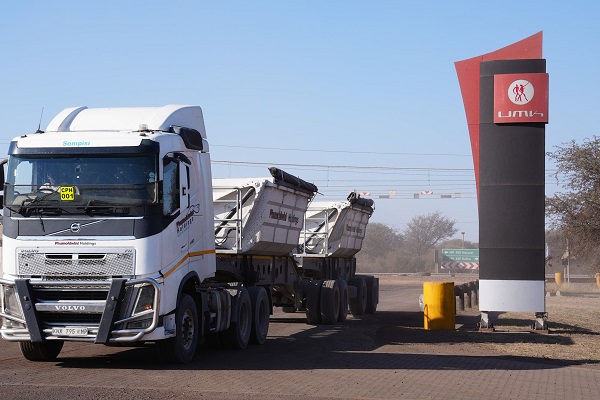
Curror stated that the transition from geopolitical conflict to reconstruction efforts in affected regions may result in a sustained increase in global demand for strategic minerals in the near to medium term, especially those associated with infrastructure, energy, transport, and industrial redevelopment.
Historical evidence indicates that post-disruption reconstruction consistently triggers significant increases in demand for construction materials and the minerals necessary for their production. Curror stated, “Once rebuilding begins, steel demand rises rapidly because countries need to rebuild infrastructure like bridges, ports, rail networks, housing, power infrastructure and manufacturing capacity.” He further emphasized, “Resources such as manganese become strategically important because there is no substitute for it in steel production at scale.”
Curror stated, “This is potentially really good news for South Africa.” He further explained, “From community benefit through to miners, beneficiation and the upside of greater and reasonably sustainable job creation.” He noted that a rebuild phase could cyclically initiate a global and local economic boom, which may positively influence development in markets not directly impacted by initial disruptions. “We could see an upward trajectory across many resource markets for decades,” he added.
Given the scale and extent of current global disruptions, Curror anticipates increased pressure across entire value chains. Rising demand in geographically dispersed regions is expected to intensify competition for resources and exert upward pressure on production and fulfilment processes. Curror further notes that this dynamic may elevate not only commodity prices but also freight and logistics costs. He states, “Freight pricing may remain elevated for longer, but in a rebuild phase, for different reasons. It may not necessarily be driven by energy prices alone, but increasingly by competition for freight space as reconstruction economies compete for shipping capacity, bulk commodities and port access.”
South Africa is well-positioned to benefit from this environment because of its substantial mineral reserves, established mining expertise, and robust export capabilities. Curror emphasized that responsible resource development, investment in logistics, and active community participation are essential for South Africa to realize the full potential of this opportunity.
South Africa’s mining industry supports thousands of jobs and generates significant export earnings and tax revenue. The current phase of industrial growth could further strengthen the Northern Cape’s status as a leading global mineral region, while also creating secondary opportunities in rail, ports, engineering services, local suppliers, and related industries. However, maintaining competitiveness will require improvements in operational efficiency, sustainability, and the reliability of logistics infrastructure.
Approximately 90% of global manganese production is utilised in steelmaking to enhance strength, durability, hardenability, wear resistance, and serves as a vital desulfurizer and deoxidiser to remove impurities from steel. South Africa accounts for about 36% of global manganese ore production, with most reserves in the Northern Cape, where UMK operates.