

With revenues expected to grow from roughly R103.6 billion (USD 6.3b) in 2023 to over R328.9 billion (USD 20b) by 2030, South Africa’s cold chain market is growing at a compound annual growth rate (CAGR) of between 18% and 20%.
Largely driven by agricultural exports and pharmaceutical demand, the industry relies on consistent power supply to ensure temperature-sensitive goods arrive at their destinations unspoiled.
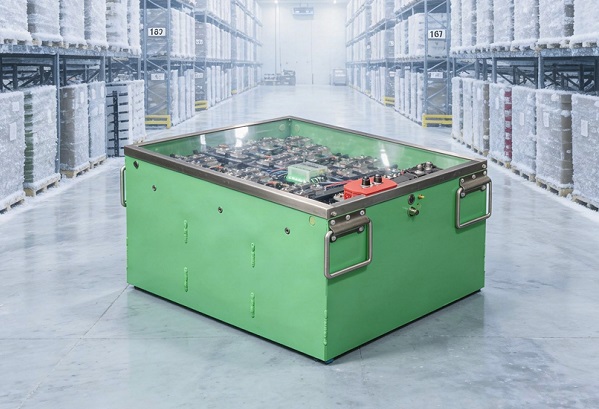
In this respect, businesses operating across the cold chain are increasingly adopting lithium-ion battery technology and advanced Battery Management Systems (BMS) to improve operational efficiency, reliability and productivity and ensure precise temperature control is maintained.
Alex Campbell, Area Sales Consultant at Industrial Power, a division of CFAO Equipment, highlights that any interruption in power or fluctuations in cooling performance can lead to product spoilage, financial losses and regulatory risks for the growing cold chain Industry.
“While South Africa’s energy supply has stabilised significantly, localised outages due to illegal connections and overloaded infrastructure still occur, requiring ongoing vigilance and back-up plans. Lithium-ion and intelligent battery packs are helping organisations address these challenges with greater confidence and sustainability.”
Lithium-ion batteries provide faster charging, longer operational life and higher energy efficiency. “Their ability to maintain consistent power output through energy density makes them particularly valuable in demanding cold storage environments, where equipment such as forklifts, pallet jacks and refrigeration systems must operate continuously and reliably,” notes Alexander.
One of the major advantages of lithium-ion technology is reduced downtime. Rapid-charging capabilities allow battery-powered equipment to return to service quickly, eliminating lengthy charging cycles or battery swap outs. This greatly improves workflow continuity, enabling warehouses and distribution centres to maintain higher productivity levels, especially during peak operating periods where meeting peak demand with reliability is key. Notably, Alexander points out that unlike standard battery options, Industrial Power guarantees a lifespan of 20,000 hours, resulting in 3,000 to 6,000 charge cycles at over 80% energy density over battery lifetime, ensuring lower total cost of ownership over time.
He cites the example of 32 Toyota 2.5 Ton Forklifts powered by 52V554Ah Balancell lithium-ion batteries that were deployed at a customer over a five-year period. “The result was more than 19,000 average operating hours per unit and an impressive R9.8 million in operational cash flow improvements.”
Battery packs designed specifically for cold chain applications also offer improved durability and performance in low-temperature environments. Advanced thermal management capabilities help maintain stable operation in refrigerated and frozen conditions, ensuring uninterrupted performance across the supply chain.
Key to these innovations is the Battery Management System (BMS), a critical technology that monitors and protects battery performance in real time. A BMS continuously tracks parameters such as voltage, temperature, charging cycles and state of health to ensure batteries operate safely and efficiently.
By intelligently balancing power usage and preventing issues such as overcharging, overheating or deep discharge, a BMS significantly extends battery lifespan and reduces maintenance requirements. This not only lowers total cost of ownership but also enhances operational reliability for businesses that depend on uninterrupted cold chain performance.
In addition, modern BMS platforms provide valuable data insights that support predictive maintenance and energy optimisation strategies for fleet operators. Operators can monitor battery health remotely using a single dashboard, identify potential issues before failures occur and make informed decisions that improve fleet management, reduce risk and improve equipment utilisation.
Campbell says South Africa’s agricultural exports reached a record high of more than R266 billion in 2025, while the pharmaceutical industry’s market revenue was estimated at approximately R157.7 billion.
“The growth in these sectors highlights the need to invest in smart energy solutions. The operational impact of Lithium-Ion technology, combined with intelligent energy management and inherently safe chemistry strengthens supply chain performance and ensures the safe delivery of temperature-sensitive products on time locally and to markets around the world,” he concludes.