By Roelof van den Berg, CEO of the Gap Infrastructure Corporation (GIC)
Clean water saves lives, sustains public health, enables businesses to operate, and keeps South Africa’s agricultural sector productive. Wastewater management is a vital component of water security, helping to ensure both rural and urban South Africans have access to potable water.
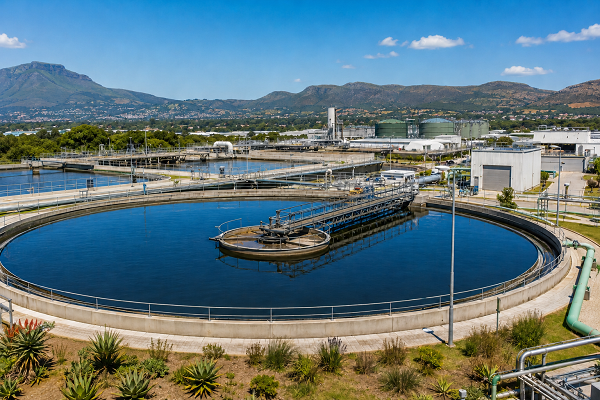 As demand on water systems grows alongside our population, industrial activity, and climate variability, wastewater infrastructure must evolve in step through well-planned expansion, modernisation, and long-term investment.
However, modernising and expanding wastewater networks is costly and technically demanding, requiring specialised expertise. For wastewater to receive the same long-term focus as other infrastructure sectors, sustained collaboration between the public sector, construction industry, and private investors is essential.
Scaling wastewater delivery through structured partnerships
A large-scale, nationwide redevelopment of wastewater systems will necessitate a multi-year commitment involving experts from across industries, with assistance from both public and private stakeholders. As such, public-private partnerships (PPPs) are best suited to address the need for advanced expertise at scale.
PPPs strengthen municipal delivery by introducing experienced operators with deep technical capacity, proven systems refined through sustained private investment, and funding structures designed for long-term performance. Meanwhile, infrastructure remains publicly owned, benefiting from public input and leadership throughout the project lifecycle.
As demands on wastewater infrastructure intensify, delivery partnerships will become increasingly important. The challenge will not be whether wastewater systems should be upgraded, but how to do so efficiently, affordably, and at the scale required to match the growth experienced in South Africa’s communities, towns, and cities.
Utilising advancements in wastewater technologies to meet South Africa’s water needs
Recent advances in wastewater technology are expanding water recycling beyond conventional treatment models. Innovations such as advanced membrane filtration and hybrid systems now remove a wider range of contaminants with greater energy efficiency and lower chemical use, allowing treated effluent to be reused for industrial and agricultural purposes, and in some cases even potable supply.
Simultaneously, real-time data processing, automation, and AI-based monitoring are changing how treatment plants operate. Continuous analysis of sensor data enables predictive adjustments that can improve energy and resource efficiency while maintaining regulatory compliance.
These digital tools also support decentralised treatment systems that recycle water close to where it is generated, easing pressure on central infrastructure and strengthening local water security. Together, these developments are reframing wastewater from a disposal problem into a reusable resource that can help relieve South Africa’s growing water stress, creating opportunities for both the public and private sectors to join in changing lives.
Aligning funding with long-life infrastructure
Wastewater infrastructure is particularly well-suited to private sector participation where funding is concerned, providing long time horizons and surety, which attracts private capital. Where delivery frameworks and governance are clearly defined, private capital can be mobilised in partnership with public stakeholders in a sustainable and optimised way.
Treatment works and bulk sewer systems are long-life assets, with predictable demand and clear performance requirements. Once operational, they function as essential municipal services that must deliver consistent outcomes over decades.
Ultimately, upgrading wastewater infrastructure delivers exponential benefits that extend to public health, environmental protection, and broader socio-economic development. Unlocking their potential as growth accelerants rests in access to specialised skills, sustainable funding, and capacity.
As pressure on water systems grow, PPPs offer an exciting and sustainable path to deliver crucial services to communities across South Africa in the years ahead.