In an industry defined by cyclical pressure, rising input costs and persistent skills shortages, financial discipline and operational agility have become decisive differentiators.
 For GVK-Siya Zama (GVK), a national construction group with more than 1 000 permanent employees across South Africa, longevity has not been accidental. It has been engineered. Wilhelm du Plessis spoke to CFO John de Sousa who unpacks how the company structures funding, manages compliance, navigates public-sector payment cycles and balances empowerment objectives with commercial discipline.
Strategic anchors and self-funded discipline
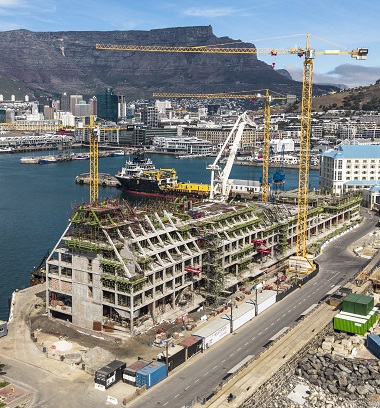
One of GVK’s flagship developments is Quay 7 at the V&A Waterfront - a strategically located project with long-term commercial implications.
“GVK views the V&A as a strategically aligned client,” De Sousa explains. “Having large anchor projects over multiple years is essential for our business model.”
Rather than relying on external funding structures for each development, GVK adopts a self-funded model supported by rigorous internal controls. “All of our projects are self-funded and carefully managed through our project lifecycle strategy,” he says. “That includes detailed programmes, cash flow forecasts and forward workload projections.”
Risk management is embedded rather than reactive. “Risk is managed through the same processes we follow on all our projects and a careful hands-on approach by the management team, together with consulting teams, ensures that risk is managed carefully.”
The emphasis on lifecycle visibility - from tender stage through to completion - reflects a broader philosophy: margins are protected not by speculation, but by disciplined oversight.
Governance under global scrutiny
High-profile developments such as the Amazon corporate office brought global visibility and heightened governance expectations.
De Sousa points to sustained investment in modern systems and skills. “Our continuous investment in modernisation and in systems that stand up to international client scrutiny and our strategy as a forward-thinking contractor is important,” he notes.
Equally critical is procedural adherence. “From a contractual perspective we follow rigorous policies and procedures to ensure that we adhere to financial controls and governance frameworks within our environment and theirs. It’s critical.”
Over time, GVK has prioritised digitisation, system integration and staff training to ensure project lifecycle management is both transparent and accountable. “We’ve continuously modernised our systems and invested in our staff to manage the full lifecycle effectively.” In an environment where reputational risk can escalate quickly, governance discipline is non-negotiable.
Regional retail and socioeconomic sensitivity
Regional developments such as Soshanguve Mall carry unique socioeconomic dynamics. Commercial risk in these contexts extends beyond spreadsheets.
“Projects like this depend largely on successful and clear collaboration, problem solving and reciprocity between ourselves and the client,” says De Sousa. “You need to be focused on outcomes, and the developer, contractor and consulting teams must align those outcomes.”
Community engagement also plays a decisive role. “We were fortunate that the client was intrinsically involved in ensuring collaboration and communication with the community at large. That’s what led to the success of a project of this nature in the area that it was in.” For GVK, commercial sustainability is inseparable from stakeholder alignment and, ultimately, client satisfaction.
Navigating public sector complexity
Public sector projects - including the award-winning Transnet HQ re-development - bring stringent compliance, reporting and fiscal accountability requirements.
“In our environment, all projects carry similar risks and expectations,” De Sousa explains. “We rely heavily on our business operating systems, which clearly identify project lifecycles as well as project management, contract management, financial and cash management, HSE and quality.”
These frameworks are underpinned by defined roadmaps. “If they’re followed and adhered to correctly, they ensure we manage all facets of our projects in a regulated manner.” However, public sector realities cannot be ignored. Delayed payments remain a persistent challenge across the industry.
“From our perspective, it’s imperative that we maintain a good balance between public and private sector projects to manage cash flow,” he says. “You can’t be too heavily weighted toward one or the other.”
While public sector debt is ultimately settled, timing can strain liquidity The key lies in portfolio balance and rigorous forward planning.
Building in remote environments
GVK’s footprint extends deep into rural South Africa, including hospital construction projects in remote parts of the former Transkei. These developments present logistical, skills and cost challenges unlike urban commercial builds.
“These projects are probably our biggest challenges,” De Sousa admits. “Skill shortages, quality of local contractors, distance from main cities, transport logistics and the long duration of contracts all play a role.”
Access roads, seasonal weather patterns and supply chain constraints can complicate delivery. Yet, the greatest variable may be human capital.
“It’s important to find individuals who thrive in those circumstances,” he says. “Not everybody is cut out for living in remote areas for extended periods at a time.”
Matching personality to project environment is therefore part of financial risk management. Productivity and morale directly influence programme adherence, \cost control and viable project delivery.
Transparency and ethical procurement
In an industry often scrutinised for governance lapses, ethical procurement and regulatory compliance are under constant watch.
GVK’s approach begins at tender stage. “We follow a rigorous tender process with close scrutiny in terms of documentation required,” De Sousa explains. “We follow the correct routes, adhere to requirements and submit all documentation accordingly.”
While broader systemic issues may exist within the sector, GVK’s emphasis remains on procedural compliance within its sphere of control.
Protecting margins in a volatile market
Rising input costs, energy instability and logistics constraints have placed unprecedented pressure on construction margins.
The response lies in efficiency and accountability. “Systems are important and managing inefficiencies is critical while holding staff accountable and providing incentives contribute meaningfully to final project success.”
GVK’s leadership model reinforces this. “We’re still a close-knit, hands-on management team,” he says. Quarterly regional financial reviews are conducted by owners personally.
The skills crisis
Perhaps the most pressing structural risk facing the sector is the ongoing exodus of skilled professionals. “The greatest risk, in my opinion, is the lack of skills to manage projects,” De Sousa says. “We face a constant challenge with professionals leaving the country. Finding adequate replacements is very difficult.”
International demand - particularly from the Middle East - has intensified competition for engineers, quantity surveyors and project managers. This has had a direct impact on contractors and more so on consultants. The net result for the industry being either poor or delayed information flow.
“We have to continue training younger staff in an attempt to retain skills and upskill existing team members.”
While market cycles and client behaviour fluctuate, the skills deficit poses a more enduring threat to industry sustainability.
Transformation as strategy, not obligation
As a leading black-owned construction group operating in a transformative environment, GVK integrates empowerment into its core strategy.
“I’ve personally spearheaded our transition to black empowerment in a real way,” De Sousa says. “It’s been part of our focus since the dawn of democracy. It’s part of our DNA.”
Rather than viewing empowerment as compliance, GVK embeds it across recruitment, mentorship and advancement structures. “The makeup of our country ensures that empowerment and localisation generally happen quite naturally for us,” he adds. “From hiring trainees and QSs to contracts managers, it’s a constant focus.”
Alignment between financial strategy and transformation objectives strengthens both resilience and sustained relevance.
Entrepreneurial longevity
“Being extremely entrepreneurial and agile,” De Sousa responds without hesitation when asked what has led to GVK’s longevity. “We’re hands-on. We make decisions quickly. We’re personally involved.”
He cautions against distance from the operational coalface. “If you want to sit in a boardroom and sit back, you’re not going to make money. You need to understand what’s happening on the ground and get out there.”
It is a philosophy shaped by experience. Trained in accounting but drawn to broader business dynamics, De Sousa moved from insurance into construction 26 years ago - and stayed.
“I love the industry. I love understanding the business more than just the numbers. The numbers come naturally.”
In a sector where uncertainty is constant, that blend of financial rigour, discipline, and strong adherence to policies, procedures, structure and entrepreneurial instinct may be GVK’s most valuable asset.
As infrastructure budgets tighten and regulatory complexity intensifies, companies that combine disciplined governance with operational agility will likely define the next chapter of South Africa’s construction story. For GVK, the blueprint appears firmly in place.