South Africa’s renewed infrastructure push is creating fresh momentum in the construction sector. More than R1 trillion has been earmarked for public infrastructure over the next three years across transport, water, sanitation and energy, forming a central pillar of government’s economic recovery strategy.
Yet industry analysts caution that funding alone does not guarantee delivery. Capacity constraints in municipalities and government departments, combined with climate vulnerability, power disruptions and rising input costs, put pressure on contractors to complete projects on time and within budget.
Construction firms are turning to practical operational measures to control risk, prevent delays, and protect already-thin margins. One of these interventions is environmental control on construction sites, particularly the management of moisture during building processes. Excess humidity slows curing times, compromises materials such as coatings or waterproofing systems, impacts final structural strength of concrete and contributes to mould growth or structural damage if not properly managed.
Wynand Deyzel, Commercial Sales Manager at air treatment technology specialist Solenco, says the industry is starting to recognise the role humidity management can play in improving project efficiency.
“Controlling moisture in a construction environment can significantly improve productivity on site. This is where the concept of cocooning becomes valuable,” he explains. “Cocooning involves creating a controlled micro-environment in a specific work area using commercial dehumidification. By extracting excess moisture from the air, contractors can stabilise conditions and ensure materials cure or bond properly.”
The concept is especially valuable when working with moisture-sensitive materials such as concrete, coatings or drywall, where environmental conditions can determine whether processes succeed or fail.
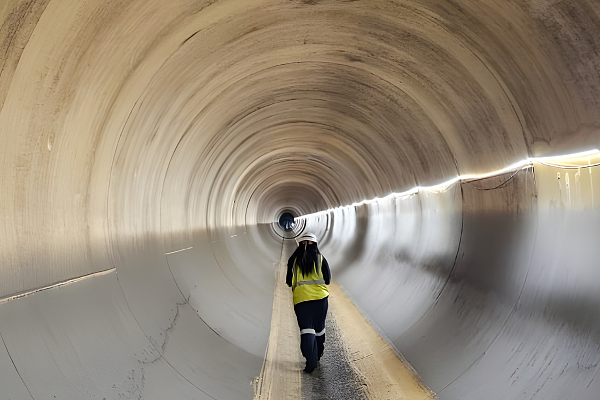
In a recent application, a contractor responsible for applying a specialised waterproofing treatment inside a major water transfer tunnel faced repeated setbacks because excessive humidity prevented the product from adhering to the tunnel walls. Portable commercial dehumidifiers were introduced to dry the environment, allowing the waterproofing process to proceed and helping the project avoid significant delays and potential contractual penalties.
Deyzel notes that maintaining consistent humidity levels can also protect expensive equipment and materials used on construction sites.
“Moisture affects far more than curing times. Over time, it can damage equipment, accelerate corrosion and reduce the lifespan of machinery operating in harsh environments. Managing humidity helps contractors maintain stable working conditions and avoid unnecessary downtime,” he says.
As infrastructure investment gathers pace, these kinds of operational strategies are becoming increasingly important.
For contractors working in demanding environments, commercial-grade dehumidifiers designed for construction applications can play a key role in maintaining controlled site conditions. Portable, durable units capable of high-capacity moisture removal allow project teams to stabilise humidity levels in enclosed areas where environmental control is essential. Equipment such as the Solenco 85L commercial dehumidifier is designed specifically for these types of construction environments, offering durable and energy-efficient moisture removal, and which can be combined with an optional extendable, flexible duct, to concentrate dehumidification in tight spaces.
In a sector where delays quickly translate into financial penalties, managing site conditions effectively is becoming another practical lever for protecting project margins and delivering infrastructure on schedule.