September marks Heritage Month which celebrates the input of all South Africans in building the rainbow nation. Since 1891, members of the Master Builders Association of the Western Cape (MBAWC) – a registered trade association for employers in the building industry and the oldest organisation of its kind in South Africa – have literally been building Cape Town and its surrounds, leaving behind a rich inheritance for current and future generations.
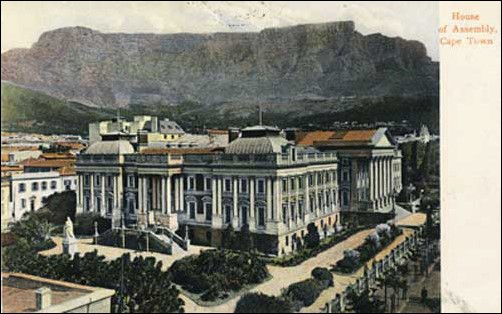 The MBAWC came about due to the building boom taking place at the time, which saw the construction of landmarks like Parliament and the Standard Bank building in Adderley Street, along with homes to cater for the influx of people to the fishing settlement of Papendorp (now known as Woodstock).
At the time of all this activity, the building industry was unregulated, meaning that the specific functions of architect, builder and quantity surveyor were not clearly defined. There were also no rules controlling relationships between employer and employee. What’s more, laws governing tenders, quality of materials and quotations were lacking. This was a source of worry for professionals in the industry and so a meeting was held at the Thatched Tavern in Green Market Square where it was agreed that an association of master builders was required. Four years later, the MBAWC came into being under the presidency of George Smart – a future Mayor of the City.
A series of strikes by builders, plasterers and carpenters for higher wages in 1901 and 1902 highlighted the need for a process of negotiation with trade unions and so, one of the MBAWC’s core roles - industrial relations - was established. It also spurred the creation of the National Federation of Building Trade Employers of South Africa (known today as Master Builders South Africa) to ensure that building employers around the country had a unified voice in dealing with these matters.
In 1905, the Federation held its first Congress where issues such as the impact of the lack of skilled labour on the growth of the industry were raised. This prompted the MBAWC to establish a training division and today, some 50% of all training done for the building industry nationwide takes place in the Western Cape.
Currently, the MBAWC’s membership comprises some 400 companies in the Western Cape, the majority of which are builders, building subcontractors, building merchants and manufacturers of building products. They have been responsible for the construction of buildings, like Portside Tower, that have altered the face of Cape Town, along with the preservation of pieces of the past like the Castle of Good Hope.
Allen Bodill, MBAWC Executive Director, says: “Since 1891, our primary objective has been to ensure that the reputation of the Western Cape building industry remains high and that investment is therefore attracted to it so that our members can continue building the Mother City and leave a legacy for future generations to enjoy.”