The global solar industry is entering a new phase. As supply chains realign and manufacturing policies evolve, countries around the world are accelerating investment in domestic production capacity to strengthen energy security and industrial resilience. South Africa is part of this broader shift, with new local manufacturing capacity contributing to a more diversified and reliable solar supply ecosystem.
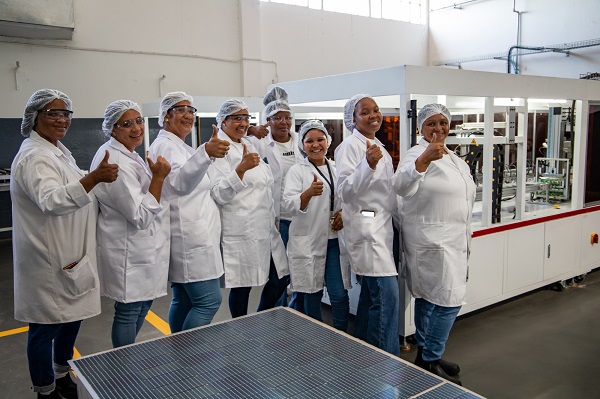
Ener-G-Africa’s all-women solar assembly team lead and operate the production line at the company’s Paarl facility.
Ener-G-Africa (EGA) recently opened its Western Cape solar panel manufacturing facility in Paarl to installers and industry players to share the next phase in the company’s solar journey and its long-term commitment to resilient, locally based production.
Bringing together representatives from government and the private sector, the event was structured to share EGA’s vision for Africa’s maturing solar market and to demonstrate how local solar manufacturing works in practice, at scale.
EGA CEO Andre Moolman highlighted that: “The recently released AFSIA Africa Solar Outlook report found that Africa is the fastest-growing solar market globally. As the market matures, there is a growing need for consistency, quality, accountability and service. We believe local manufacturing has a critical role to play in meeting these expectations.”
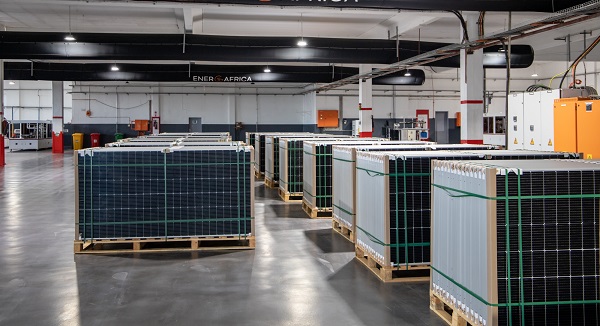
EGA has an annual solar panel manufacturing capacity amounting to around 150 MW.
Recent analysis in the Africa Solar Outlook suggests that solar adoption across Africa has been consistently under-reported, particularly in distributed and commercial systems, with installer-led deployment driving much of the real growth. While competitive pricing remains important, Moolman notes that installer priorities now extend beyond cost, to include supply certainty, quality assurance and reliable after-sales support.
“Against this backdrop, EGA is a local manufacturer built for long-term participation in the solar ecosystem,” he says. “Our Paarl facility is designed to offer manufacturing flexibility across multiple panel sizes and applications, backed by internationally accredited production standards and local technical support.”
The AFSIA report also highlights a clear shift towards integrated solar and battery solutions, as customers increasingly prioritise reliability and energy security, particularly in markets with constrained grid performance. Moolman emphasised EGA’s focus as a solutions-oriented manufacturer, not simply a panel assembler.
Solar supply chains are changing
Speaking at the open day, energy analyst and MD at EE Business Intelligence, Chris Yelland, outlined the global market dynamics shaping solar supply chains, and the outlook for solar installers in the next three years. Recent international shifts, including changes in export incentives, are expected to affect global pricing structures, reinforcing the growing relevance of resilient, locally based manufacturing partners who can offer stability over time
Local solutions for local context
At its Paarl facility, EGA has an annual solar panel manufacturing capacity amounting to around150 MW.
“EGA manufactures panels for residential, commercial and agricultural use. It does not operate in the utility-scale segment of the market. This allows us to remain focused on the installer market, where responsiveness, proximity and service are critical,” says Moolman. “We have invested in infrastructure, people and processes. With that comes accountability. If something goes wrong, we are here to engage, inspect, test and resolve it.
“Our focus is on building long-term capacity and accountability in the markets we serve,” Moolman says.
For more information visit: www.ener-g-africa.com