In the 1970s and ‘80s, the hardwired alarm annunciator was essential to industrial control rooms, particularly in high-risk sectors such as the nuclear, petrochemical and oil and gas industries.
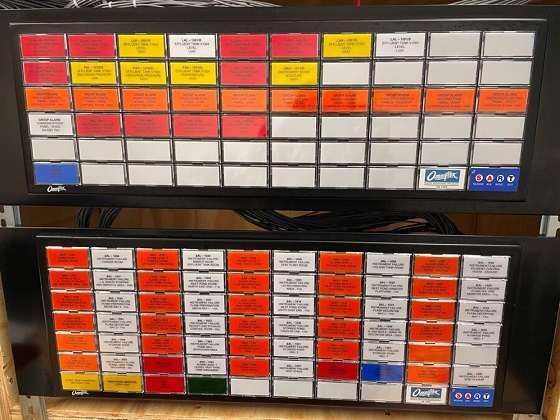
Omniflex continues to supply hardwired alarm annunciators aligned with IEC and EEMUA standards.
The wall-mounted panels, with flashing lights and hardwired inputs, served as the front line of safety monitoring, giving operators clear visibility of the alarm through pattern recognition. However, the 1990s brought a shift. The rise of the digital age, PC-based systems and graphical interfaces led many to see the traditional annunciator market as obsolete. Omniflex saw the market differently. Director Gary Bradshaw here outlines how it reshaped the industry.
While some major players in the sector either scaled back investment or consolidated – as happened with the 1989 merger of Highland and Rochester – and the market seemed in decline, Omniflex acknowledged that the technology was evolving but recognised that the fundamental need for reliable, unambiguous alarm systems in critical environments wasn’t going away. It was becoming more important.
As some companies exited the space or shifted focus, Omniflex chose to remain active. The company adapted to emerging technologies like SCADA, DCS, and HMI, positioning itself not just as a hardware provider, but as a solution partner in providing integrated alarm systems.
A pivotal moment came in 1994 with the Milford Haven explosion, This catastrophic event at the Texaco Refinery in Milford Haven in Pembrokeshire, Wales in the United Kingdom, exposed serious flaws in alarm management. During the incident, operators were overwhelmed by an avalanche of screen-based alarms, unable to distinguish urgent threats from routine warnings.
This tragedy accelerated the development and adoption of the IEC61508 SIL and the EEMUA191 Alarm Standard, which called for clear prioritisation of alarms, including colour coding, and reinforced the importance of the hardwired alarm annunciator due to its clear display format providing for pattern recognition and concise operator guidance. Recognising the implications of this shift, Omniflex worked closely with a member of the committee involved in drafting the EEMUA 191 standard.
As the regulations evolved, Omniflex continued to develop its already successful OMNI range of Alarm Annunciators ensuring that they aligned with IEC61508 and EEMUA191. The modern annunciators in this range feature a compact design, flexible configuration, and can integrate seamlessly with SCADA and PLC systems.
The OMNI range filled a critical gap in the market just as demand for high-integrity alarm systems resurged. It gave Omniflex a strong competitive advantage as others had exited the space.
A key lesson here is that changing regulations can breathe new life into technologies once considered outdated. By anticipating the impact of safety standards like IEC61508 and EEMUA191 and investing accordingly, Omniflex helped shape what the alarm annunciator sector looks like today.
For more information visit: www.omniflex.com