Independent laboratory testing has uncovered non-compliance with South Africa's compulsory SANS 1507 standards in several locally manufactured and imported electrical cables.
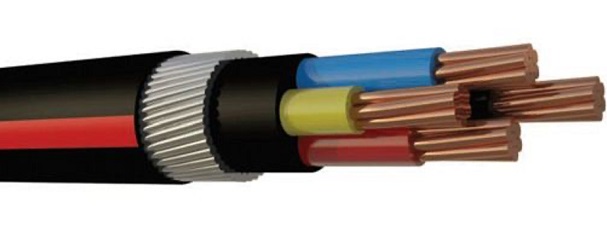
SOEW manufactures SANS and IEC standards-compliant electrical cables, specialising in flame-retardant solutions.
This underscores the risk that numerous electrical installations, including in underground mines, industrial facilities and high-rise buildings, could be facing in potential fire hazards due to the installation of non-compliant product where a standard wire or cable type does not meet all fire and related emissions safety standards.
This was revealed by South Ocean Electric Wire (SOEW) Testing Laboratory in Alrode, a JSE-listed local cable manufacturer.
Andre Smith, CEO of SOEW, explains that cables are identified by extruded stripes on their black outer sheath. A red stripe denotes Flame Retardant (FR) PVC, which produces dense smoke and corrosive hydrogen chloride gas (HCl) if it burns, making it unsuitable for certain buildings and underground mine installations.
A blue stripe indicates Low Halogen Flame Retardant (LHFR) cables, which emit less smoke and fewer toxic gases. A white stripe signifies Low Smoke Zero Halogen (LSZH) cables, generating minimal smoke with no toxic emissions.
“In applications such as solar installations, engineering projects, manufacturing facilities, construction and industrial settings, selecting the correct cable is crucial to reduce safety and fire risks,” Smith emphasises.
“Fire retardant (FR) PVC (red stripe) is unsuitable for confined environments due to its emissions; LHFR (blue) and LSZH (white) provide graduated protection for applications involving sensitive electronics or personnel. Costs rise with the performance level. Blue-stripe cables are higher priced than red-stripe cables, and white-stripe cables are the most expensive due to the use of advanced polymers in the manufacturing process.”
He adds that SANS 1507, which aligns with international standards such as IEC 60332, IEC 60331, UL 94, and BS 6387, mandates specific requirements for flame retardancy and emissions in all installed cables and wires. For example, Part 4 of SANS 1507 details additional criteria for fire-retardant cables, including materials, construction and electrical performance.
These standards ensure the cable design will delay the spread of a fire by self-extinguishing when the flame source is removed, as the cable’s required polymer's Limiting Oxygen Index (LOI) exceeds the 27% found in normal air, preventing sustained burning.
Smith notes that SOEW's tests revealed shortcuts by manufacturers, including the use of substandard polymers that render cables non-compliant and hazardous. Instances include mis-marking FR PVC as LHFR or even LSZH by applying a blue or a white stripe on the cable and using LSZH only on outer sheaths, while inner cores and the cable bedding do not comply with the required standards. In certain installations contractors have also been found to substitute blue-stripe cables for the required white-stripe variants to cut costs
He adds that cable verification requires specialised equipment, which not all manufacturers possess. Many rely on unverified datasheets from the manufacturer. As a reputable manufacturer, SOEW cautions users across sectors against the danger of using non-standard cables and offers independent testing for compliance assurance.
For more information visit: www.soew.co.za