Ahead of World Water Day on 22 March, water treatment specialist, Veolia Services Southern Africa urged government and local municipalities to consider the implementation of water reuse solutions, to protect the country’s freshwater and groundwater resources. There is a growing need for such interventions in water management; it is predicted that by 2025, there will be water shortages in 50 countries – including South Africa.
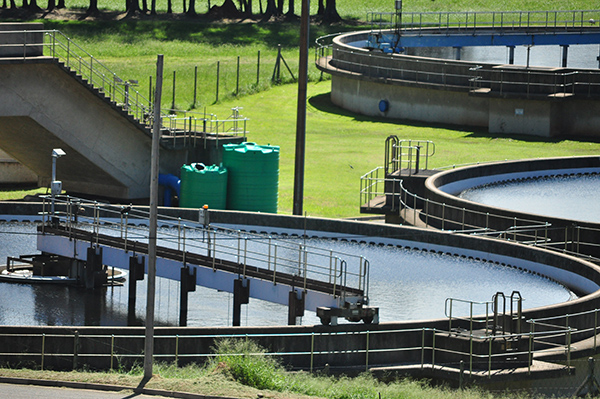
The Durban Water Recycling Plant freed up water for 220 000 households in the City of eThekwini.
Wastewater reuse protects natural water resources
Only 2.5% of the world’s water is available as freshwater, yet demand for this resource grows steadily. Water reuse is not a recent innovation (it has been used in Namibia for the past 50 years), but it presents an effective remedy to the scarcity of freshwater. As well as making more water available, water reuse solutions allow for the preservation of natural water resources. In addition, water reuse controls costs and significantly reduces pollutant discharges – major benefits for municipalities, industry, mining and agriculture. As Antoine Frérot, Veolia Chairman and CEO highlights: “Wastewater can no longer be regarded as waste. Today, only 2% of the wastewater produced in the world is reused. There is a lot of room for improvement!”
Miles Murray, Director of Business Development, Veolia Services Southern Africa, believes the limited adoption of wastewater reuse solutions in South Africa is to our detriment. “Investment in this sphere is typically seen as a grudge purchase, so allocating money to it is resisted, in the municipal and industrial sectors,” he says.
However, he points to the success of the Durban Water Recycling Plant (DW), constructed in 2000 and operated and maintained by Veolia. This plant has freed up water for 220 000 households in the City of eThekwini, without the need for additional infrastructure spending. At DW, 47 Ml/day of mixed effluent from the industry as well as domestic wastewater is treated to a high standard and is then used by large industrial clients. This leaves more drinking water available for consumption and domestic use. City clients benefit from significant cost savings as they pay lower fares for this water (compared to those for regular potable water). A high level of skills development is also enabled at the private sector-operated and maintained plant.
Another case study in effective wastewater reuse is presented by the Windhoek Goreangab Operating Company (WINGOC) – a consortium of Veolia and VA Tech Wabag. The company delivers 21 000 m3 of safe drinking water daily – a quarter of the total drinking water consumed in Windhoek. Namibia is a water scarce country (only 1% of the average 250 mm of rainfall a year infiltrates the groundwater supply) and Windhoek is largely dependent on water supply from boreholes and from dams which are located far from the city. Murray says, “To cope with shortages, the city sought alternative solutions to secure reliable water supply and found an answer in wastewater recycling.”
Artificial aquifer recharge boosts supply
Demand for water has tripled in the past 50 years, depleting groundwater levels. Natural aquifers are being drained faster than they can be replenished through rainfall and surface water infiltration. Artificial aquifer recharge presents a viable solution, replenishing and preserving aquifers for sustainable water cycle management.
Veolia’s artificial aquifer recharge process takes the aquifer’s hydrogeology into consideration, to ensure the groundwater is restored and protected. The surface wastewater is treated before being used in any recharge application, to ensure optimal water quality. “Aquifer recharge provides more groundwater in regions suffering from chronic or seasonal water deficits, closing the gap between the demand for water and the existing resources,” says Murray.
Water resource management
Veolia’s water resource management solutions enable continuous production with the goal of protecting the ecosystem and reducing hydric stress impacts. They facilitate the control of all stages in the water cycle and can meet the many challenges faced by local authorities and industrial customers: resource management, production and delivery of drinking water and industrial water, processes such as collection, treatment and recycling from all sources as well as by-products (organic matter, salts, metals, complex molecules and energy). In addition, Veolia offers design and construction of treatment and network infrastructure. “This expertise enables Veolia to support its customers in the implementation of integrated and sustainable water resource management,” says Murray.
Veolia Services Southern Africa has over 160 years of experience in water treatment and technology and is a specialist in optimised resource management with over 350 proprietary solutions. These include digital services that enable smarter management and contribute to the continuous improvement of facilities’ operational performance. The company’s purpose is closely aligned with the United Nations Sustainable Development Goals.
For more information visit: www.veolia.com