The Global Wind Energy Council (GWEC) released its Global Wind Report 2026 in April – revealing 2025 as another record year for wind energy development and highlighting several notable trends.
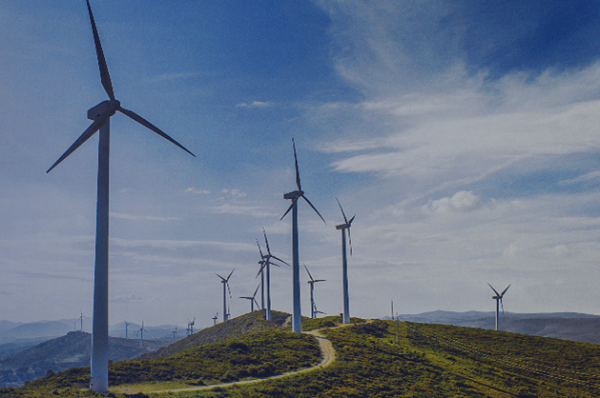
The Global Wind Energy Report 2026 reflects growing wind energy installations and emerging trends.
The global wind industry installed 165 GW of new capacity in 2025. That's a new record, and it pushes cumulative global wind power past 1 299 GW worldwide. Behind the headline figure, GWEC sees this as confirmation that wind energy is becoming essential to grids, to industry, and to governments, all recognising the link between energy security and energy independence.
Asia is leading, by a long way
The most striking data in this year's report comes from Asia.
China installed more than 120 GW of wind in 2025 – close to the world's 2024 total. India recorded its best year to date, installing 6.34 GW of new onshore capacity, an 85% jump on the previous year, reclaiming its position as the world's third-largest wind market.
Beyond the headline markets, South Korea, Vietnam and the Philippines are converting regulatory reform into live project pipelines. GWEC projects that the Asia Pacific region (outside China) will become the third-largest offshore wind growth market globally by 2030.
Energy security redefined
The report is published against a backdrop of extraordinary geopolitical pressure impacting fossil fuel supply chains, generating erratic price shocks and cascading economic consequences, which have once again exposed the structural vulnerability of fossil fuel-dependency.
The countries less affected are those that have already started building wind energy generation capacity at scale.
The GWEC makes the point that wind delivers across all four dimensions of energy security: availability, accessibility, affordability and acceptability. It reduces reliance on imported fuels, stabilises long-term electricity costs and offers governments a path towards sovereign, resilient energy systems.
Alongside climate considerations, wind supports energy security. And it is being used around the world.
Saudi Arabia more than quadrupled its annual installations to 1.5 GW. Chile tripled its additional capacity to over 1.1 GW. Türkiye extended its position as one of the most active onshore markets, approaching 16 GW cumulative installed capacity. Sweden and Romania posted some of the sharpest year-on-year growth rates in Europe.
Wherever such growth emerges, the pattern is the same: stable policy, efficient permitting, coordinated grid planning, alignment between energy and industrial strategy. It’s proven and this year's report profiles the markets putting it into practice – and those with the potential to follow.
An economic strategy as much as an energy strategy
The markets winning on wind in 2025 are not looking only at decarbonising. They are investing in ports, in manufacturing, in supply chains, in rural economies, and in workforces.
Large-scale wind deployment triggers spending far beyond the turbines. Onshore wind distributes long-term investment into regional communities. Offshore wind is driving port modernisation, high-voltage transmission upgrades and specialised maritime services. And floating offshore wind is opening deep-water markets that didn't exist five years ago.
According to the GWEC, the countries that recognise this next phase of economic competition are already forging ahead.
Tackling the challenges
It also acknowledges that record installations don't mean everything is working.
The GWEC notes that misinformation campaigns are becoming more sophisticated, working to undermine public confidence in wind energy. Protectionist trade measures are threatening the diversified supply chains the industry depends on. And despite record wind auctions globally, offshore wind installation rates are not keeping pace with what's needed for 2030.
The most successful markets last year were those that moved ahead despite the challenges.
The report sets out how others can do the same.
It emphasises that wind power is no longer only an environmental solution, but is a strategic infrastructure asset, delivering economic, industrial and energy security benefits at scale, across every region, and in markets that didn't appear on any deployment map five years ago.
The Global Wind Report 2026 offers the most comprehensive analysis of where the industry stands and what it will take to sustain the momentum.
To download the full report go to: www.gwec.net