Darryl Macdougall, managing director of Verder Pumps South Africa, highlights how innovations in chemical dosing can drive progress towards improved water security.
Click to download and read pdf
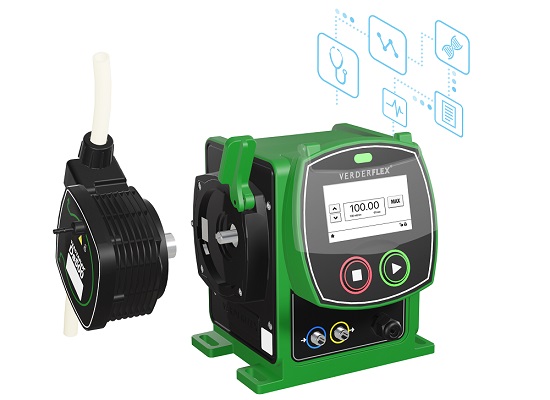
The peristaltic Verderflex Ds500 metering and dosing pump contains the pumped chemical within the tube element, ensuring it never comes into contact with the pump’s mechanical components.
Untreated wastewater remains a major contributor to global water scarcity and environmental degradation. The World Health Organisation (WHO) estimates that 44% of household wastewater is not treated properly, while only 38% of industrial wastewater is safely treated before discharge. The result is widespread pollution of freshwater ecosystems, increasing pressure on already constrained water resources and growing risks to public health.
Yet wastewater is also an underutilised water resource. The United Nations Environment Programme (UNEP) reports that the untapped potential for wastewater reuse is around 320 billion m3 annually, more than 10 times the capacity currently produced by global desalination.
Achieving this potential depends on reliable treatment infrastructure – and at the centre of every wastewater treatment facility are robust pumping technologies. For engineers designing municipal and industrial treatment plants, pump selection plays a critical role in maintaining process stability, achieving precise chemical dosing and ensuring long-term operational reliability.
Chemical dosing is fundamental across multiple stages of wastewater treatment. Coagulants, flocculants, pH-correcting chemicals, and disinfectants must be accurately introduced to ensure efficient contaminant removal and stable downstream processing.
During coagulation and flocculation, for example, chemicals such as ferric chloride, aluminium sulphate and polymer solutions are used to destabilise suspended particles and promote floc formation. Incorrect dosing directly impairs treatment performance: underdosing reduces contaminant removal efficiency, while overdosing increases sludge production and operating costs.
Accurate metering pumps are therefore essential to maintain consistent dosing under variable flow conditions.
Peristaltic dosing pumps offer particular advantages in these applications. In pumps such as the Verderflex Ds500 metering and dosing pump, the pumped chemical remains completely contained within the tube element, meaning it never comes into contact with the pump’s mechanical components. This configuration improves reliability when handling aggressive chemicals such as sodium hypochlorite, acids, caustic solutions or ferric salts, while reducing corrosion and maintenance requirements.
The Ds500 is designed for municipal and industrial dosing duties that require consistent, accurate flow control. Because the pumped fluid is isolated from the drive mechanism, the risk of seal failure or contamination is minimised, supporting reliable operation in continuous treatment processes.
The Verderflex Ds4F expands the cased-drive peristaltic range by combining the control capabilities of the Ds500 with multiple tube-element options. This allows engineers to configure the pump to suit different process conditions, including viscous polymer dosing, lime slurry injection for pH control or chemical transfer within treatment plants.
Wastewater treatment plants must manage a wide range of chemicals and operating conditions, requiring dosing systems that offer both flexibility and precision.
Pump ranges such as Microdos and ITC dosing systems provide a variety of technologies, including electromagnetic solenoid diaphragm pumps, peristaltic pumps and motor-driven piston or diaphragm metering pumps. These are used across numerous treatment stages, including coagulant dosing in clarification processes, polymer dosing for sludge thickening and dewatering, pH control using sodium hydroxide or sulphuric acid, nutrient dosing in biological treatment systems and disinfection dosing for final effluent treatment.
The ITC DOSmart series, for example, uses stepper motor technology to deliver high-precision chemical metering. With a turndown ratio of up to 1:3 000, the pumps can maintain accurate dosing across widely varying flow conditions – a key requirement in municipal treatment plants where influent flows fluctuate throughout the day.
These pumps also offer strong suction capability to handle viscous chemicals, such as polymer solutions used in sludge treatment processes. With flow capacities of up to 60 litres per hour, they are well suited to applications including polymer preparation units supplying centrifuges, belt filter presses and dissolved air flotation systems.
Similarly, the ITC Dostec AC series provides motor-driven metering pumps available in both diaphragm and piston configurations. These pumps support multiple operating modes, including manual control, analogue signal input, proportional dosing and batch dosing. This flexibility allows dosing to be directly linked to plant instrumentation such as flow meters, pH probes or turbidity sensors, enabling automated process control.
As treatment plants adopt increasingly digitalised operations, remote monitoring and predictive maintenance are becoming essential. The DOSmart and Dostec AC pump series can be integrated into the Cloud Manager App, allowing operators to monitor pump performance, operational parameters and dosing accuracy remotely. Through a centralised interface, plant operators can access real-time data, receive alerts and track equipment performance across multiple installations.
For utilities operating multiple sites or remote treatment facilities, this capability improves system oversight and allows early detection of operational issues, helping to reduce unplanned downtime and optimise maintenance schedules.
Wastewater treatment frequently involves pumping abrasive slurries, viscous chemicals and shear-sensitive fluids. Conventional pump technologies often struggle in these environments due to wear on seals, valves or internal components.
Verderflex peristaltic pumps are particularly well suited to these demanding applications. Their operating principle – compressing a reinforced hose to move fluid through the pump – ensures the pumped medium remains completely isolated from mechanical components. Advantages include reduced maintenance due to minimal wear components; improved containment of hazardous or corrosive chemicals; and gentle pumping of shear-sensitive polymer solutions. In addition, the hose is typically the primary wear component, making maintenance predictable and easier to manage.
As water scarcity intensifies, wastewater reuse will become an increasingly important component of sustainable water management. By enabling accurate chemical dosing, robust handling of difficult media, and improved operational monitoring, modern pump technologies are helping transform wastewater into a valuable, reusable resource while safeguarding freshwater sources.
To access case studies about Verder’s wastewater pumping solutions, click here.
https://verderliquids.com/za/en