As another new year gets underway, Sparks Electrical News looks at the year ahead for local electrical contractors, picking apart the potential challenges and opportunities you will be faced with this year.
Challenges
Load shedding: As you work in an industry where electricity is the core focus, the mere presence of load shedding makes an electrical contractor’s job that much harder. How can you provide a CoC when the client has no electricity for you to check?
While it can be a demoralising situation, the EskomSePush App, an application that monitors the current Eskom loadshedding status and notifies you if the power is scheduled to go off in the selected areas, can prove invaluable when planning your day’s work. While Eskom are likely to, and often do, shift between stages at a moment’s notice, knowing whether or not you will have power at a client’s home or business when you arrive can save you both time and money.
Petrol price: As a career as an electrical contractor is a mobile service, the petrol price definitely has an impact on the pocket. Whether you are a one-man-band or have a fleet of electricians hitting the road, serious petrol price hikes are not good for the bottom line. At the time of writing, a big drop in petrol and diesel prices was expected for January. According to the latest weekly forecast from the Central Energy Fund, petrol prices were anticipated to come down by over R1.50, while diesel could be cut by a much larger R3.50. The main driver behind the lower prices is a huge drop in the international product prices for petroleum, which are guided by global oil movements.
Looking ahead, global oil prices have continued to drop significantly. According to Bloomberg, crude oil remains on track for its first back-to-back quarterly decline since mid-2019 as the demand outlook sours and thin liquidity exacerbates price swings into the year-end.
“Investors are also weighing the fallout from the $60-a-barrel price cap imposed by the G7 (Group of Seven) and European Union on Russian crude to punish Moscow for the Ukraine invasion,” it said. Some events are supporting a case for greater oil demand – such as crucial North American pipelines being shut and China slowly moving away from its zero-Covid policies – however, these are not enough to reverse the trend. Additionally, a surge in Covid cases in China is spurring concern about consumption over winter, with industry consultants saying that the sudden lifting of restrictions in the country could pose downside risks for oil demand.
Meanwhile, the South African rand continues to trade favourably against the US dollar, despite volatility and weakness due to ongoing political uncertainty. This uncertainty persists, with the African National Congress heading into election territory and Cyril Ramaphosa’s future as the leader of the party not guaranteed – both not great for long-term oil prices.
Abroad, consumers have been warned to expect fuel prices at the pump to remain high into the new year due to disruptions to Russian oil supplies and as refineries struggle to meet demand recovering from the pandemic. However, the pressure should ease in the second half of 2023 when several new large refineries including in the Middle East are expected to start up. For now, record petrol and diesel prices in the United States, Europe and elsewhere have cooled global oil demand by around 1 million barrels per day (bpd), roughly 1% of global demand.
The takeaway from this? While it is hard to predict, fuel prices look to remain relatively high throughout 2023. Proper planning of your routes, making sure you do the job correctly the first time around and driving more conservatively could help you to spend less in 2023 on petrol.
Retirements: Another pressing issue that adds to the construction industry problems in 2023 is the retirement of aging boomers, the inflow of inexperienced workers, and the skilled labour shortage. Inexperience can also be a factor in an increasing number of injuries and accidents on jobsites. These factors must be addressed, with boomers primarily being managers, and their replacement is vital.

Spiralling costs: The rising cost of materials will continue to be the most significant challenge facing UK electricians in 2023, according to a new report assessing the confidence of the industry. While the study was focused on UK-based electricians, we are worried that the same problem will be evident locally this year.
The study surveyed electricians about their views on the year ahead and found that, while there is a general acceptance that the landscape is difficult, many are cautiously optimistic.
Just over a quarter (26 percent) of electricians think their companies will be more successful next year than they were in 2022, and one in ten (10 percent) believe the industry will grow stronger over the coming months. Furthermore, more than a third (37 percent) of electricians think they’ll be better off financially in 2023, which could explain the planned recruitment drive. Just over one in six (17 percent) are looking to expand and hire new staff, representing a slight increase from last year (15 percent).
However, with widespread societal issues, such as the cost of living crisis, some electricians are naturally more wary about the next 12 months. All the respondents acknowledged that there will be challenges, and top of the list is the rising cost of materials (48 percent).
Simply getting hold of materials is also a worry (21 percent), as is the ability to recruit people to fill job vacancies (25 percent).
Dominick Sandford, Managing Director at ElectricalDirect, said: “It’s been a really tough couple of years, both nationally and for the electrical industry, but while many challenges remain, it’s encouraging to see that some electricians are feeling positive about the future as we approach 2023.
“However, it’s concerning that some of the most dominant issues, such as the rising cost of materials, have not been addressed in the 12 months since we last published our report, and in fact are now starting to affect more people in our industry. We hope that the situation will improve in 2023, as it’s clearly a major worry for many electricians.”
Opportunities
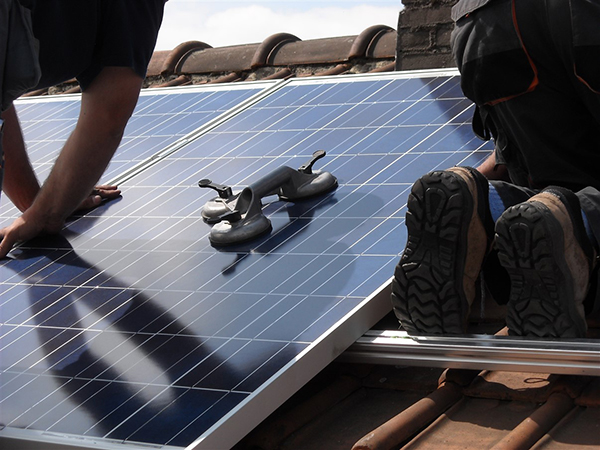
Solar: With load shedding here to stay will into 2023, and more than likely far beyond, solar power and renewable energy will continue to grow this year. Mounting solar panels on a rooftop is just one, and arguably the simplest, part of a PV installation. Any part of the installation that flows from the inverter – that converts direct current (dc) electricity generated by the solar panels to alternating current (ac) electricity used by the electrical grid – must be done and signed off, through a Certificate of Compliance (CoC), by a qualified and registered electrician.
To become a registered professional electrician in South Africa, you must pass a trade test, have an NQF level 3 minimum that includes a Technical Senior Certificate, and must pass the national exam on SANS 10142-1. You'll also need a Wireman's License and need to be registered with the Department of Labour (DOL) to be legally recognised as a qualified electrical contractor.
Being a qualified and registered electrician is critical if you’re hoping to become an independent contractor or start your own company that will fulfil all aspects of a solar installation, from mounting right through to the final CoC.
If you’re looking to work for a company that already employs a qualified and registered electrician – who will effectively oversee all the work being done and is responsible for sign-off – then obtaining a Solar PV Service Technician qualification is a quicker way of entering the industry for some hands-on experience.
Based on the need for national training offering support to the growing renewable energy industry, the Solar Photovoltaic Service Technician NQF Level 5 was registered with the South African Qualification Authority (SAQA) under Qualification ID 99447 in December 2016.
The qualification consists of four modular part qualifications: Solar PV Mounter, Solar PV Installer, Solar PV Technician, and Solar PV Service Technician. Enrolment requirements include a minimum of Grade 11 (NQF Level 3) passed with Maths and Science as subjects.
While you don't need to be qualified as an electrician to become qualified as a Solar PV Service Technician, both qualifications are important steps in the PV GreenCard programme.
The PV GreenCard programme is a quality assurance initiative led by SAPVIA that provides installers with accreditation. While participation in the programme is voluntary, for now, multiple municipalities and business customers are buying into the concept, with some requiring installers to be accredited.
PV GreenCard endorsed service providers form part of the SAPVIA PV GreenCard online database, which can be searched by potential clients. The five-Day PV GreenCard Installer Training Course follows the exit outcomes of the curriculum specific to the Solar PV Installer Part Qualification.
The two-day PV GreenCard Training includes theoretical as well as practical training where candidates are required to mount PV installations on a simulated roof environment. The purpose of this training is primarily to ascertain the competency of installers and vet their abilities to gain access to the PV GreenCard quality mechanism, according to SAPVIA.
SAPVIA-accredited installers can issue PV GreenCards to their clients in both physical and digital formats. These documents detail the specifications of the solar installation and assure that the installation has been completed to the required standard.
To qualify for the PV GreenCard programme, installers must provide company registration details, proof that they're registered as qualified electricians with the DOL, proof that they have completed a five-day PV installer course and undertake a two-day theoretical and practical assessment.
"The PV GreenCard Programme focuses on education, skills development, and training to build installer capacity as well as improve standards development and compliance in line with international best practice," explained SAPVIA.
Smart houses: The term ‘smart home’ can be heard more and more frequently, and this is not just by people working within the electrotechnical industry. This shift is the result of consumers being confronted with products to turn their home into a smart home from all angles. There is a whole host of smart gadgets available for the house – smart thermostats, smart lights, smart TVs, smart kettles… the list goes on.
In the last five years, the visibility and awareness of smart technology has increased dramatically but, unfortunately, the vast amount of information that is now flooding the Internet has not necessarily lead to a better understanding of what a smart home actually is. There are still many misconceptions, doubts, and even fears, about the benefits of smart technology. In this article, we aim to provide some clarity and explain how electricians and electrical contractors are perfectly placed to step into this emerging market to grow their business by offering smart home services.
To set yourself up as a smart home installer and to be successful you don’t just need the technical skills, but also to know what your customers actually want. It’s no good specialising in installing smart fridges that order the milk if nobody wants them, and believe us, they don’t!
Recent consumer research revealed that 71 per cent of homeowners would sacrifice another feature in their home – such as a second bathroom or summer house – for smart home automation. Heating/cooling, lighting and security are the top three key growth areas for the so-called digital homes market.
A surprising result – given all the smart home gadgets that are targeted directly at the consumer and the DIY market – is that the report also revealed that 66 per cent of homeowners are looking for a professionally installed system.
As an electrician or electrical contractor, you are in the perfect position to capitalise, since you already have a sound understanding of electrics. You can build on this foundation to learn new skills and expand those aspects of a smart home you offer as you go along.
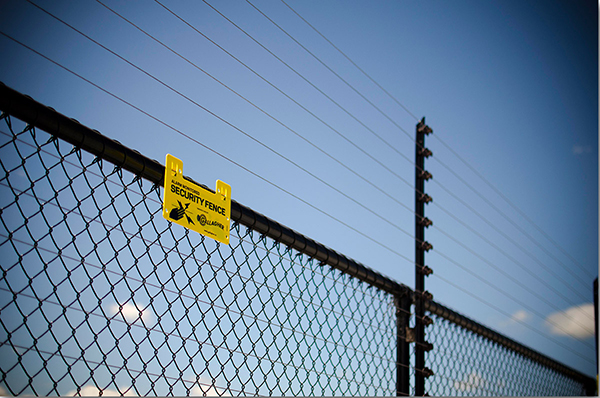
Security: With crime stats painting a bleak picture for many South Africans, the security sector will continue to be a thriving business in 2023. As such, the Electrical Contractors Association have gained capacity to help its members diversify their service offering with Electric Fencing as an offer to clients. The Energy and Water Sector Education and Training Authority (EWSETA) has given the ECA(SA) accreditation for Electrical Fence Training.
This is an opportunity for members to offer clients an extra service and access another source of income for their businesses. In tough economic times, when domestic and business security is of paramount importance, being able to contribute to the security of your clients and doing business whilst at it, can only be good for your business and may help your business grow and survive tough economic conditions. However, while you probably can do very little about the midnight cabinet reshuffle, you can find new clients – and new money – for your business. Your existing clients do not have to use another supplier for this service and the ECA(SA), believe clients are much more likely to trust his/her trusted electrical contractor to do an electric fence installation than another person, who may do the electrical installation but cannot issue the related CoC.
Municipal jobs: City Power deployed 52 newly appointed electricians to lessen the entity’s reliance on contractors and foster area-specific accountability in the Johannesburg power network as of December 1.
The electricians will be posted in problem-prone sections of the City Power network and assume direct responsibility for sections of the grid. Whereas previous contractors were haphazardly employed by City Power to rectify outages and resolve long-term issues, the newly appointed electricians will foster a better understanding of issues and build up a body of knowledge specific to their area.
MMC for Environment and Infrastructure Service, Michael Sun said this will enable more sustainable solutions to short and long-term issues based on the in-house electricians’ region-specific experience. “This will save City Power millions of rands annually in contractor fees and ensure better accountability in the work undertaken on a day-to-day basis.”
More electricians will be in-sourced by City Power in the coming months with the aim that a total contingent of 300 electricians to be deployed by mid-2023.
“This is part of a grander strategy to decrease the number of emergency repair funds spent on labour as opposed to repair components and equipment needed to sustainably repair and rehabilitate infrastructure. The plan has been six months in the making with over a thousand applications being received for the electrician posts. I want to congratulate the new team of City Power electricians, many of them young people and women that will lead a new age of accountability and quality craftsmanship within City Power,” said Sun.
Resolve to change with the times: Innovation in the electrical industry is happening very fast. From technology to new installation techniques to changing regulations, it's more important than ever for electrical contractors to be adaptable. Keep on top of industry trends, best practices and new equipment to keep your company ahead of the game. Joining an association or attending tradeshows and networking events can be a great way to keep your business up to date on the information you need to know to continue your growth.
Change is difficult, but losing business to a more progressive competitor is a much worse outcome than getting outside of your comfort zone. Now, more than ever, electrical contractors need to rely on their people, equipment and technologies to make absolutely sure the job is being done right the first time. There's no more time to wasted time.